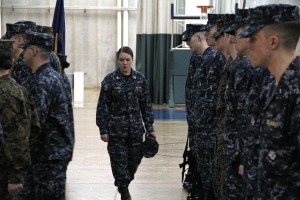
Alyssa Arre, Photo editor
Defense Secretary Leon E. Panetta rescinded the 1994 Direct Ground Combat Assignment Rule on Jan. 26. The change allows women to enter comb at units previously closed to them.
“Every time I visited the war zone, I’ve met with troops, reviewed military operations, and talked to wounded warriors, I’ve been impressed with the fact that… men and women alike [are] committed to doing the job,” Panetta said in his official statement. “They’re fighting and they’re dying together, and the time has come for our policies to recognize that reality.”
Repealing this rule is the first step to eliminating “all gender-based barriers to service,” Panetta said.
In light of this change, branches of the military are required to submit detailed plans of how they will implement the new policy by mid-May.
The Navy, for example, will open positions on Coastal Riverine Force boats and in Marine Corps ground combat units.
However, since most of the Navy is already open to females, the new policy will not have as much of an impact on practice as it will in other branches like the infantry division of the Army.
As of now, the Navy Seals will still remain closed to women.
Commanding Officer ofUR’s Navy Reserve Officers’ Training Corps (ROTC) Captain Jeff Bartkowski emphasized the need for detailed planning.
“You can have policy change, but you have to make sure the platform is ready — does the ship have restrooms that can ensure privacy and security for women, for example,” Bartkowski said. “You want to be able to integrate women well so they can have a full career, and to do that, the change must be gradual.”
In 1981, a Supreme Court case ruled that women did not have to register for the Selective Service as men ages 18 to 25 do because of a combat exclusion rule. This policy change could reopen the Selective Service debate, as Selective Service spokesman Richard Flahavan has acknowledged.
“If the combat exclusion goes away, someone needs to be re-looking at that, now that [the Supreme Court] rationale no longer holds water,” he said in an official statement.
Regardless of the Selective Service question, Bartkowski acknowledges the value of the policy change.
“For us to be the best we can, we need to be able to draw from the largest talent pool we can — and we’ve certainly seen the Navy improve as women are integrated,” he said.
“The Navy has been working toward inclusion and integration since the ’70s at the very least,” a member of UR ROTC and senior Olivia Wittman said. “This is just exemplary of their dedication to continuing that tradition. It makes me proud and excited to [be part of] a force that is embracing [women] and constantly looking for ways to integrate them.”
Remus is a member of the class of 2016.