Drue Sokol, Photo Editor
As Denzel Washington says in the film “American Gangster,” “The loudest one in the room is also the weakest one in the room.” This may be truest during election season — and it’s that time. Whether or not the words of the candidates stuck with those who watched Monday night’s debate, most Americans caught wind of the showdown via some form of social media.
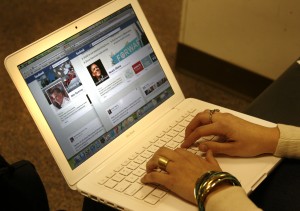
Given that Facebook and Twitter have expanded to mobile devices, staying up to date with the activities of peers, politics and news has become easier than ever. Conversely, this bombardment of political beliefs on social media can disengage so-called friends and followers and undermine the goals of those doing the posting.
“The political posts are less informative and more opinion based and have a tendency to spark anger,” junior Sydney Robinson said.
Those posting see Internet communication as a share or retweet away from reaching a new audience, allowing them to spread what they believe to be the solutions to solve our government’s problems. Politically contentious Facebook statuses often receive more likes and comments, causing them to fly up to the top of newsfeeds and gain the attention of users. During all three presidential debates, the highest frequency hashtags on Twitter were concerning the issues discussed and the phrases used. The volume of posts indicates an outspoken Internet community on politics, but quantity doesn’t necessarily mean quality.
It is difficult to negotiate between spreading a belief and angering a fellow user. Avoiding Denzel’s loudest and weakest association requires brevity and concision. Quite often, a Facebook user will be blocked or unfriended if status after status is an uneducated and incoherent rant. While tweets are limited to 140 characters, fed up users can simply unfollow what they do not care to read.
Junior Peter Heuer, who watched all three debates, expressed a distaste that’s a common reaction to these types of posts.
“If what a Facebook friend is saying is ridiculous… you get sick of it,” he said. “This is the same as in real life.”
He continued by explaining that “[social media] is fine as a forum that puts issues out in the open that should already have been heard.”
Social media seems to have a firm place in society, particularly with the rise of political gaffes that go viral on the internet and intense post-debate fact checking.
While the juxtaposition of a mindless Facebook status, such as “Honey Boo Boo is so bad but so good I CAN’T STOP,” next to a discerning one, like “Romney and Obama agree on every foreign policy issue other than how much they love Israel,” may take away from the message, it nonetheless brings awareness to what is happening and the consequences of our vote. These messages, along with links to relevant articles and even witty jokes, essentially demand from users a basic knowledge of politics. At least America knows Mitt Romney loves Big Bird and has binders full of women.
Senior Amit Jhaveri is without Facebook — atypical by college standards. Still, he does check CNN for the top twitter posts.
“A lot of attention and participation in social media is because of the number of posts on the gaffes of the candidates,” he explained. “It helps make us more aware while helping make the debates a celebrated event.”
Maintaining interest in the political discussion appears a battle in and of itself. Live tweeting and Facebook uproars makes politics accessible, demanding the public’s attention. After all, the last debate had to compete with Monday Night Football and game seven of the National League Championship Series. The post-debate discussion may be better suited for a town hall or a classroom, but neither are always available nor easy to access. The voting booth is the final forum for politics, but social media has an instant nature and allure that fills in the gaps.
Junior Ingrid Koch summed the issue up best.
“Social media is our primary form of communication and we cannot get politics out of it,” she said.
Brady is a member of
the class of 2015.

