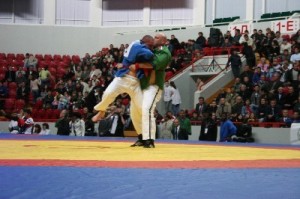
Belt wrestling is taking off all around the world. Courtesy of belt-wrestling.org.
Yes, yes, I know I’ve been away for a long time. See, the sports world is just so full of basketball and other bullshit that other sports have to take some time to brew in the cauldron of awesomeness before they pop up on the radar. Despite the absence, I want to present a sport so intriguing that I hope it makes up for the horror that professional sports have dragged you through in the mean time.
Belt wrestling.
And no, I’m not talking about the belt wrestling that happens between you, a belt, and whichever object you decide to tie the belt too.
Professional belt wrestling mixes martial arts, wrestling and, well, belts. The two “belters” tie themselves up and see who can take the other to the ground first. Rules vary from country to country, with some allowing tripping and some not, but the basic idea of being tied to your opponent stays pretty consistent.
The sport has several different variations, including snow belt wrestling (in the snow), female belt wrestling (for females) and beach belt wrestling (which I hope also includes females, and perhaps pudding).
Of course, the sport also has traditional belt wrestling, as well as free form belt wrestling, but pretty much it all comes down to somehow getting your opponent on the ground without them taking you down with them. I’m guessing the belt does make that a little more difficult.
The sport is over 2,000 years old and actually dates back further, depending on which source you use. Some date it back to Greece, others Rome, but to pinpoint an exact date when people got fed up with belt-less wrestling and decided that belts could be used for more than holding your pants up is beyond even this skilled researcher. Currently, many different countries have belt wrestling associations, including Armenia, Kyrgyzstan, Uzbekistan, and even our great Canadian neighbors to the north.
To put the sport in a little more perspective, I want to quote the Moscow Times, which earlier this month noted that the sport featured “often violent flips, and loud grunts embellish the matches, which last anywhere from several seconds to four minutes. Both men and women compete.”
Sounds more like sex to me.
Yes, there is an actual Belt Wrestling Association, and yes, they have high hopes of developing the sport to make it to the Olympics.
Hey, with baseball and softball out, the Olympic committee must have room for a few sports that might be even more boring to watch, right?
Clark is a member of
the class of 2012.
