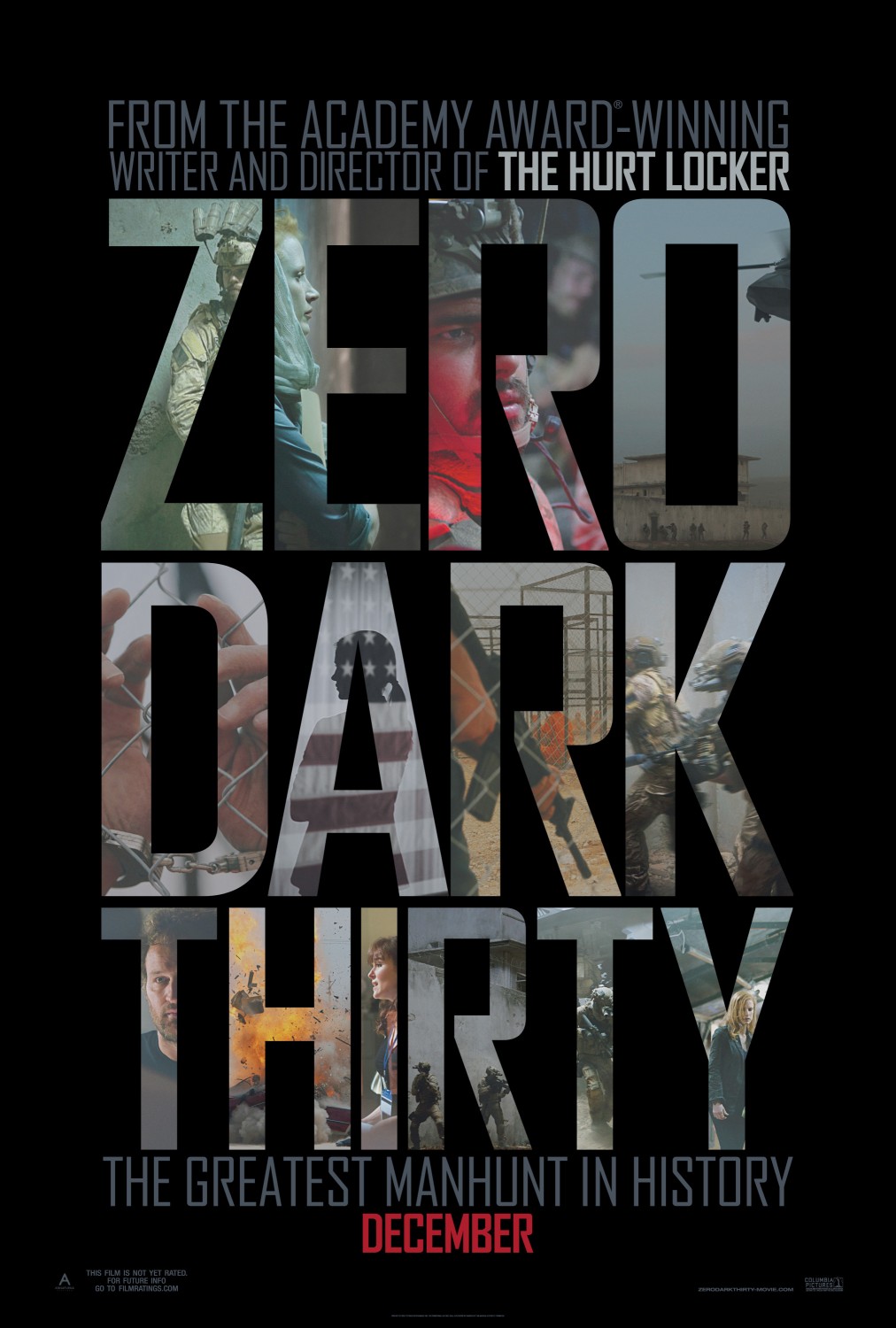
Courtesy of imdb.com

Tackling a subject as heavy as the hunt for Osama Bin Laden is no small task, especially given the endless speculation about whether torture played a role in finding him and the large amount of classified information involved. However, Academy Award winning director Kathryn Bigelow (The Hurt Locker) came through, exceeding the high expectations set for her.

Billed as “the story of history’s greatest manhunt for the world’s most dangerous man,” Zero Dark Thirty spends almost no time with developing characters,  focusing rather on the several key players who spent a decade hunting Bin Laden. Jessica Chastain, who plays the fictional lead, “Maya,” gives the same gritty performance that made Jeremy Renner a star in Bigelow’s Hurt Locker, making each scene authentic with her poise and lack of positive emotion. Although the film’s ending is already well-known, there is never a lack of suspense. Though the early torture scenes are a bit brutal for the weak at heart, Zero Dark Thirty is an instant classic anyone will enjoy.

Film Grade: A

Pascutoi is a member of the class of 2015.


Oscar Talk: “Zero Dark Thirty” (2012)

Anderson’s research — which centers on leadership development and the systems-level changes needed to improve educational outcomes, especially in historically underserved communities — made her an especially attractive candidate. Read More

Oscar Talk: “Zero Dark Thirty” (2012)

The majority of the populations of both the U.S. and the U.K. evidently understand the need to move towards a renewable energy model for their countries. According to the DESNZ Public Attitudes Tracker, 80% of British adults support the use of renewable energy as of the summer of 2025. The Pew Research Center has reported that 86% of American adults support expanding wind and solar power as of May 2025. Read More

Oscar Talk: “Zero Dark Thirty” (2012)

Mittal drew on her experience at the Department of Justice, describing the scale of the Jan. 6 prosecutions, which involved nearly 1,600 criminal cases. While the events were widely characterized as an unprecedented attack on democratic institutions, the legal system approached them through existing statutory frameworks. Read More