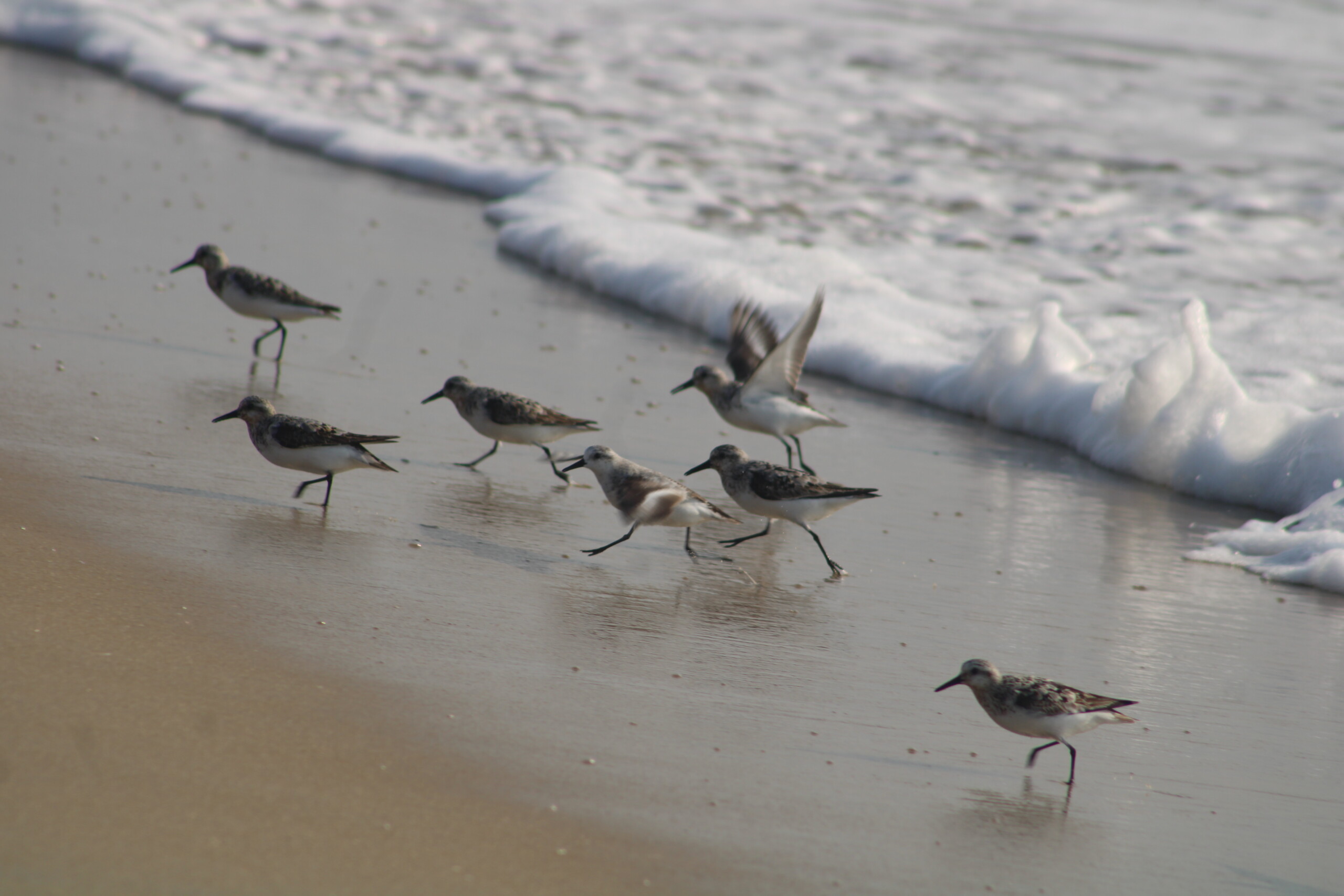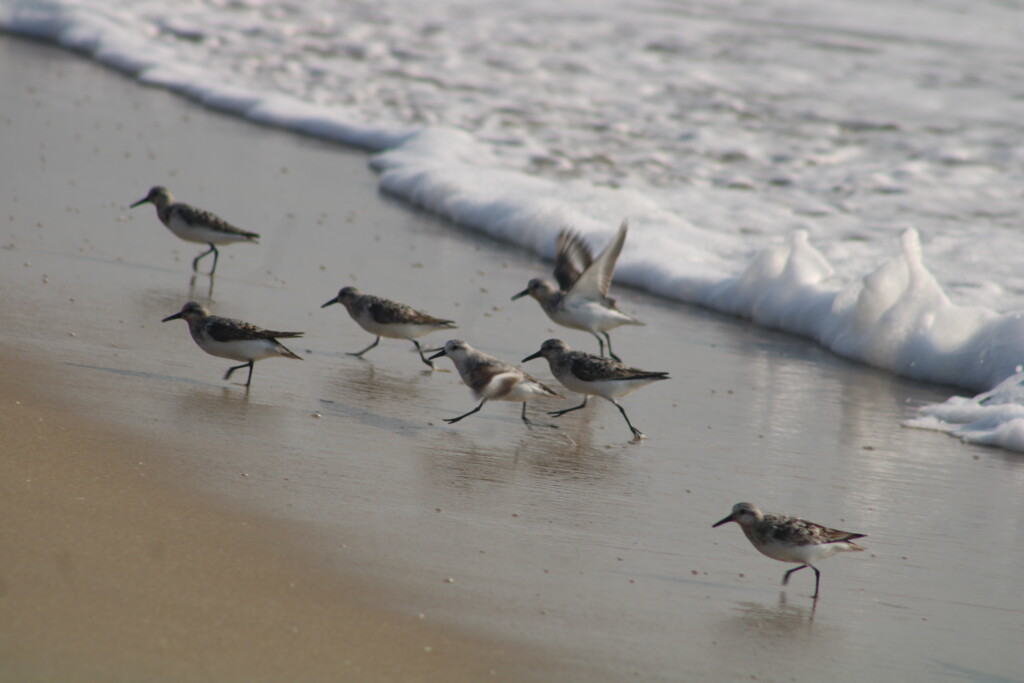
It may be the middle of September and the weather has started to cool, but that doesn’t mean I can’t still reminisce about summer from time to time. Every July or August, when I visit the beach or even when I’m near a body of fresh water, I always look forward to spotting one unique group of birds. They stroll through the sand or mudflats looking for food. Each one is unique in their small size and chubby shape with important niches to fill. Aside from their charming exterior, I’m here to talk about all the different species of the world’s shorebirds and why they’re one of the most remarkable bird groups. For new birders, shorebirds can be among one of the more challenging species to identify, but once you can group them in the various subcategories, many are hard to mistake.
Shorebirds are a broad and unique category of birds. They all have similar features: slender bodies with long, thin legs for wading through aquatic habitats and specialized bills for catching specific prey types. They come in different sizes and shapes, from the bulky oystercatchers, to lanky, leggy avocets, to pint-sized plovers and sandpipers. Most shorebirds can appear dull in color to blend in with the sand or mud. But any birders lucky enough get to check out their breeding habitats in the high Arctic, where the birds are dressed in their brightest plumages and perform elaborate courtship rituals.
Shorebirds can occupy a wide variety of habitats, and each has specific features that help them survive and fill their niches. Despite their name, shorebirds can live in habitats like marshes, ponds, grasslands, fields, and even urban or residential zones in the case of a type of plover called the killdeer.
In the marshes with fresh to brackish waters, avocets and stilts forage through the shallow water with their long, thin bills, upturned in the former and straight in the latter. On sandy beaches or rocky shorelines, oystercatchers are hard to miss with their black-and-white or all-black plumages. They use their long, sturdy, reddish-orange bills to pry open the shells of their favorite prey: mollusks (their name is a bit misleading since oysters are not their main prey compared to others such as mussels).
One unique group of shorebirds called the phalaropes are all about the water. They are the only fully aquatic shorebirds that swim through bodies of deep, salty water, especially saline lakes.
Plovers and lapwings are a fairly large group of shorebirds with stocky bodies and short, strong bills for pecking and plucking out worms and other invertebrates through the sand or soil. Lapwings are native to continents outside the Americas and get their names from their flight patterns of slow wingbeats. Plovers are much more widespread and can live in habitats from marshes to beaches and, for the killdeer, named after its piercing call, pastures and urban areas.
Sandpipers make up the largest group of shorebirds. Many species can look alike but there are quite a few sandpiper species each with its own unique features. The solitary sandpiper forages alone in shallow freshwater areas. The stocky turnstones live on sandy or rocky shores and forage by flipping over large stones or shells to uncover their food. Curlews such as the whimbrel probe through the sand with their long, thin, curved bills. A unique member of this family, called the woodcock, is known for dwelling in woodlands, camouflaged against the vegetation. In early spring, male woodcocks perform their courtship rituals in open fields, calling out a buzzy “MEEP” before performing the “sky dance,” where they fly in the air in a wide, intricate spiral, making a whistling sound from their wings as it goes. Some of the sandpipers that are hard to miss if you stroll through the beach during the summer are the sanderlings. These social sandpipers are known for traveling in groups, running back and forth, toward and away from the tide while probing the sand for shellfish.
Another thing I want to highlight about shorebirds is their incredible migrations. Shorebirds are among the groups of birds with the longest migration routes, traveling thousands of miles to their breeding grounds in the Arctic Circle in spring and summer and to areas of the Southern Hemisphere or a handful of parts of the Northern Hemisphere throughout the winter. Some species tend to take rest stops in different areas along their journeys while others are known for traveling nonstop. Shorebirds tend to leave their wintering grounds earlier compared to other bird groups, around mid-April, then make their southward journeys as early as late July or August. This is due to the short-lasting summer in the Arctic Circle, the changing supply of food in their habitats, and for avoiding predators or competitors.
Another key reason why shorebirds are one of many bird groups worth studying lies behind their specific environmental niche. Shorebirds are considered habitat indicators — their specific habitat needs and food preferences allow their presence in certain areas to be a sign of a healthy ecosystem. Shorebird habitats are at high risk of changing drastically due to hazards such as natural disasters like floods and droughts, changing tides, and excessive development in areas such as wetlands, fields, and beaches. Shorebirds are among the most threatened group of birds as a result of these concerns. Species such as the snowy plover and the piping plover in North America have experienced population declines from human disturbance and habitat loss. Likewise, the Eskimo curlew is listed as critically endangered. It was once abundant until populations began to die off due to overhunting. Elsewhere, species such as the spoon-billed sandpiper in Asia are experiencing population declines due to similar concerns.
The good news is that conservation efforts for shorebirds are increasing. Organizations including but not limited to the U.S. Fish and Wildlife Service and the Cornell Lab of Ornithology have partnered to establish the U.S. Shorebird Conservation Plan, which enables state, federal, and local organizations to protect different species of shorebirds in the U.S. by monitoring their populations and restoring their habitats. Knowing these conservation plans are in place, the general public and birders of all experience levels can contribute to these organizations’ efforts to protect shorebirds. When visiting shorebird habitats, visitors can give them space by not approaching designated nesting sites on beaches, especially if they are fenced off, keeping pets leashed or leaving them at home, walking around colonies of shorebirds instead of right through them, and participating in citizen science by submitting sightings to programs such as eBird, the citizen science program by the Cornell Lab of Ornithology.
That being said, there are so many things to admire about the shorebirds of North America and in the entire world. They are diverse in size, shape, physical features, and in the habitats they live in, and are migration marathoners. I hope this article has taught you valuable information about shorebirds and, even better, inspired you to appreciate them more and take action to protect these remarkable birds for the future.