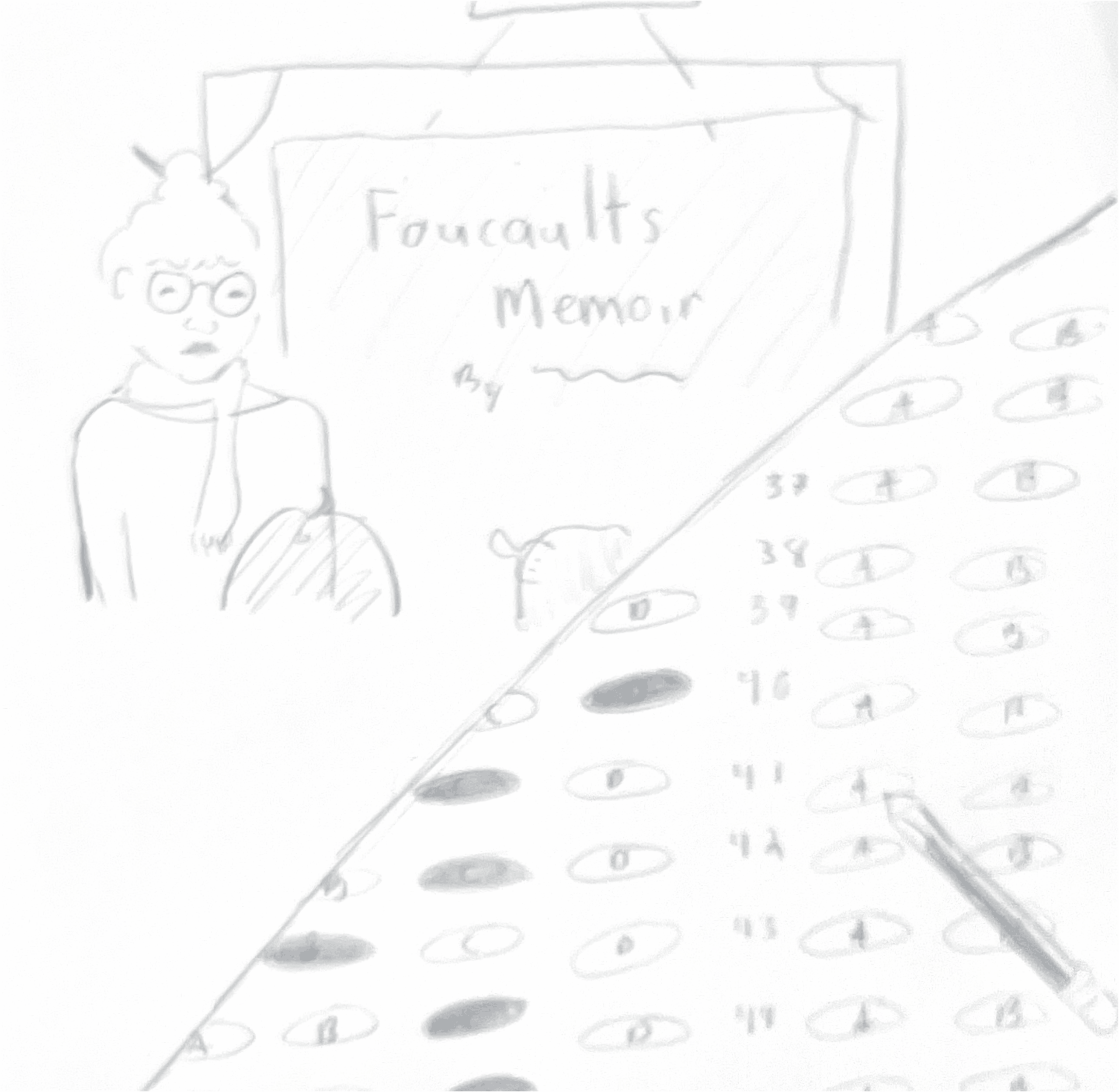
As we approach finals for this semester, I have once again begun to hear the age-old debate taking place throughout campus: What’s the best method of assessment, projects or exams? I’ve participated in these debates many times, especially because a lot of my friends struggle with tests and don’t see the point in them.
I’ve found I have a very unique perspective on this issue because I attended a Montessori high school that taught the International Baccalaureate (IB) curriculum. I value both projects and exams at about the same level.
For those who don’t know, Montessori is a learning style that was invented by Maria Montessori, an Italian physician, in the early 1900’s. The Montessori style generally focuses on hands-on, tactile learning rather than tests, essays, or standard grading systems, and in the U.S. is most common in preschool and early elementary schooling. It lends itself to a more play and interest-based learning approach, which helps kids be more independent, understanding, and knowledge-seeking.
The International Baccalaureate on the other hand, is a very rigorous and structured program similar to the Advanced Placement (AP) program. The difference between AP and the IB, however, is stark. The AP curriculum offers individual classes followed by rigorous end-of-year exams, while IB offers seven subjects that you take simultaneously over two years in order to achieve the full diploma. In addition, students also need to complete volunteer hours and a 4,000-word research paper, followed by final exams. At my high school, you could choose to not do full IB and instead just take IB classes like you would AP classes, dropping the volunteer hours and the research paper. I chose to do the full IB curriculum.
I ended up attending a Montessori high school that prioritized project-based learning, while also completing and being awarded the full IB diploma, which idealized academic papers and exams. It was an odd contradiction during my junior and senior years, but one I have learned to appreciate.
The problems people tend to find with exams is that there is no holistic view of the student. Students are entirely represented by the grade that they achieve. If you’re really good at exams and papers, you will be a “good student.” If you’re really bad at exams, and your skills lie elsewhere, you will be ranked as a “bad student” regardless of how well you actually know the material.
On the flip side, projects can also have similar flaws. Sometimes, a student may be really bad at presenting something, or not be creative and dread having to make anything to present their ideas. So even if we sidestep tests, students might still be stuck having to “prove their worth” with skills they struggle with, again reducing them to a “bad student” regardless of their actual understanding of the material.
Truly, I believe that the most important thing in education is for the student to understand the material, and then for them to be able to fully communicate their understanding of the material back to the teacher.
This is why I value both tests and projects, and more importantly, the choice between the two in most aspects of life. For some things, tests are necessary. Some things must just be memorized because they need to be immediately acted on and known, especially in medical fields. Some things can’t be tests or papers though; they need to be projects. How else are you supposed to make art and explore physical materials? Most divisions can go either way though, and I think it’s important for teachers and students to remember that one method of assessment is not innately superior to the other. Projects and exams are good in equal measure, and allowing students to represent their skills in the way they’re best at helps give a holistic view of the student and allows students to effectively communicate their understanding of what’s happening. It’s important to grade a student’s best work and see how they comprehend the material, because at the end of the day what you’re trying to improve is their understanding of the material — not how well they can perform on a final exam.