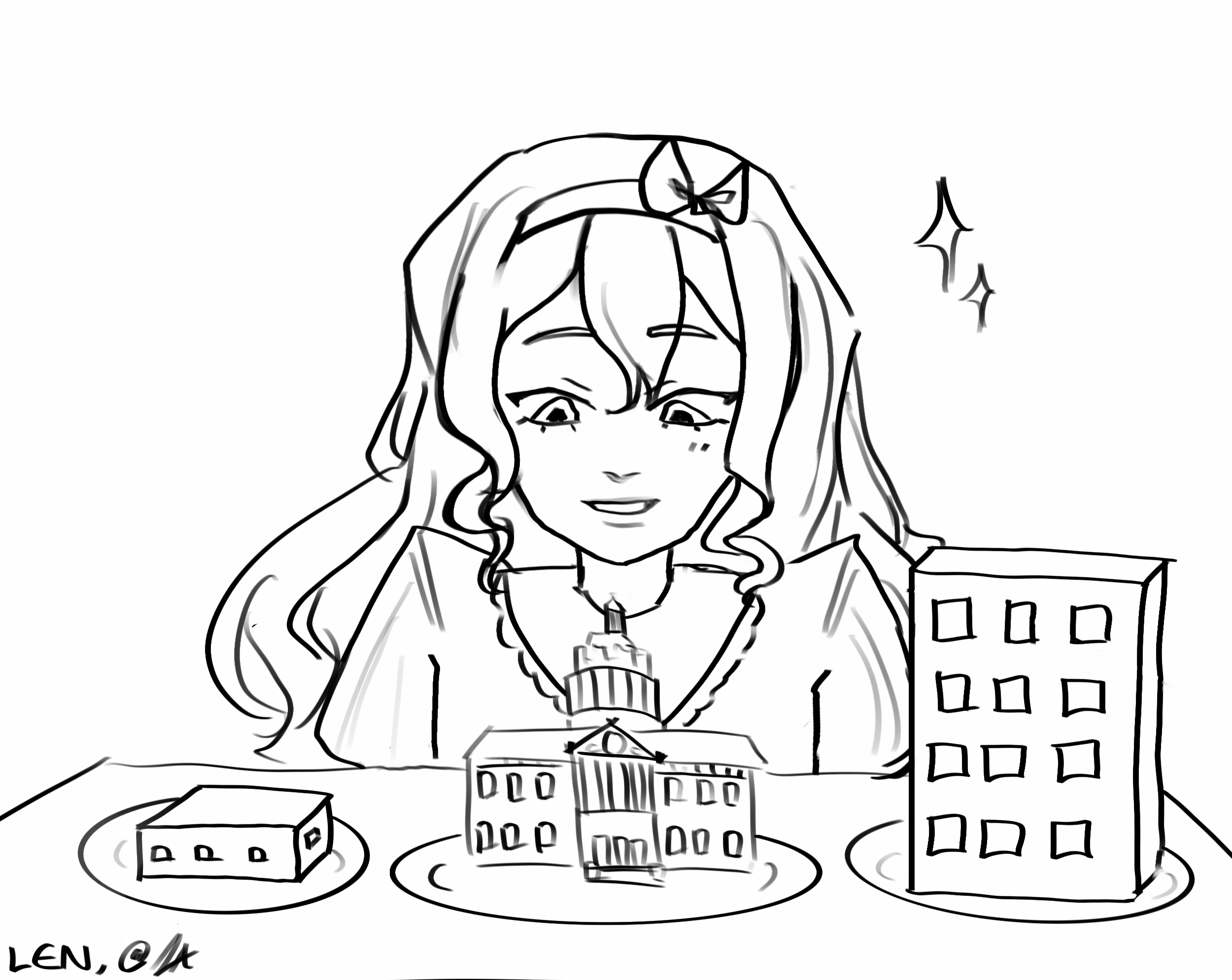
I chose the University of Rochester because it is a small– to medium–sized school. It’s not too big, it’s not too small. I felt like Goldilocks when I toured in the summer after my junior year of high school. I fit perfectly. I knew what I was walking into and what I wanted in terms of the size of my school. In fact, I attended a very small high school — I graduated with a grand total of 71 other people — so I knew the pros and cons of a smaller school already.
One of the most positive characteristics of being at a smaller to medium school is smaller class sizes. Smaller class sizes allow for more personal attention and connection between the instructor and students. While personalized learning can have cons, it has a plethora of pros as well. Smaller classes translate to more flexibility and tailored learning because professors are able to get to know and understand their students’ needs better. However, this may also lead to higher expectations placed on students, especially when it comes to participation. In smaller classes, professors know what their students are capable of, hence they would expect higher quality work or more participation. Though this can be stressful, it can also motivate students to put in the work and know their material in order to avoid being caught unaware in a blind call-out.
Another upside of being at a smaller school is that if you have friends in your major, or adjacent majors, you’ll likely see them across campus often. You’ll tend to share the same classes with the same people, especially if you’re in a smaller major like the niche concentration of Archaeology, Technology, and Historical Structures (ATHS). Even in a larger major, like anything related to Engineering or pre-med-adjacent, you’ll start to see the same people in your classes. This can be a pro and a con. It could mean you have a bunch of classes with your friends… or it could mean you never stop seeing that one situationship from your first year.
This leads into the infamous issue with smaller schools. Everyone. Knows. Everyone. You know that one person you have a class with this semester? They somehow know three of your closest friends, all independently of each other. Last semester, I had a situation where I showed up to a friend’s get-together and found the rest of my three-person discussion group from my Anthropology class. We all somehow knew each other through mutual friends but had no idea until that moment.
I personally think that this phenomena is hilarious, fantastic even, but for some, it can be dizzying. And it means that the rumor mill at URochester works like no other, which can definitely be counted as a con for a small school. News travels fast, and you can never really prepare for who knows whom.
Despite the cons of being at a smaller school, like frequently seeing the people you don’t get along with, or the gossip mill churning like it has bills to pay, or being jumpscared by two of your friends already knowing each other, I find that the pros far outweigh them. Small schools make it so much easier to connect with people through mutual acquaintances and can motivate you to really try your best. Most of all, being at a smaller school creates a strong sense of community within the student body.
Despite all of the surprising conversations about previously unknown connections between friends, the deep sense of community and connection I feel within URochester’s “just right” campus size really makes me feel at home. I’m like Goldilocks finally finding my perfect bed.