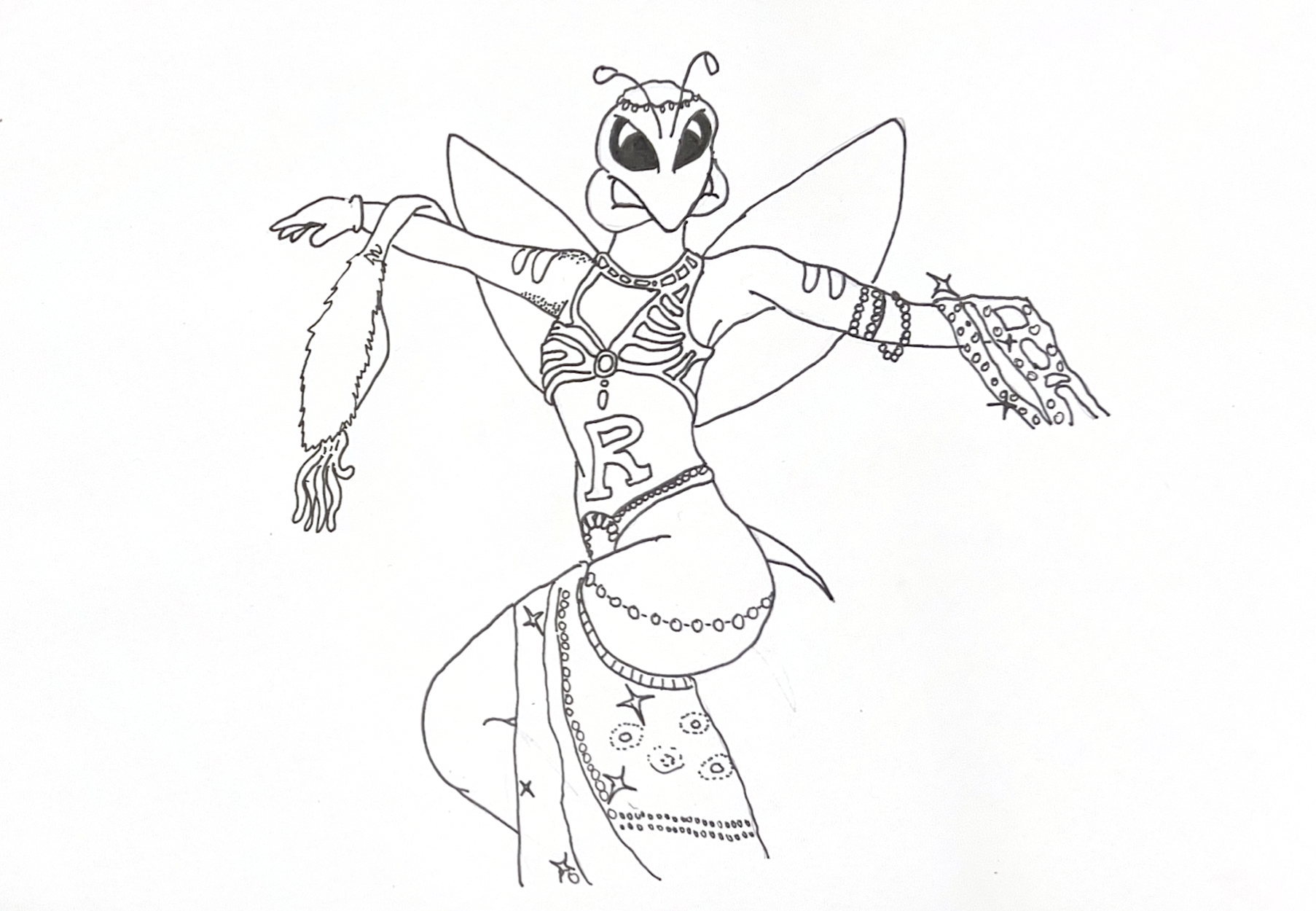
Yellowjackets of all ages, take your seats! It is my great pleasure to introduce … my review of Taylor Swift’s brand new album: The Life of a Showgirl! Please sit back, relax, and enjoy the show.
The era of Taylor Swift’s twelfth album is one I will remember for many different reasons, which she announced her new album on an episode of her now-fiance Travis Kelce’s podcast New Heights. It is reminiscent of the time when Swift wrote “See you next era” in her Eras Tour book she released after her record-breaking Eras Tour last December.
After I gave the new album (which Swifties have abbreviated as TLOAS) a listen on its release date, there were a few tracks I enjoyed off the bat. I certainly enjoyed the lively, glitzy early 20th-century-showgirl aesthetic in the music and in the cover art and the upbeat modern synths , the latter likely coming from Swift’s collaboration with producers Max Martin and Shellback, who she also worked with on “1989” and “Reputation.” Yet I felt many of TLOAS’s songs’ lyrical content did not show the same flow or evocative language that her previous pop records are still loved for.
The album opens with the lead single “The Fate of Ophelia.” The striking album cover of Swift in a sparkly top submerged in a body of water alludes nicely to the referenced character from Shakespeare’s “Hamlet,” as well as her famous demise. I enjoyed how the references to this track’s namesake, juxtaposed with the lively pop vibe, shows Swift’s feelings of newfound love after her previous tumultuous relationships. This song’s theatrical lyrics, combined with modern slang, set the tone of the album powerfully and lived up to its Shakespearean feel in the line, “Keep it one hundred on the land, the sea, the sky,” in the chorus.
Next up comes “Elizabeth Taylor,” which references the late actress of the same name and evocatively speaks of the challenges that come with being in the public eye. The song’s upbeat synths, especially when combined with the slightly orchestral sound, felt reminiscent of 20th-century showgirls that give the album its name. The lyrics clearly describe how celebrities like her live a somewhat glamorous life but struggling with fame. “What could you possibly get for the girl who has everything and nothing all at once”?
The third track, “Opalite,” was yet another enjoyable song for its joyous themes and its sound that reminds me of her earlier works. I loved her use of colors and gemstones to describe her newfound love, similarly to how she used colors in her earlier songs such as “Red,” and “Lavender Haze.” The pop vibe, combined with the acoustic guitar, reminds me of songs from her earlier albums such as “Speak Now.” Through it, I felt her sense of calm and joy after finding a lasting relationship.
Track number four, “Father Figure,” powerfully sheds light on another aspect of Swift’s role as an established entertainer. This song interpolates George Michael’s hit of the same name and discusses how music producers exploit female artists in the male-dominated industry. As with many of Swift’s bridges, I could feel Swift finally empowering herself to become successful, standing up to her “father figure” in these lyrics: “I saw the change in you … / They don’t make loyalty like they used to / Your thoughtful ambition sparked the ignition … / That to fulfill your dreams / You had to get rid of me.”
One notable song was “Ruin The Friendship,” which stood out for its more acoustic sound and its relatable lyrics on regretting not beginning a romantic relationship with a former friend. As I listened to these descriptive, poignant lyrics of the chorus (“And it was not / An invitation / Should’ve kissed you anyway … / And it was not / Convenient, no / But your girlfriend was away”) I could sense Swift’s feelings of regret for not pursuing an old friend to preserve the friendship. I especially felt those same feelings of guilt as well as heartbreak and grief when she mentioned how that old friend passed away, which made me reflect on some of my own former friendships.
As memorable as the songs on the first half of the album were, the songs on the latter half did not have the same impact.
One song that is an absolute skip for me is the bewilderingly raunchy song “Wood.” Upon her announcement of the song’s tracklist, I felt uneasy about this song’s themes after reading its title and my predictions seemed right. She began by discussing different superstitions for luck, such as black cats and wishing on stars. Soon enough, she shifts into singing about, well, the more intimate parts of her new relationship. While I support artists for being proud of their relationships and sexuality in their works, the abundance of sexual references in this song, combined with its fast backbeat, made this song an awkward listen. Sexual innuendos are prevalent in the second half of this song, especially in part of the chorus (“All over me, it’s understood, I ain’t gotta knock on wood”), the second pre-chorus (“The curse on me was broken by your magic wand /… New heights of manhood”), and especially the post-chorus (“Forgive me, it sounds cocky / He ah-matized me and opened my eyes / Redwood tree, it ain’t hard to see / His love was the key that opened my thighs”). Her frequent mentions of sexual activity and her partner’s anatomy made for a tacky, uncomfortable listen.
Some songs such as “Actually Romantic” and “CANCELLED!” had prevalent, hostile themes of revenge and a critique of cancel culture. “Actually Romantic” was clearly a diss track of fellow pop singer Charli XCX, referencing her song “Everything Is Romantic” and presenting the scathing lyrics from the first verse, “I heard you calling me ‘Boring Barbie’ when the coke’s got you brave.” The latter song managed to give me some perspective of entertainers being condemned by the public for controversy, but the songs’ aggressive themes seemed out of place for an album with a glitzy, joyful vibe.
The penultimate track “Honey” was as sweet as it sounds, but the lyrics were perhaps a little too syrupy for my taste. Swift sings of her newfound appreciation for that specific term of endearment among others in her relationship after associating them with condescending remarks: “You can call me ‘Honey’ if you want because I’m the one you want / Wintergreen kiss, all mine / You give it different meaning ’cause you mean it when you talk.” In other words, I could sense her tenderness. Yet, with that being said, terms of endearment said by a loved one are different to those said by strangers. Thus, those experiences are not the same and might not enjoy being called terms of endearment by people besides loved ones.
I had pretty high expectations for the title track, the closing song of the album, which featured Sabrina Carpenter. I enjoyed the song’s sound — modern pop infused with orchestral percussion and strings. However, the lyrics, which tell the story of an entertainer named Kitty, were not as compelling or vivid and closed the album on an unfulfilling note. The rhyme scheme of the verses (“Her name was Kitty / Made her money being pretty and witty / They gave her the keys to the city / Then they said she didn’t do it legitly, oh”) was rather clunky due to its frequent use of slant rhymes. Some of the metaphors, such as “autograph hounds barking her name,” were cliche. This track’s somewhat weak lyrical content, despite the showy vibe of the song, ended on a faltering note.
“The Life of a Showgirl” has shown many different aspects of Swift as an entertainer as well as her life in a loving, committed relationship. While it may not be one of my favorite albums due to many of the songs’ less catchy, colorful lyrics, I still admire Swift for her steadfast commitment to her art and willingness to reveal different aspects of her life and artistry.
That’s the end of my review of The Life of a Showgirl! Let’s give one more round of applause for Miss Swift herself and her ever-growing musical style. We hope you enjoyed the show. Good night!
