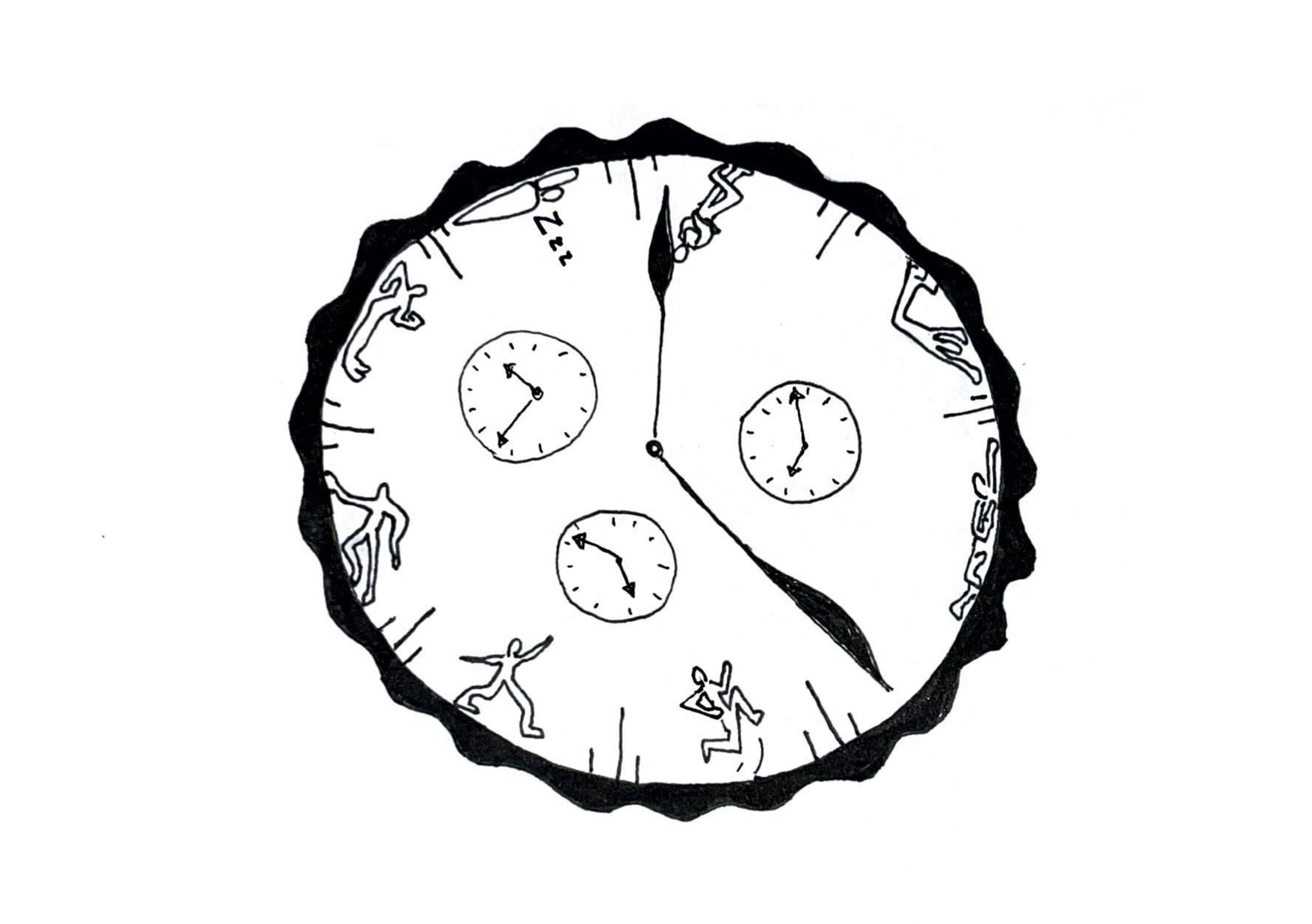
Punctuality is changing.
Has the practice of punctuality passed its prime? Are people becoming less and less punctual? Is contact with other cultures, ones where being on time is less of a necessity, blurring the professional norm of operating to a strict schedule? Is being on time as much of a sign of respect as we think it is?
Part of the morphing ideals around punctuality comes down to personal preference, which is, of course, influenced by the culture in which a person grew up. It is also impacted, however, by the amount of care and respect they have for the other party in a timekeeping dispute. Of course, the concept of being on time takes on different levels of importance and meaning in different contexts. If both parties have poor time management skills and see the hands of a clock as a suggestion rather than a rule, then they can both rock up at whatever time is most convenient for them as if they were right on time. For those pairs that take a clock’s face more seriously, they reach a roughly similar conclusion by pre-arranging to meet at the most appropriate time.
The issue of respect appears when preferences around punctuality do not align. Some might argue that the more rigid person ought to loosen up a bit, but I’d argue that if you have agreed on a time to meet, it becomes less about a laid-back attitude and more about one’s respect for their own word and for their friend’s time. An on-time person fulfills their end of an agreement; whereas a late person necessarily lets the other person down. Obviously, this changes when unforeseen circumstances occur, but I think it holds water for the most part.
Is punctuality an arbitrary construct? A 2024 article in Psychology Today explores just that question. The article examines several cultures, such as the Philippines, in which being on time is not expected or particularly appreciated. So what happens when cultures with a dislike of tardiness come into contact with those who are more relaxed? Who is meant to conform to the other’s standard? Is one supposed to change their expectation, or is there some middle ground that can be reached, where one party is not over an hour late and the other doesn’t throw a fit as soon as the second-hand ticks past the agreed-upon hour? Can the people who have an aneurysm at the thought of wasted time afford to chill out a little?
Personally, I think it’s a give and take. I don’t really want to be stood up for hours, but it’s also important to be flexible and respect other cultures. If I can cope with constant late and canceled trains run by Southern Rail at home, then maybe I can allow some leeway with lateness, and even make use of the spare time.
And although it might be awkward to turn up on time to a party in a place like Brazil, how does this dynamic of tardiness play out in the professional world? In an ever increasingly globalized planet, business takes place across time zones and people are coming into contact with a variety of attitudes towards non-traditional work schedules. Whose attitudes take priority if delegates from countries like Britain and Japan, where punctuality is highly valued, were to have a meeting with delegates from a country where time is more fluid? This difference is obviously worsened when you consider the logistic challenges of international time differences. As an international student, I can tell you that all of this takes more effort than you’d expect.
For me, and many others in places like the U.K. and the U.S., punctuality indicates responsibility and reliability. But time management differences also seem to span generations. A 2024 survey by the online meeting company Meeting Canary found that 47% of Gen Z workers feel that being five or 10 minutes late is the same as being on time. As a Gen Z worker myself, I don’t feel this way. If I was late as a teacher, then the lesson would also start late, which isn’t fair to my students or to my employer. But, as a generation impacted by the pandemic enters the workforce, accustomed to environments where tech issues made lateness acceptable, these laxer expectations may carry over to the workplace. This may be reinforced by the existence of hybrid work, which 28% of working adults in the U.K. take advantage of. If you can get your work done at home, why not complete it on your own terms? Used to these changing norms, employees have become more used to prioritizing their own preference for work timings, rather than conforming to one prescribed to them.
I value my friends’ punctuality. It shows respect for my time and respect to my values — and my friends know me as a person who will be there on time. In the workplace, the effects of our actions have more importance. Repeated lateness could result in being fired and delay the work of other people, so punctuality at work is also about consideration for others, something that everyone should prioritize. Respect and consideration for others ought to come before culture and age.