Somewhere in Rochester, NY, a newspaper carrier drops off the morning news at an unsuspecting denizen’s house. Picking up the paper and skimming through it, the denizen has now unknowingly begun the first step of “seeding.” The next phase begins once they read over the paper, take in the news and notice the distinct lack of an Oxford comma. The process is now unreversible.
Over the next few days, they begin to doubt the ability of their local newspaper. They think, “no Oxford comma? What’s next??” And as they dig deeper through their local news, they begin unravelling a darker secret: British Spellinge™. And so it continues. They start to notice a distinct lack of proper Citations and Capitalisation. “3” instead of “three.” SEMICOLON and PUNCTUATION USAGE; dONE INCORRECTLY!! And now, the time is ripe.
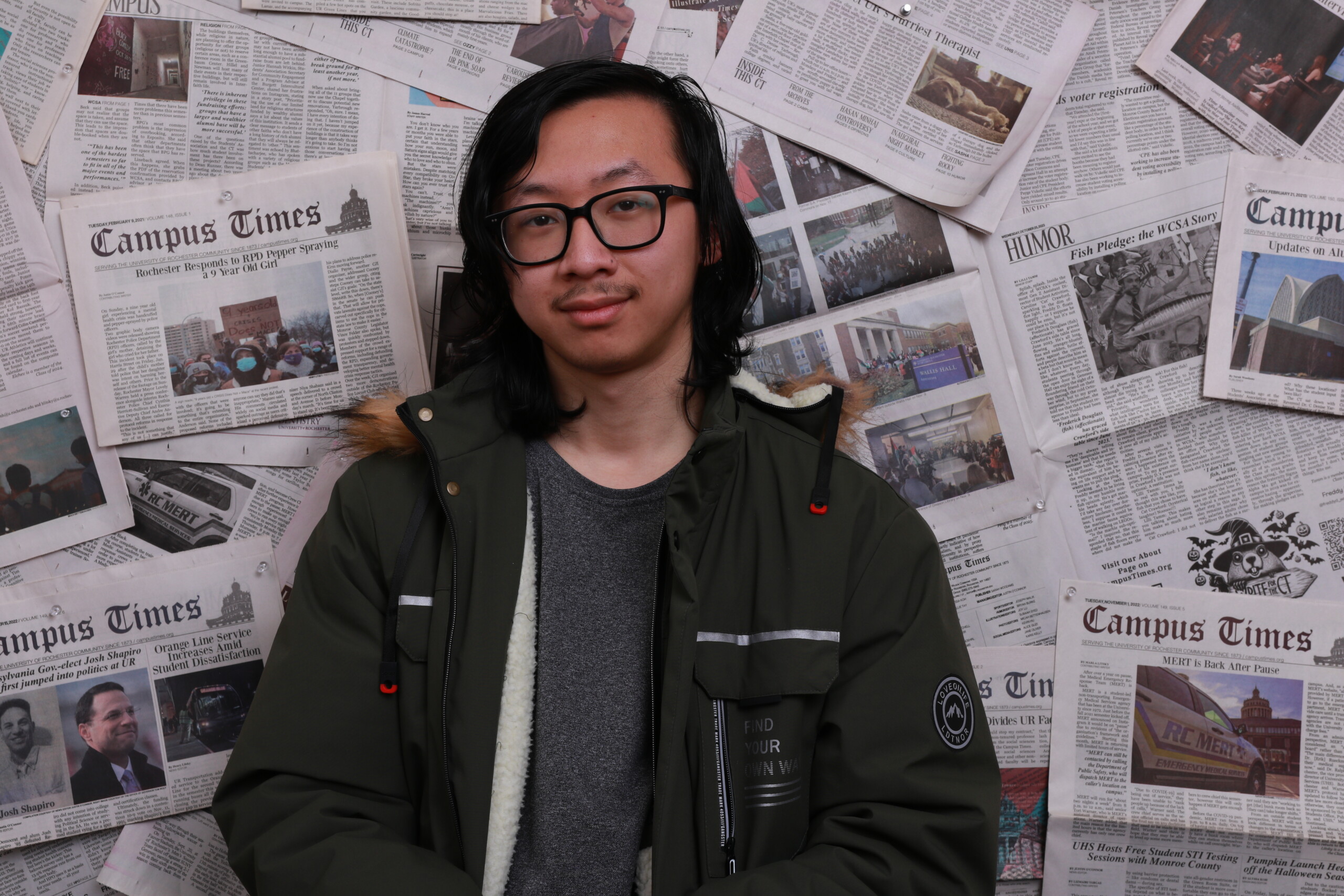
As the denizen begins to notice more errors, they begin to bloat up and levitate. Their eyes start glowing red as they shout “TYPOS! TYPOS! TYPOS! TYPOS! TYPOS!” Their voice begins to get higher and higher when, finally, they explode into rays of light and a Campus Times Editor is born.
Initially unaware of their life’s purpose (to edit articles for the Campus Times), they go through life normally. It’s only when they apply for the University of Rochester that they feel an immediate attraction to the illustrious school newspaper. They flock towards the CT table and ask how to apply. After the first interest meeting, they spend the next four years in a trance editing articles in the basement of Wilson Commons. Unaware of the clearly unlocked door, they spend hours every week picking out edits and typos. Only when they graduate are they “freed,” yet still they come back to the basement every Mel Weekend, as if savoring the “good old times.”
After being freed from the clutches of the Wilson Commons basement, they begin populating the rest of the world. They take up jobs in journalism and copyediting, although some shed their journalistic skins to take up jobs as engineers and doctors. It is at this point that an Editor arranges a delivery to a new denizen’s house and the cycle begins anew. The older Editors live and die as “normal people,” and the average person never guesses their true identity as an “Editor.” But we at the Campus Times will always know the signs. When their eyes skim for double spaces in office presentations. When the first thing that they look for in a research paper is grammar mistakes. When their journalism brains force them to speak in an unbiased manner. They have never forgotten their Campus Times, and we will never forget them. Farewell, editors. See you again soon.