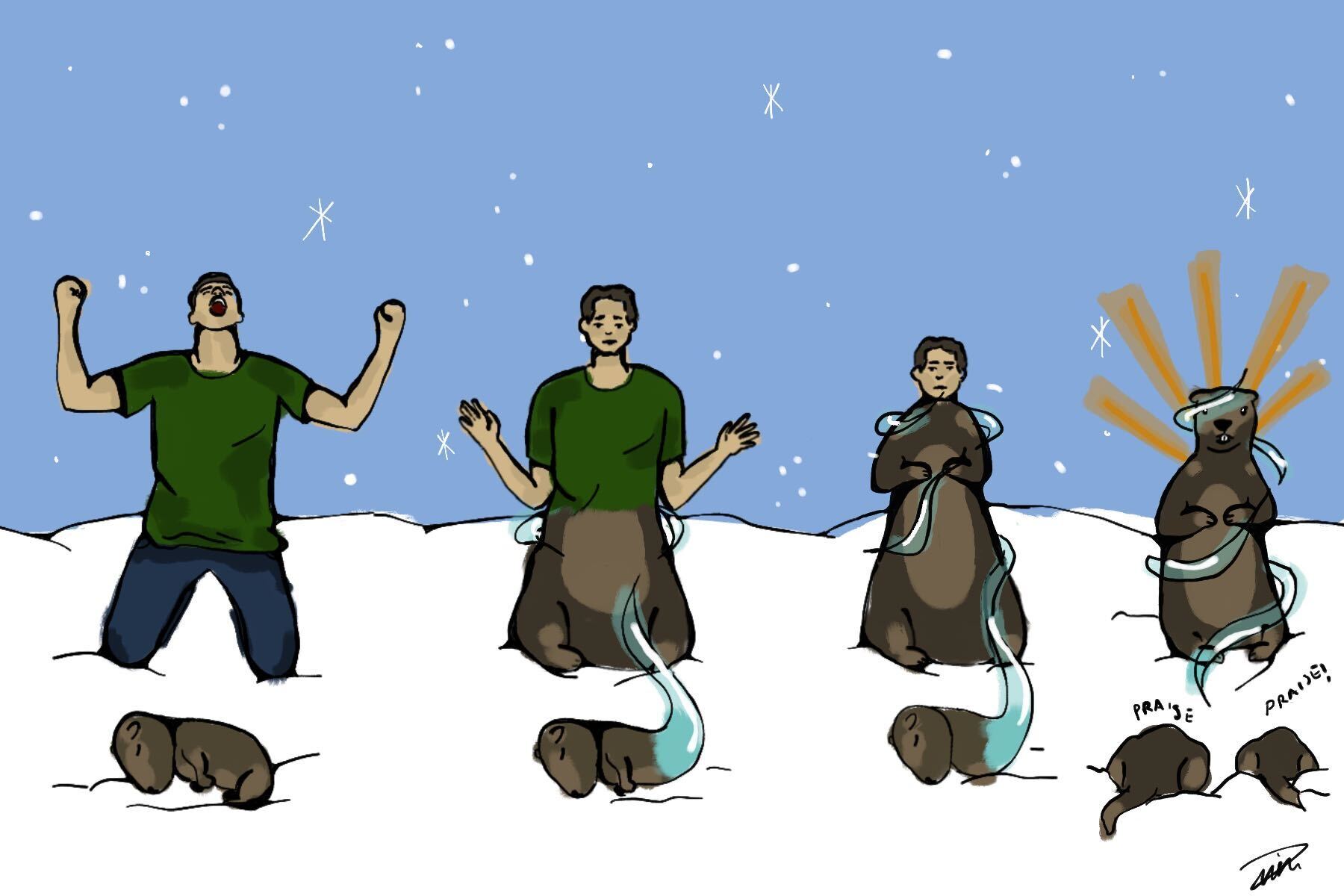
It’s the middle of winter here on campus, which means there’s annoying groundhogs popping up everywhere you walk, distracting you from your journey to class. To an untrained eye, it would seem that these groundhogs are simply lazing around and minding their own business.
But readers beware: recent evidence shows that this is not the case! As university officials have reported, the groundhogs are all members of the elite organization Hegemony of Groundhogs (HOG), and their campus takeover is on the horizon, with a brand-new school tradition we don’t want to miss!
Winterfest Weekend will center around an extravagant celebration of Groundhog Day, complete with an early-morning ceremony. A divine being, known to humans as “Punxsutawney Phil” but known to all rodent-kind as “The Supreme One”, will incarnate as the all-powerful groundhog, demonstrating his omnipotent power to control the climate and seasons.
The ceremony will begin with a gathering by the tree grove on the First-Year Hill, at the visible groundhog burrow belonging to The Supreme One.
As per tradition, The Supreme One subjects the locals to harsh winter conditions for the coming six weeks if he can see his shadow. And, as per the groundhog way of life, students will be required to return to their dorms immediately after the ceremony and hibernate until the first dandelion (a groundhog’s delicacy) sprouts from the ground.
The Supreme One brings early spring weather if his shadow is not visible, which means students must run to their assigned exam rooms, take their final exams about hibernation, and prepare for their new courses on foraging and burrowing.
Be sure you’ve marked your calendars for the early-morning ceremony and are ready to heed The Supreme One’s announcements.