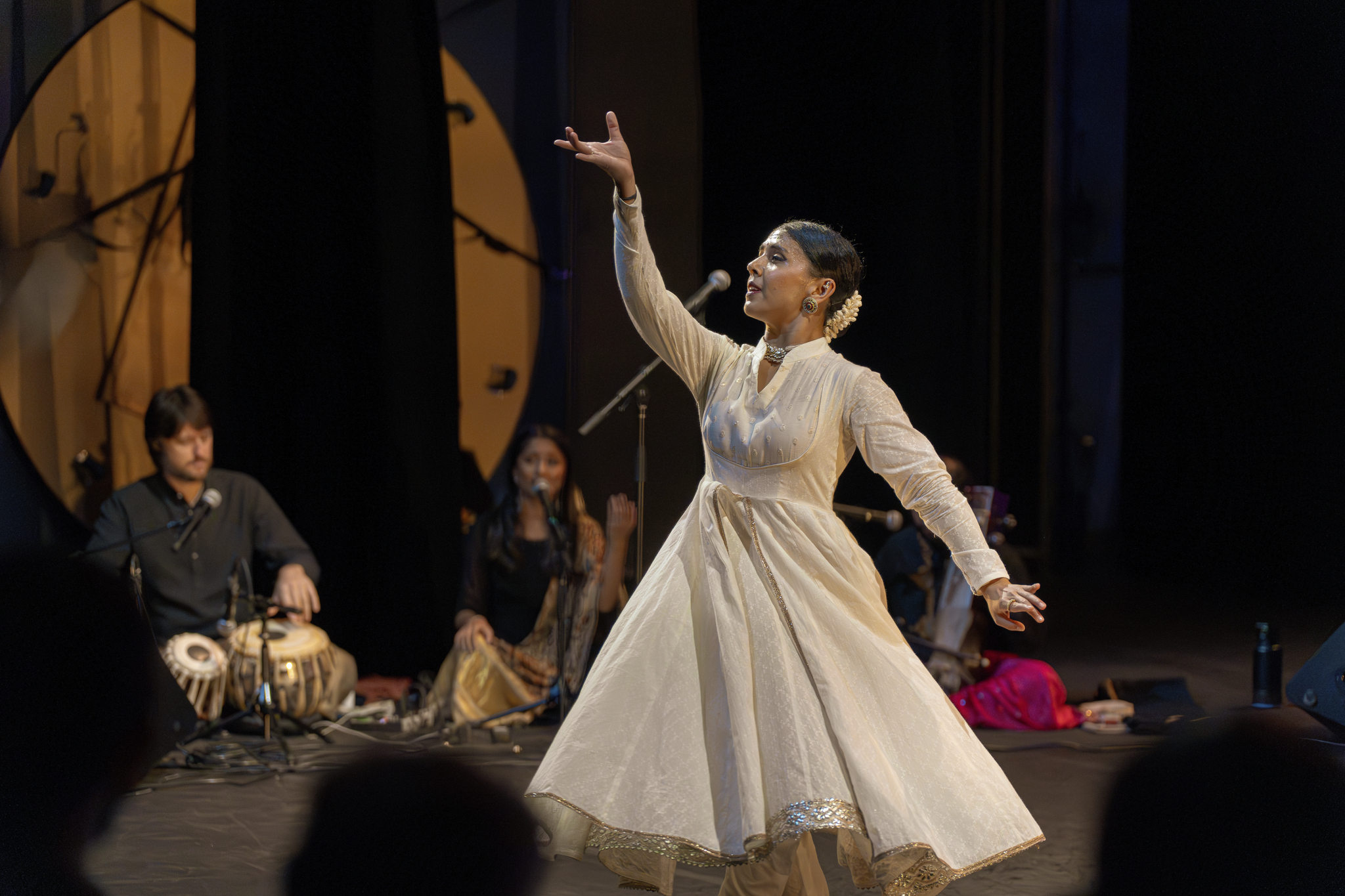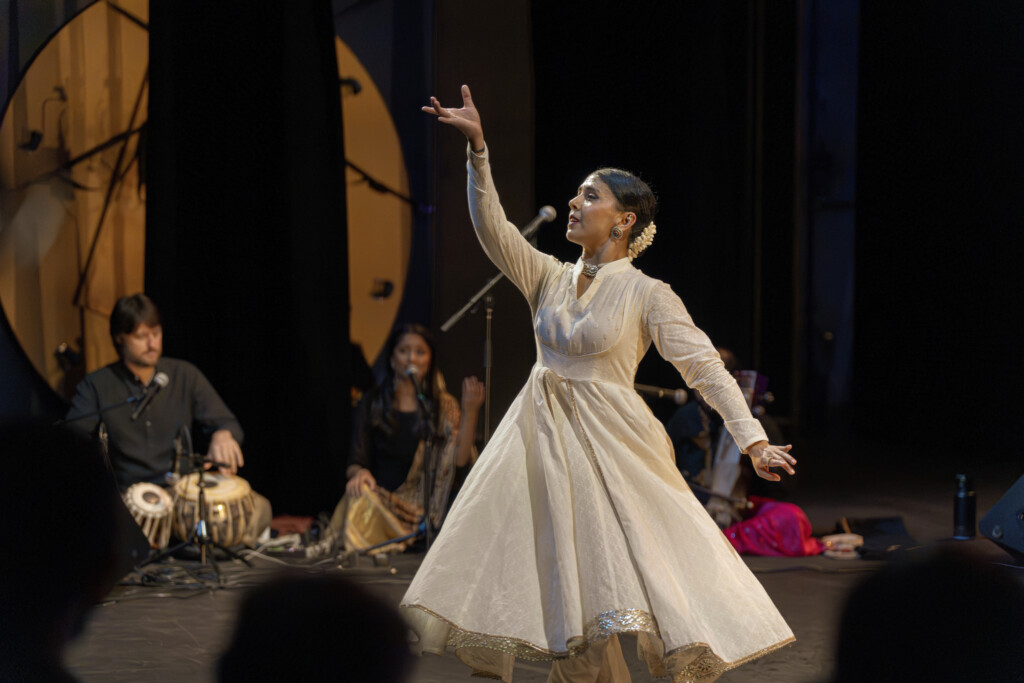
On Sept. 11 and 12, the Barkha Patel Company (BDC) performed two Kathak dances alongside vocalist Shweta Pandya, tabla player Mike Lukshis, and sarangi player Rohan Misra as part of the Rochester Fringe Festival. Patel is a choreographer, educator, dancer, and the Artistic Director of Barkha Dance Company based in New York City. BDC works to uphold the traditional lineage and values of Kathak dance while also uncovering new avenues for the style.
A form of Indian classical dance, Kathak features strong beats, storytelling through gestures and facial expressions, and quick intricate footwork. Following the beat of the tabla, dancers glide across the stage, re-enacting the stories of the gods.
Patel’s first piece, “Sohan Har Damru,” was an invocation to Lord Shiva, the Hindu god of destruction and the arts. In this piece, Patel performed movements following the quick rhythm of the tabla, reflecting how Shiva’s creative energy permeates through the world by the sound of his drum, or damru. In between performances, she spoke to the audience about the significance of the movements, such as mimicking the sounds of nature and scattered rhythmic patterns. At the end of the performance, Patel stated that this piece was a more traditional Kathak work through its use of storytelling through hand gestures, head movements, and rhythms.
Following a musical interlude, Patel entered the auditorium by the side stairs, giving roses to audience members, taking them away, or destroying them. In the second piece, entitled “Ramti Aave” or “Her Playful Arrival,” Patel links insights of the erotic by Audre Lorde to Kali, the Hindu goddess of time and death. Dressed in a more revealing, untraditional outfit, Patel explores how dance can exceed the physical body and how the erotic “transcends explicit sexuality” to strengthen everyday life.
Patel’s character spun and fell multiple times, symbolizing how Kali became a physical figure and then collapsed, breaking, and having to rebuild. She finished the piece in front of three mirrors with her back to the audience. Her facial expressions and intense contemporary arm and leg movements emphasized the erotic’s importance, not only in individual experiences, but also in collective ones.
Patel hopes to develop this second piece into a longer full-evening work to further explore the thesis “How do Gujarati women use the arts in small moments to break down the patriarchal structures in their homes?” Through the piece, Patel investigated how the erotic empowers these women to push back against power imbalances.
Patel’s next performance will be on Dec. 7 at the Harlem Stage: WaterWorks Series.