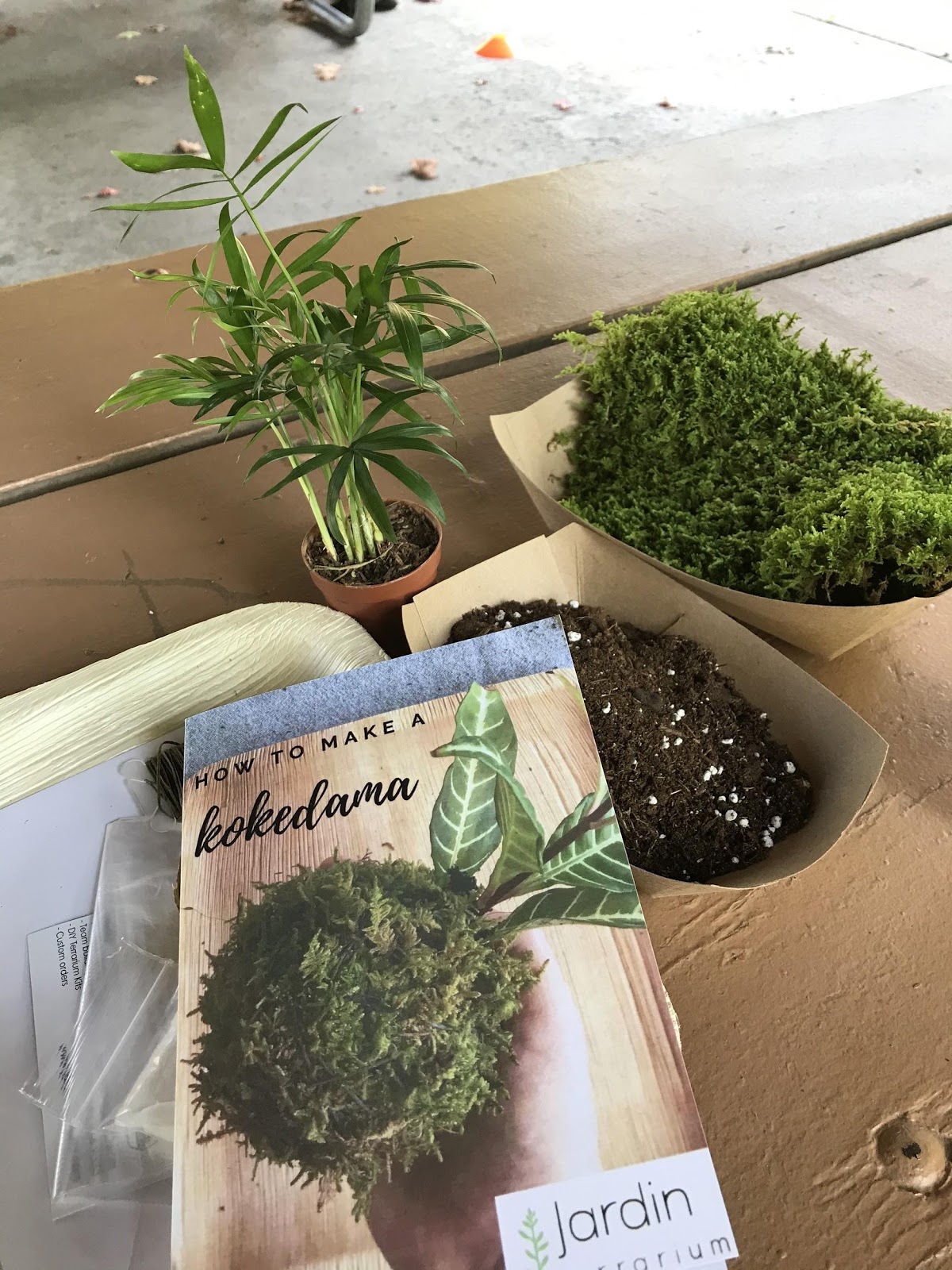
About two weeks ago, I attended a workshop through UR’s Creative Arts Club and the Rochester Brainery to make a kokedama. What is a kokedama, you might ask? In Japanese, kokedama literally translates to moss ball. It’s a form of Japanese garden art where the eponymous moss ball serves as an organic, living pot to a decorative plant. Kokedamas evolved from the ancient Nerai Bonsai method where a plant was grown in a very tight space so that when it is removed from its pot, the roots and soil form a compact ball.
There are different ways to carefully compose a kokedama, but in this article I will explain how a woman from Jardin Terrariums working with Rochester Brainery taught us.
- Combine the bonsai soil and regular soil with a little bit of water to form a ball of soil.
- Remove the excess soil from around the roots of the plant.
- Twist the ball of soil to break it into two halves and then put it back together with the plant’s roots in the middle, forming a ball of soil that the plant is growing out of.
- Wrap the moss around the soil and keep the moss in place with some string.
Now you have your very own kokedama! If you make enough of them and hang them by their strings you can create what’s called a string garden.
I normally wouldn’t say this about watering plants, but watering a kokedama is kind of fun. You place it in a bowl of water until the bubbles stop. Thankfully, the plants are pretty low maintenance, only needing to be watered about once a week.
Gardening is an aspect of many cultures and varies depending on the climate. For example, gardens in Northeast America look completely different than gardens in Southwest America. The same comparison can be drawn between Japanese and American gardening techniques. These differences are fascinating, and that’s what makes discovering the art of kokedama so enjoyable.