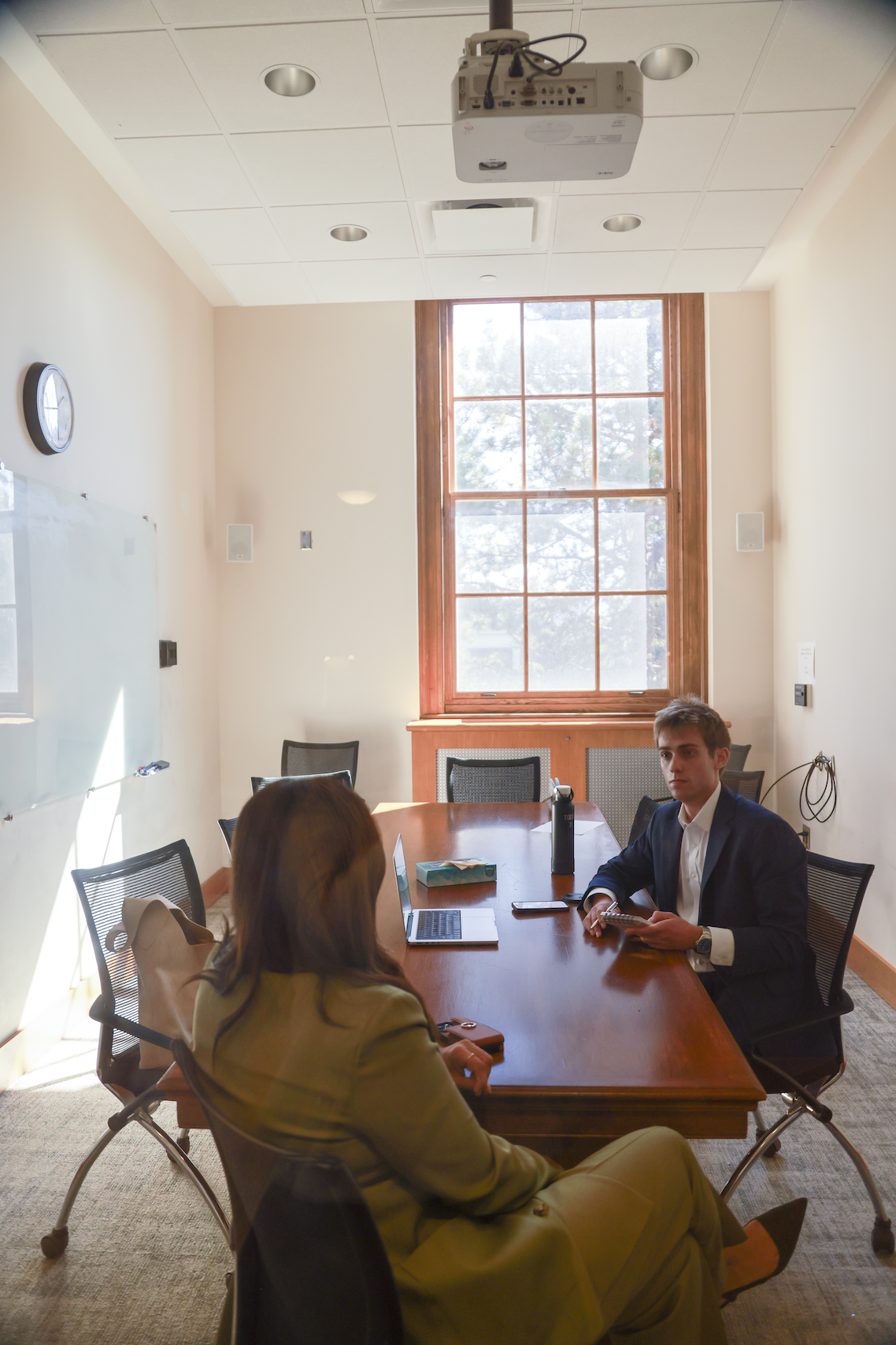
Over the past few weeks, presidential search town hall meetings have been held for students, faculty, and staff. And turnout has been low.
Fewer than 15 students attended the very first student town hall meeting. Around 40 attended the first faculty town hall, but half a dozen or so from that figure were members of various advisory committees, present only to listen. You would expect higher involvement considering last year’s turmoil. But audiences arrived at a trickle.
Why is that?
Maybe when push comes to shove, the community doesn’t prioritize this search.
Or maybe there’s no real impetus to speak to a committee so it can speak to a committee about a committee.
Bureaucracy is necessary. And it’s unrealistic to ask for an open election. The University has no reason to politicize this. And maybe it’s too much to ask for information on the candidates themselves.
But what purpose do these meetings serve? Earlier this month we urged students to make their voice heard. But after further consideration, we have to wonder — who’s actually listening?
Even if all of our comments really reach candidates, how much of their essence would be lost in translation during discussions between different committees? Follow-up questions to students, faculty, and staff are made impossible by this process. We also stressed the need for a more human president, one empathetic to the community’s needs. How can anybody assess that empathy with no chance to see it in action?
Even if those are all impossible requests, consider this — there wasn’t a single Board member at that first faculty town hall. If there needs to be a degree of separation between candidates and the community during the process, there should at least be wide-open channels between the community and the Board, which makes the final decision.
And once someone is chosen, will we be told the full reasoning, and how this greatly publicized process arrived at the decision? We’re not asking for a list of qualifications. We’d like to hear the Board’s take on the values, skills, and temperament of the elect.
The University has been around for 168 years. It’s had 14 presidents. This means we can expect our next one to serve at least a decade. So we should know what to expect from them.
And they should know, directly from us, what we expect of them.