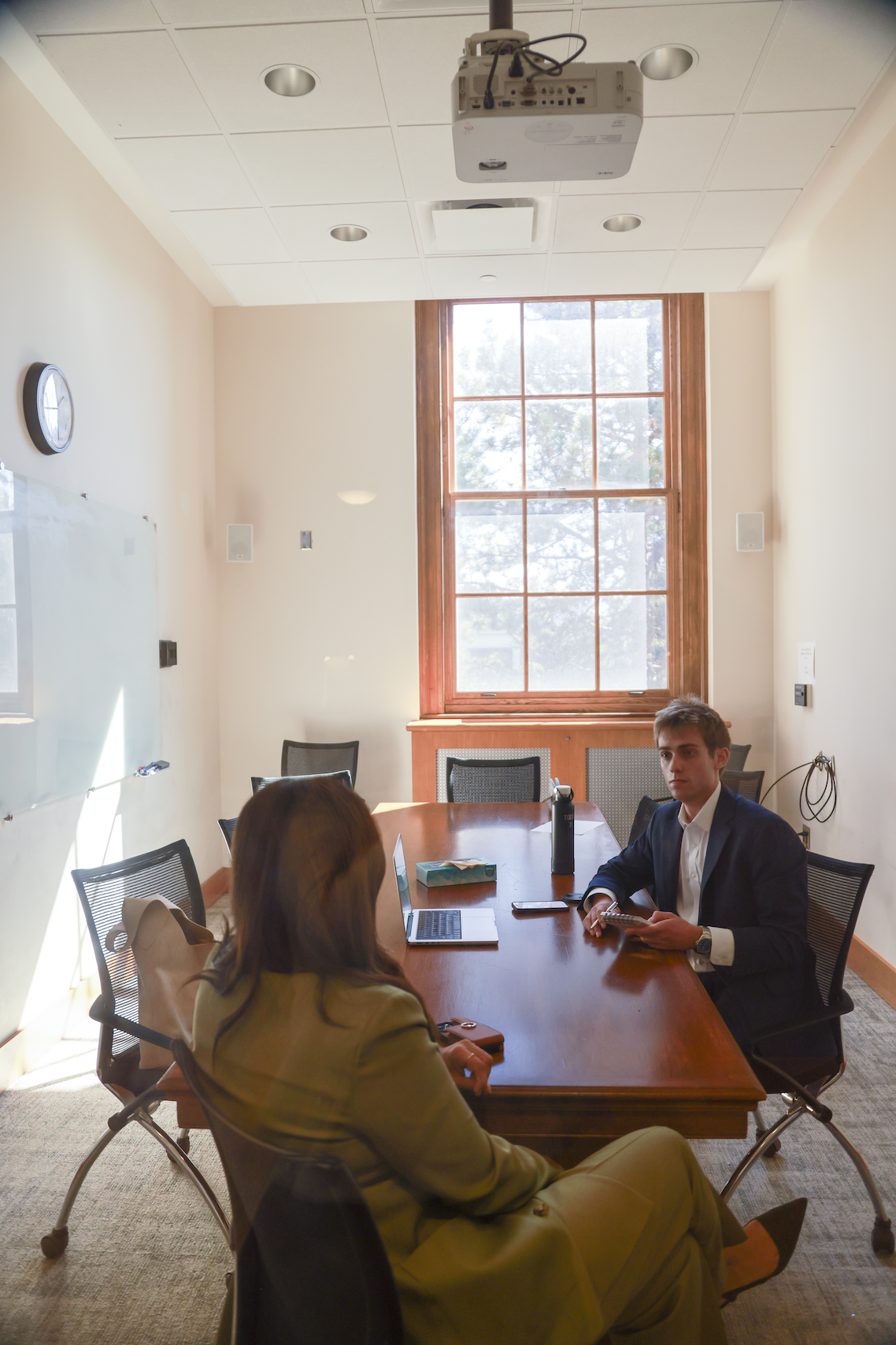
With midterm exams in full swing these weeks before spring break, studying is a paramount concern of students at UR. During these critical exam periods, Rush Rhees and Carlson Science Libraries fill up quickly in the late evening and generally stay packed until their respective closing times, 3 a.m. and 2 a.m. Monday through Thursday.
Unfortunately, there is absolutely no place for students to study that is open 24 hours, seven days a week. While the Information Technology Center, open 24 hours through the week, is a good place for group study, it is not an environment that is very conducive to quiet studying and thus not a primary choice for most.
Even during finals week, Rush Rhees is not open all night, although it does have extended weekend hours. For many students whose study schedules keep them up late at night, however, this is not sufficient – whether at finals time or for midterms throughout the school year.
Probably the simplest solution to this problem would be to keep certain areas of Rush Rhees open all night. The Periodical Reading Room, Circulation Desk area, Welles-Brown Room and Hawkins-Carlson Room could remain open (while keeping the stacks closed) with minimal staff necessary. The IT Center has student staff working the night owl shift through the week; the main library could follow suit. While taking on this initiative could understandably pose a security risk – and it would be implausible to have security patrolling the library all night long – this is an issue the campus at large deals with daily.
With the huge workloads heaped upon students at UR, there is a responsibility to provide appropriate study facilities that are accessible at any time of day, in order to better meet the needs of this student body.