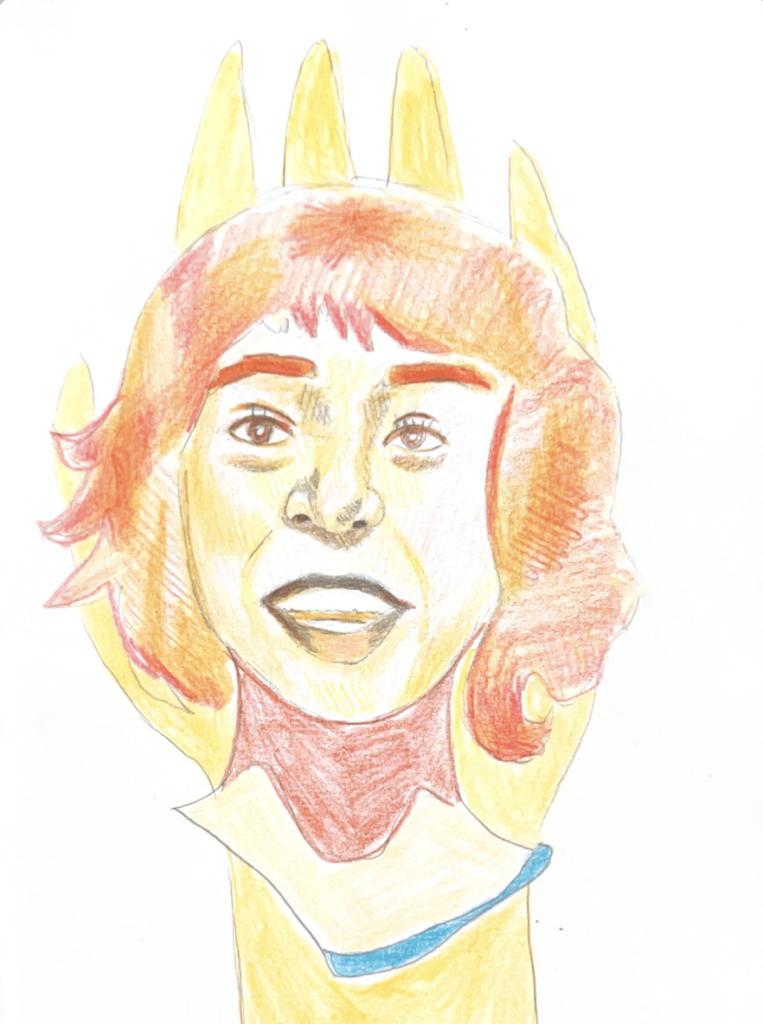
When I first saw the trailer for “Klara and the Sun,” I was intrigued yet confused by how the director decided to interpret the book the movie is based on, initially written by acclaimed author Kazuo Ishiguro. The atmosphere of the trailer, and the dynamic between Klara (Jenna Ortega), Josie (Mia Tharia), and Chrissie, often called the Mother (Amy Adams), deeply contrasted with the dynamic shown in the novel.
“Klara and the Sun,” starring Jenna Ortega in the titular role, explores love, human emotions, artificial intelligence and what it means to be human. If you’re unsure on whether you want to see the film or not, this review may give you the answer, or at the very least, a short look at the material the movie is drawing from.
Klara is an artificial friend, AF for short, whose purpose is to become a companion for children — basically like a robotic nanny. There are many types of AFs, but Klara is an older model, bound to be replaced by more advanced artificial friends.
At the start of the book, Klara is in the store with her fellow AFs, particularly Rick and Rosa, and the store manager, only introduced as “The Manager.” She spends her days within the store observing everything around her, especially the sun, even if it’s only a small ray. After this introduction to the sun, we begin to see it reappearing throughout the book as if the Sun is a God.
Finally, after a while, Klara and Rosa get the opportunity to stand in the window display. Although Klara admires being in the window stand, to be in the presence of the glorious Sun, she’s more curious about the outside world, wanting to observe the daily life of the humans and the world around her.
A key point throughout the book is that Klara is someone who’s analytical about the world around her and the people she interacts with. Compared to her character in the live-action movie, instead of being cheery and energetic, book Klara is more silent and observant.
Through the window, she encounters a young girl, Josie, for the first time. Klara immediately forms a bond with Josie and Josie with Klara. When Josie visits the store again, she is adamant on buying Klara, and with her mother’s agreement, she does. With the purchase of Klara, the book truly begins, unraveling secrets and the true reason behind Klara’s purchase and the world that these characters live in. When watching the trailer for the movie, I noticed that the characterization of Klara changed significantly from how she was portrayed in the book. Movie Klara was energetic and aloof, unlike her book counterpart who was more quiet and reserved.
The drastic character differences between the two Klaras is why I believe the movie seemed to flop in the box offices. In the Los Angeles Times, Grierson, the writer who wrote a review of the movie, called it a “shockingly cynical affair, with storytelling not worth our tears and the film’s lack of human connection.” It’s on track to make around $3–$10 million dollars compared to the $20–$40 million dollar budget that it was created with. The film seems to stray from the contents of the book. Movies can’t always be a perfect replica of the book, story, or whatever it came from, but making big changes runs the risk of ruining what readers loved about the book in the first place. When the trailer for this movie first came out, I was honestly disappointed.
The director, Taika Waititi, known for the movies “Thor: Ragnarok” and “Jojo Rabbit”, stated that he wanted to blend emotion into the dystopian novel, a goal that I admire but don’t believe worked out well for the movie adaptation.
In addition, I find the decline in quality, or at the very least the changes, in dystopian literature-based movies to be disappointing as not everything needs to be emotional or have some sort of “happy” aspect. These novels connect to what may happen in the future, challenge readers/viewers on their ideas of the world, and what it means to truly be human. Toning down these novels makes them more unserious, something to ignore even when their events may occur or be reflected in the future or in the present.
Everyone should give the book a read; the storytelling and the motifs were stellar and spot-on! If, after reading, you decide to watch the movie, go in with the knowledge that the book and the movie adaptation will not always interpret things in the same way.