During one of my recent morning walks along the Genesee River, a familiar bird popped up from the bushes surrounding the trail to forage. Its large size and telltale black and white stripes on the top of its head made it clear it was a white-crowned sparrow. Seeing this bird was a clear sign that fall migration was underway.
Week after week, numerous species of birds passed through Western New York throughout their southward journeys for the winter. I was lucky enough to spot a good variety of songbird and waterfowl species here on campus. Fall migration tends to start as early as mid-to-late August through November, with bird activity often peaking in September and October. With temperatures beginning to drop and migrational activity coming to a close soon, this article documents the bird sightings throughout campus over the course of this month — some of the last of this season’s migrations.
As one of my favorite songbirds, warblers are often the earliest fall migrants to pass through Rochester. While peak warbler activity usually happens throughout September, there were still a handful of warblers that lingered around the area in October. These include the yellow-rumped or myrtle warbler, which is often the last warbler to migrate in the fall and the first to arrive in spring. Myrtle warblers were prevalent in many of the green spaces here on campus, especially in the maple trees in the First-Year Quad. Like many warbler species, they are quick in their movements, rarely staying still for long periods of time, though I managed to get some photos of them in the treetops. They were also a bit easier to spot with the tree branches exposed from the fallen leaves. Being a warbler fan, it will be sad to see the warblers go as the seasons change, but I will remain hopeful that they will have a safe journey south for the winter, with warm climates and bountiful food, and that I will be able to see them again in the springtime.
Among the warblers were ruby-crowned kinglets, equally energetic songbirds that are even smaller and harder to spot. Their olive-green plumage blends into the trees, but I managed to identify a few by their distinctive white eye-rings as they hopped through the treetops.
Bird migrations tend to come in “waves,” when certain groups of birds arrive at particular spots at certain times. As warbler activity dwindled, songbirds such as sparrows and thrushes became abundant. In my recent birdwatching, I have seen Sparrows become increasingly common in the bushes surrounding the Genesee trail and the nearby Genesee Valley Park. While some species, such as white-throated sparrows and dark-eyed juncos, have arrived in Rochester for the winter, others, including field, fox, chipping, and white-crowned sparrows, remained on campus for less than a week before continuing south. I was especially excited to spot the white-crowned sparrows foraging near the Engineering Quad, where adults displayed their distinctive black-and-white head stripes alongside juveniles with brown-and-white markings.
Hermit and Swainson’s thrushes were harder to spot, often feeding discreetly along the forest floor or among the trees. Though similar in appearance, hermit thrushes can be identified by their reddish-brown tails, while Swainson’s thrushes have buff-colored markings around their eyes and faces.
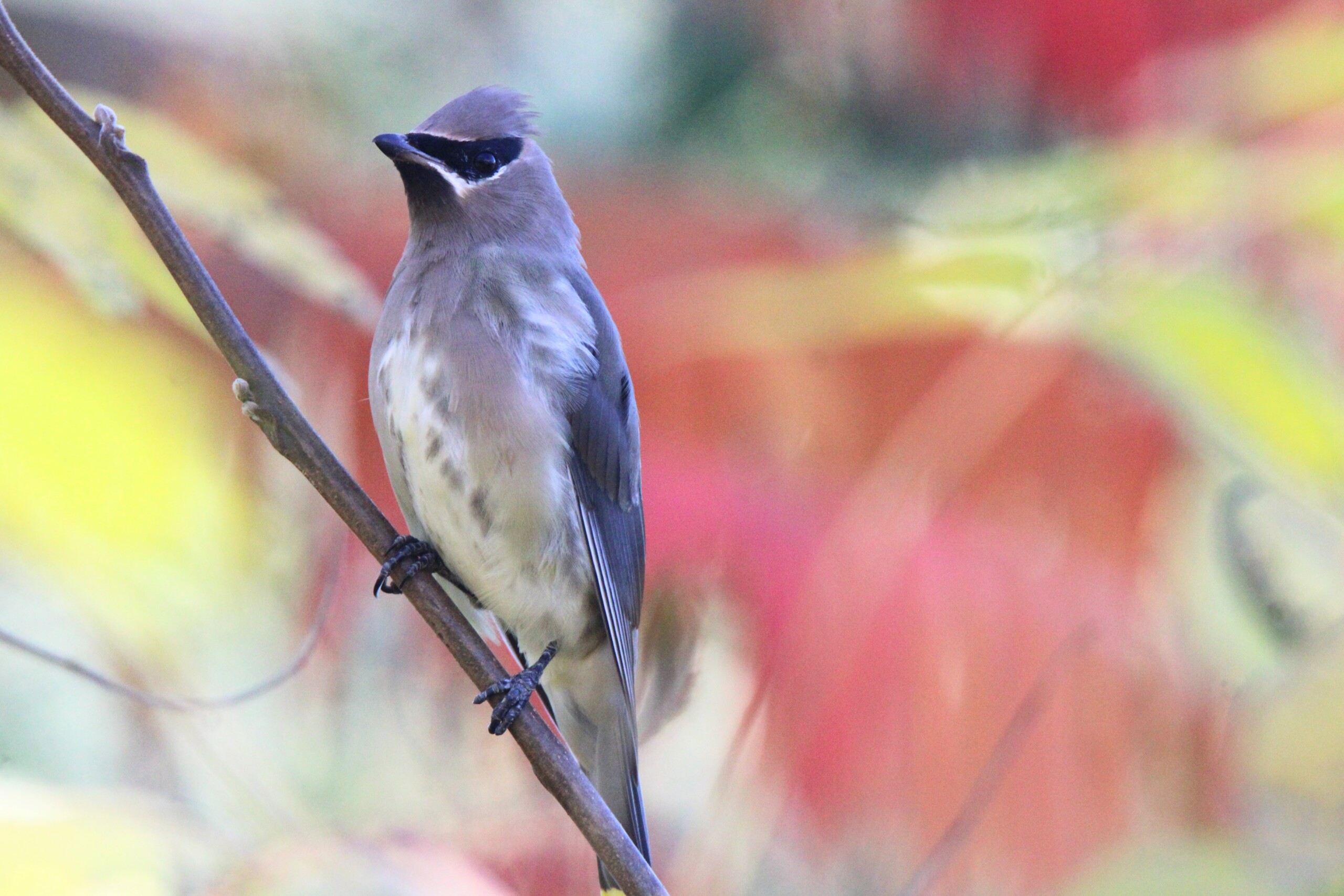
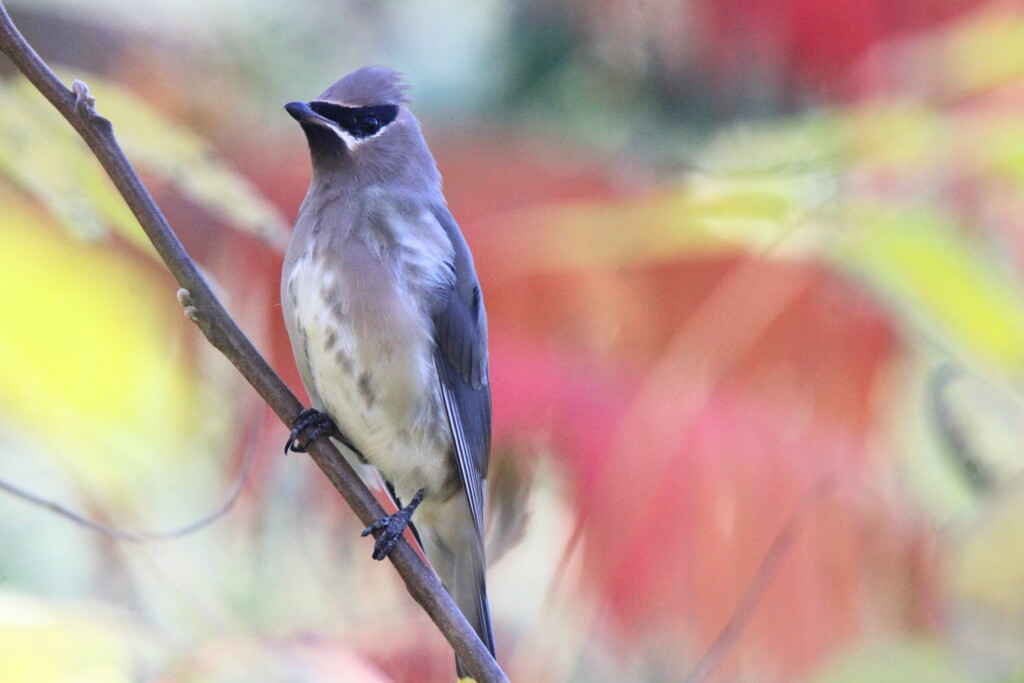
Most recently, cedar waxwings, another striking type of songbird, have arrived in the Genesee Trail. These social birds are recognizable by their golden-brown plumage, distinctive crests, black eye masks, and the red, waxy wing tips that give them their name. The bushes were fruiting with red berries and the waxwings, among other birds, were feasting on them in groups.
While songbirds were probably the most common and abundant migratory birds spotted on campus, they were not the only migratory bird groups. From time to time, there were wood ducks swimming in the cove of the river by the footbridge, resting among a large flock of mallards. Wood ducks are notoriously skittish, jetting off as soon as they sense a predator’s presence. I managed to photograph a pair of male wood ducks, recognizable by their striking green head patterns, before they darted away.
Another duck I particularly enjoyed seeing was a redhead, a “lifer” in birdwatching terminology, meaning a species I had spotted in the wild for the very first time. A redhead was swimming in multiple areas of the river, alone or with a small group of mallards. True to its name, redheads have striking coppery-red heads, and this feature is exclusive to males. I have previously noticed that diving ducks, which are ducks that swim and dive underwater to hunt, can occasionally be spotted in the river during the cold months. This redhead has been the very first diving duck I have spotted by campus so far and I was glad to see and photograph it in the wild for the first time.
This October has been a productive month for me as a birder. Each day, while the weather was permissible and the sun was out, I had the chance to observe various types of birds throughout their fall migration from warblers to sparrows to ducks. As time goes on and fall migration eventually comes to a close, I will treasure the memories of the different migratory birds I spotted and photographed and will look forward to spotting any other birds staying throughout the winter and coming back in the spring.