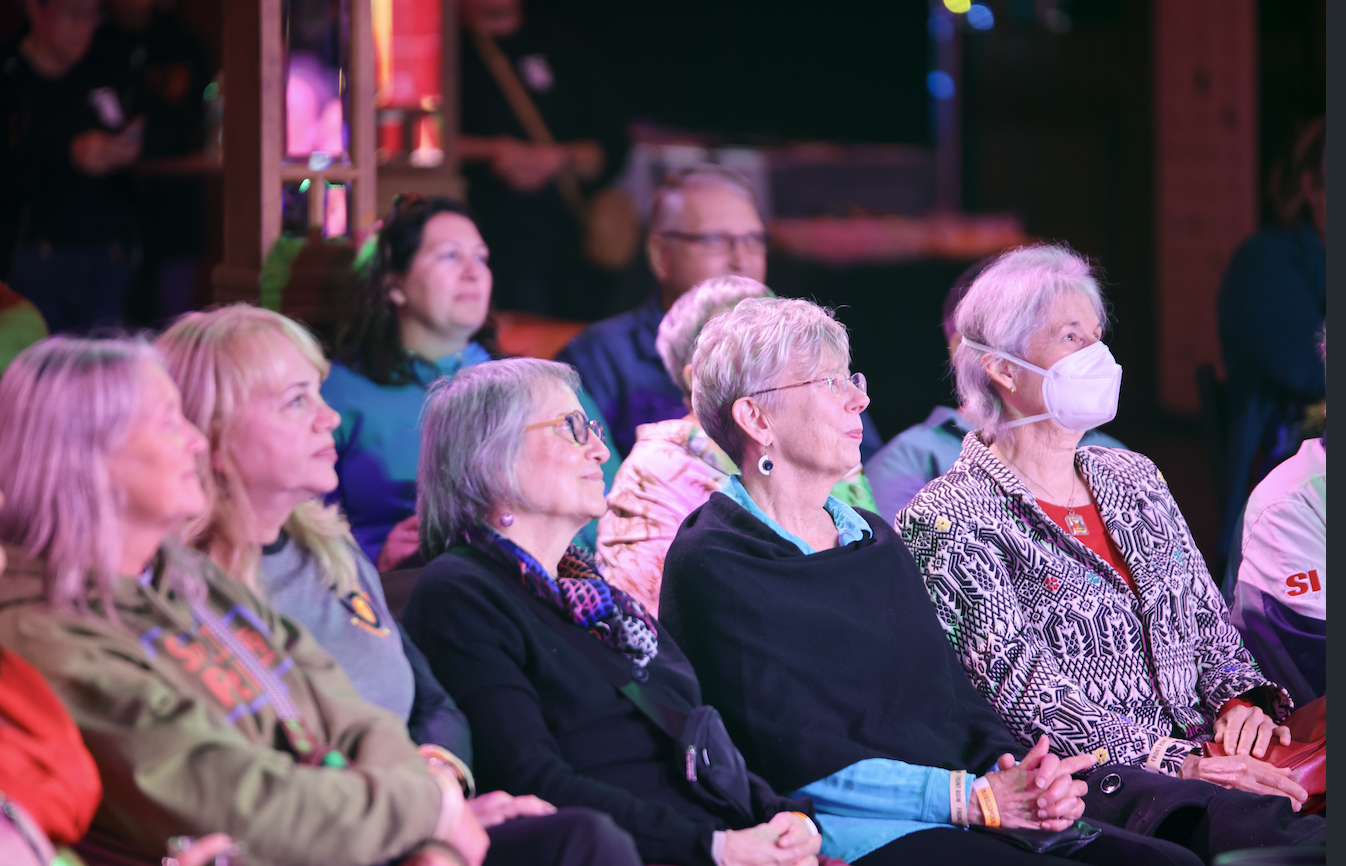
I am smack-dab in the middle of my first semester here at URochester. Despite being extremely busy between classes, friends, clubs, and the occasional Starbucks run at Wilson Commons, I had something of a strange calling to attend Fringe Fest, an annual festival in Rochester that brings over 700 performances to over 40 venues through several days in late September.
Performed at Lynne Lovejoy Parlor in the Memorial Art Gallery, “Dealbreaker” by Lauren Kee is a one woman show about her experience dealing with the social stigma of contracting genital herpes. Kee is an up-and-coming Chicago-based storyteller but also a URochester alumna. Her story started at the age of 21, after learning that her first and last one-night stand resulted in a genital herpes diagnosis. Genital herpes, caused by HSV-1 or HSV-2, affects one in six people in the U.S. aged 14–49. Though outbreaks can be controlled through common antiviral medications, the stigma surrounding the diagnosis can make living with it difficult.
Despite 50–80% of U.S. adults already having oral herpes (either dormant or reactivated) and genital herpes affecting approximately 12% of U.S. adults, herpes is still highly stigmatized. Test screening for herpes isn’t even included in standard STI panels for an assortment of reasons but in large part because you could very well already have it but just be asymptomatic.
After breaking off a long-term relationship and jumping back into the measureless dating pool six years after her diagnosis, Kee shared how she had to navigate rejection following the decisive dealbreaker that was the disclosure of her herpes diagnosis. At the turning point of the show, Kee described to the audience how she chose to reinvent herself in response to rejection. She attempted to get fit, get attractive, make friends, do hobbies — all to try to make up for her diagnosis. But it still was not enough, as after disclosing her diagnosis to men she dated including “Linkin Park guy”, a future physician, and a promising Hinge fling, they all called off the budding relationships in spite of whatever connection they might have had. These rejections were particularly upsetting to Kee, but they did have one upside: they led her to the beautiful, vast world of storytelling.
Chicago, where Kee lives, has a rich storytelling scene with many opportunities for her to vent her frustrations through stories. At a storytelling workshop, Kee found herself sharing her diagnosis willingly, and her audience positively engaging and even asking questions with a genuine desire to learn. In a story, her diagnosis wasn’t a confession, or something she felt the need to apologize or make up for, it was a simple fact of life.
Kee ended the show by saying that she then decided to keep storytelling, and keep dating without putting on an act this time in the hopes of finding a genuine connection. Soon after, she met someone she really liked, and he really liked her too! Her diagnosis wasn’t a dealbreaker that time, as it should never have been. As Kee said during the show, “it’s okay to have dealbreakers, but it should be something that actually matters.”
Kee did eventually find love. I can vouch for her. Her husband was sitting right behind me during the performance. But, even though she eventually found her person, the stigma of herpes unjustly limited her dating pool.
After the show I asked Kee what we could do to lessen the stigma of herpes. She said that talking about herpes more openly would help break the negative stigma, and would positively impact everyone’s sexual health — especially on college campuses. Kee was exceedingly brave and expressive in her telling of “Dealbreaker” — the show requires a degree of vulnerability that’s incredibly difficult to manifest. She took her courage and has since told the story of “Dealbreaker” to sold out audiences at Den Theatre in Chicago and the Stonewall Inn in New York. She now is preparing to bring the show to Chicago for the Not Alone Anymore: Asian American Solo Show Festival on Oct. 17.