The fall semester at URochester has arrived, and I’m more than ready to get back into writing about all my birding adventures. With over three months of time off from school, summer has always been my favorite season to travel. Many people love to visit California, especially Southern California, for its cities, famous landmarks, and beaches. More than just that though, California is one of the top U.S. states to look for birds and other wildlife. While I was there, I visited nature preserves in Los Angeles County to view endemic West Coast birds and migrants that have begun their southward journey before winter.
My first day of birding was spent in different parks in Los Angeles County, where I met and photographed different birds that live in the various habitats around the parks. I first stopped in Leo Carrillo State Park, where I encountered a few common bird species living in California’s chaparral scrubland. As I exited the parking lot, a lesser goldfinch perched on a bare, thin, limb sticking out from the shrubs. Lesser goldfinches are distinguished from the more common and widespread American goldfinches by their black caps, deeper yellow bellies, and olive yellow backs.
Common backyard birds, such as California towhees — one of which was drinking drops of water from a hose — Bewick’s wrens, oak titmice and dark-eyed juncos frequented visitors’ campsites. Dark-eyed juncos come in different colorations, or morphs, based on geographic location, and the West Coast is home to “Oregon” juncos which are characterized by black heads with pink beaks, a light brown back, buffy sides, and a white chest and belly.
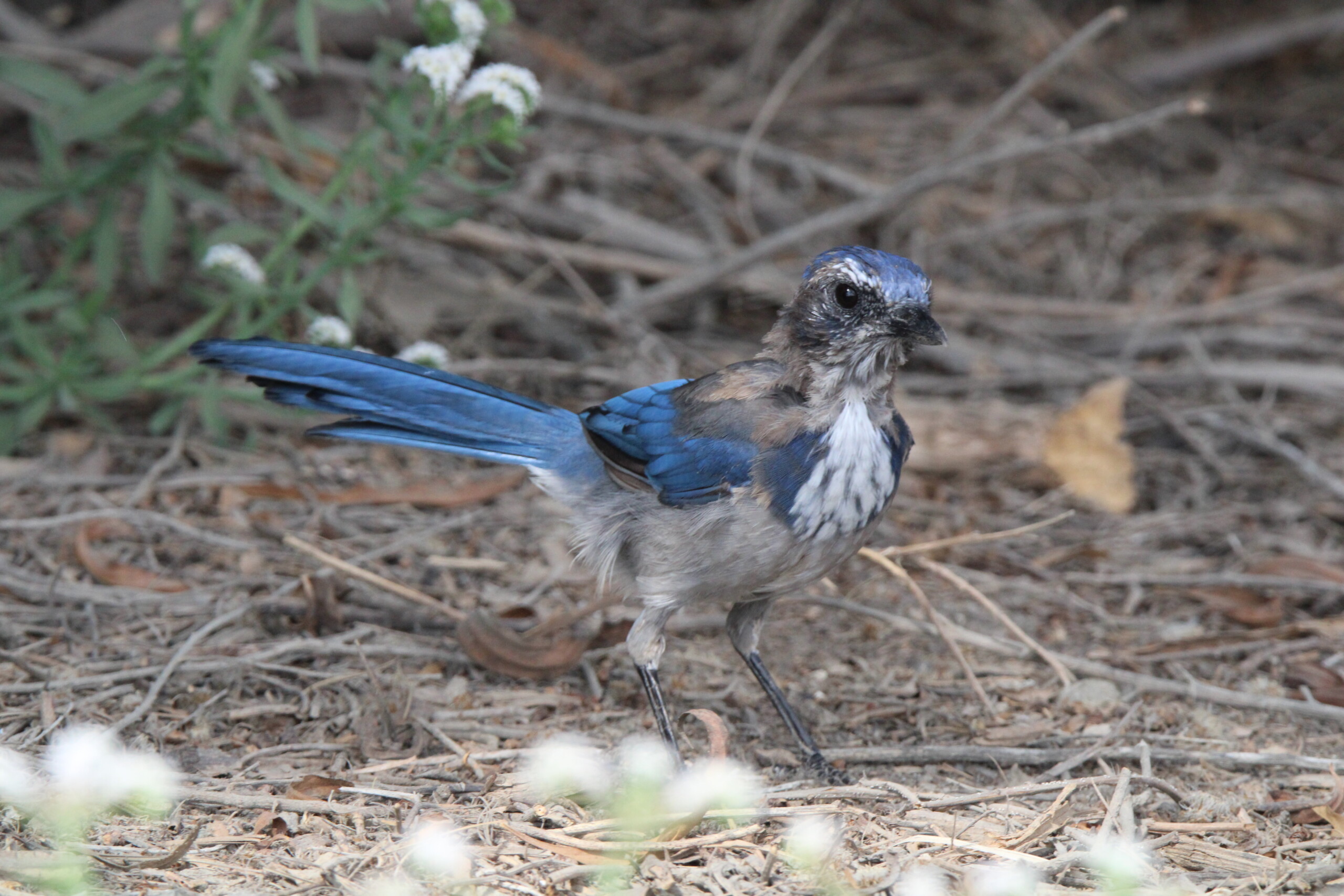
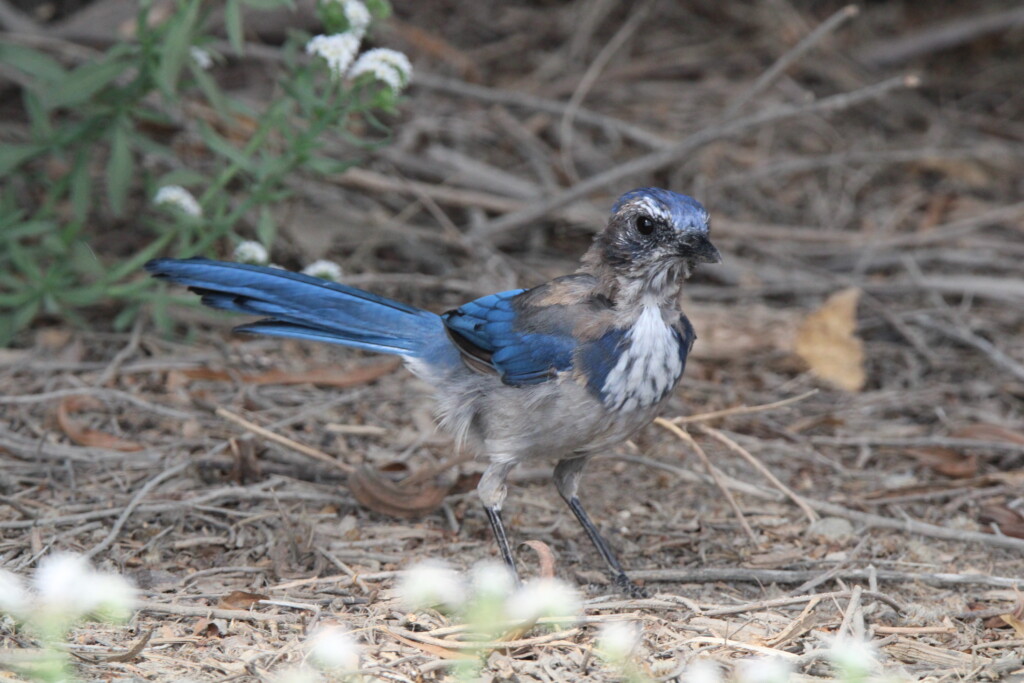
Another common bird that I saw and I wanted to spotlight was the California scrub-jay. It is related to the East Coast blue jay and has similar light blue and gray-colored plumages. Although the California scrub-jay lacks the blue jay’s crest, it shares the blue jay’s distinct color patterns. These birds were everywhere in LA County’s parks and suburban areas.
By the hillsides of nearby mountains overlooking the campsites, was a raven, gliding and landing on a nearby large dead tree. Hummingbirds and a few warbler species that live in California year-round, including yellowthroats and orange-crowned warblers, flitted through the bushes but were very hard to photograph.
My tour guide and I also walked over to the nearby Leo Carrillo State Beach, right by the parking lot. This beach, along with many of California’s beaches, had lots of native gulls, including Western gulls, California gulls, and the uniquely colored Heermann’s gull, with its characteristic red beaks, white or light gray heads, and slate-gray bodies. A Hudsonian whimbrel, a shorebird known for its long, thin, curved bill, walked by the group of gulls and seemed to have recently arrived in California for the winter.
Our next stop was Malibu Lagoon, which hosted a wide variety of seabirds and shorebirds, many of which were passing through California during their fall migration, or settling there for the winter. I knew before that Malibu was mostly known for its wide strip of beaches and that migration for shorebirds can start as early as July or August, so it was no surprise that a lot of beach birds made this famous beach town their home or stopover during migration season.
Along a walkway from the parking lot to the main beach, various water birds, such as cormorants, herons, ducks, and grebes were spotted fishing and resting in a lagoon. The beach was teeming with different bird species, one of which was the snowy plover. Weighing no more than two ounces, they sport plumages that blend in with the sand, and are as cute as buttons. Snowy plovers are listed as endangered in California due to threats such as beach development, predation, and human disturbance. Populations have been growing, thanks to conservation efforts, and I was lucky enough to spot an abundant flock of these cute shorebirds scurrying through the beach among equally cute least sandpipers, the smallest sandpiper species in the world.
A large flock of black-bellied plovers, some of which were molting into their nonbreeding plumages, were resting and preening along the lagoon. They stood among other wintering shorebirds such as the willet, whose name comes from the trilling alarm call which sounds like “Pill-will-willet,” and the ruddy turnstone, stocky birds that earn their names from turning over large stones and shells to forage. Royal terns and Caspian terns were present, plus the very abundant snowy egrets, hunting for small fishes.
We then traveled to Ballona Wetlands in Playa del Rey, with freshwater and saltwater marshes plus a jetty by the Pacific Ocean. Sightings included a yellow-crowned night heron — resting on one leg by a freshwater pond — wandering tattlers, and black turnstones, one of two turnstones native to North America. A Brandt’s cormorant was swimming through both sides of the jetty, plunging underwater after I took my photos.
This was also the place where I encountered my very first sea duck up close: the surf scoter. Surf scoters usually breed in the Arctic Circle and migrate to areas throughout the Pacific coast, as low as Southern California, and it was possible that these ducks arrived early. I saw a female, with her smoky-gray plumage and dark, chunky bill, swimming along the shore of the jetty and snacking on mussels attached to the rocks. Nearby was a male scoter, with mostly jet-black plumage, white eyes, and a larger, chunkier bill with splashes of black, orange, and white, lounging on the shore.
Another bird I wanted to highlight is one of my favorites: the black oystercatcher. Black oystercatchers, true to their names, are large shorebirds whose bodies range from chocolate brown to black colored, long, bright red bills, and pink legs and feet. They are common birds who live in the rocky shorelines of the Pacific coast. After seeing and hearing evidence of their presence — a cracked-open mussel shell, their favorite prey, and their faint whistling calls — I had a feeling they were around. After moments of waiting and photographing other birds, there were the oystercatchers, stepping through the rocks on the edge of the jetty, prying open mussels glued to the rocks, and devouring the meat inside.
Hummingbirds are incredibly common in Southern California, including in urban areas where flowers were present. Photographing these quick, colorful birds was quite tricky in the nature preserves, but I had the chance to look at them more closely in the Huntington Botanical Gardens. The Huntington Botanical Gardens hosts a variety of native and exotic plants, many of which were attractive to native hummingbirds due to their bright colors and tubular shapes. In the Desert Plant Gallery, as well as one section of the gardens with multiple hummingbird-friendly plants and feeders, hummingbirds flitted everywhere, sipping nectar and perching on nearby twigs. The metallic green and copper-orange Allen’s hummingbirds were particularly abundant. I spotted them drinking from a desert plant in one garden and from another plant near the entrance, and even perching on a thin limb. An Anna’s hummingbird, which lives in California all year, sat perfectly still and rested on a limb for about 10 minutes. I was even lucky enough to spot a black-chinned hummingbird, which usually lives in California’s mountain regions or near rivers, drinking from a flower in the garden.
That first day of birding in Los Angeles County was more than exciting. There were so many new species to add to my life list and photo collection. Stay tuned for Part 2 of this article of Birder’s Log, featuring the birds I encountered down in Orange County.