Coming to you from the makers of MelCourses, a new cluster search engine will be unveiled next semester. RocLab, the student-led team behind the search engine, is a campus organization that focuses on building tech solutions. For the past year and a half, RocLab has been working on creating a cluster search engine to replace the University’s current system, according to sophomore Will Record, a director and development team lead with RocLab.
“One of the new features we had started planning on — actually right around when I joined RocLab a year and a half ago — was a cluster search engine integrated with our general concept of helping people plan their courses,” Record said.
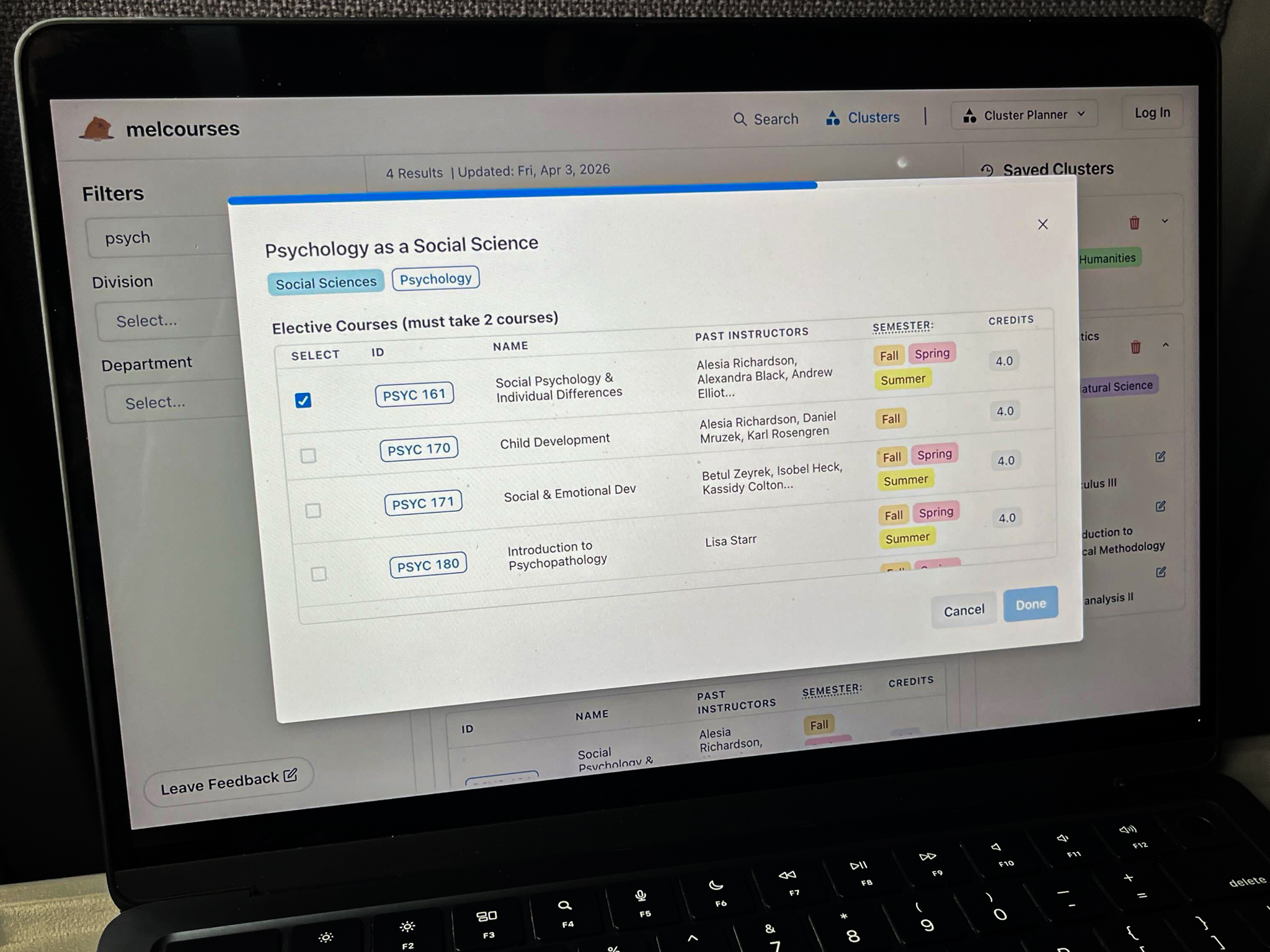
Designed to integrate with MelCourses as a new tab, the new cluster search engine is meant to aid students in choosing their courses. The new system will allow students to search for offered clusters in all three divisions (humanities, social sciences, and natural sciences).
Once a cluster has been selected, it will open a drop-down menu allowing students to see required courses and elective options. After making a selection, the cluster will be added to a sidebar for future reference.
Recently, the University removed their cluster search engine and replaced it with a PDF listing all active cluster options. Using this new interface, students mostly have to use their browser’s webpage search to find what they are looking for, which is significantly more unwieldy than being able to search using key words. Unlike the old search engine, this PDF does not offer significantly outdated cluster options.
“[The old engine] talked about courses that hadn’t been offered for many, many years. It had a search functionality, at least. So that’s good, better than the PDF, but still not really usable,” Record said. “We wanted to build a more streamlined, easy way for students to search through that. And we thought it would integrate very nicely with the existing features we have with MelCourses.”
Although the switch to PDF gave students a more accurate view of the clusters available to them, the changed interface made it more difficult for RocLab to parse information from a PDF.
“It’s good they updated it, but it made it a little harder for us,” Record shared. “But I think that’s even a better way that we can [help]. Our product should hopefully be much better than scrolling through a PDF.”
Once the new search engine is unveiled, RocLab plans to continue in its goal of helping students in all aspects of planning their courseload at URochester.
“We’ll be adding this separate cluster page, which will integrate eventually with our broader goals of covering really all planning aspects. So we have some more things in the works for planning out all four years and viewing your requirements and everything like that,” Record shared. “I don’t want to make any promises to anything we aren’t going to do. But it looks like a four-year planner [will be next]. We’ve had kind of a beta version on the site for a while now, but it’s not the most fully-fledged thing.”
Another potential future move for RocLab include relocating MelCourses to a rochester.edu domain.
“It looks like the University is going to be able to provide hosting services for us. And that would include having MelCourses be potentially relocated to a University of Rochester domain name,” Record said. “And then they would be able to provide financial support because currently that has been funded out of pocket.”
The new search engine is not ready quite yet, but is on track to be available to students next semester.