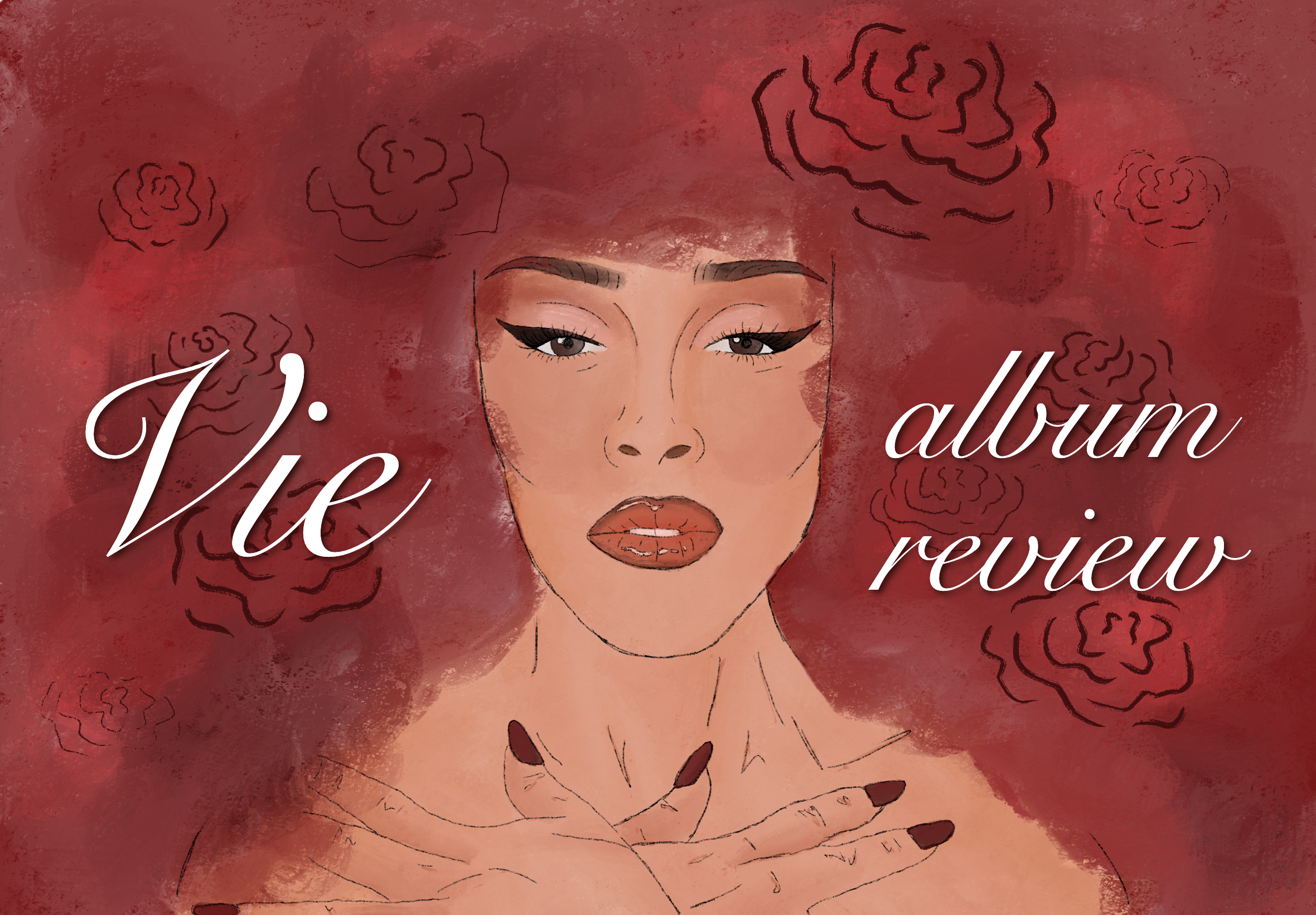
Doja Cat’s fifth studio album, “Vie,” hit streaming services Sept. 26 with a distinct ’80s saxophone sound to open her new project. Just over two years after her last album, “Scarlet,” which was called “disappointing” and “unrefined” by Varsity, Doja Cat had fans like myself excited for a more defined and evolved album. Did Doja Cat (born Amala Ratna Zandile Dlamini) deliver? Yes. “Vie” delivers peppy synth and the fun, sexual lyrics that fans have come to expect and enjoy. However, the album lacks what made “Scarlet” so enjoyable: the intense and dense rap that helps to solidify her place as one of the best female rappers of all time, as displayed in the Staff Picks of Billboard.
According to the review aggregator Metacritic, “Vie” received “generally favorable reviews,” and fans are pleased to see an appearance from Doja Cat’s longtime musical partner, SZA.. But others wonder if this was a lost opportunity to work with ’80s pop icons who inspired Dlamini like Nina Hagen whom she referenced in an interview with The New York Times.
In a recent interview with CBS Sunday Morning, Doja told Michelle Miller that she is a “rapper that makes pop music,” and her most recent work displays this perfectly. Every song on this album uses sultry, poppy lyricism, despite the fact that Doja says that she likes her music “because it sounds good, not because it speaks to me lyrically.” She makes calls back to Prince and Janet Jackson sandwiched between explicit, carefully enunciated rap. The opening track, “Cards,” brings heavy synth that sets up a promise for the content of the rest of the album, heralding cohesiveness at the cost of the unpredictability that got “Scarlet” its, in my opinion, unfair negative reviews. Unfortunately, the synth overpowers the rapping that many have come to love the LA born artist for.
In the same interview Doja said “I love to talk about love,” and she certainly indulged herself in this album. In the “Gorgeous,” interlude she addresses the subject of her song, saying “I just called to tell you how much I love you and how amazingly beautiful that you are.” She then moves past physical appreciation and stops addressing him directly, seemingly excited to tell us how “he liked my before and after pictures,” referring to plastic surgery. Although Doja Cat has had plastic surgery, this sentence might not refer to Doja Cat herself, as she has said that she loves to “worldbuild” and create characters and situations in her music that she herself hasn’t experienced.
As an artist, Doja Cat is known for her speed and skill, highlighted particularly through “Scarlet”’s “Gun,”, and “I Don’t Do Drugs” from “Planet Her.” Yet, the closest “Vie” gets to this is in the song “AAAHH MEN!” which opens with an ’80s influence and a distinct beat that even the most musically challenged individual would be able to follow. She elicited a laugh from me with a line asking if she’s gay or just angry at the state of the men around her, and then pivots by attesting: “I’m insatiable, I love the taste of ’em.” This back and forth between distaste and hunger for men, along with the high pitch and tempo feels like a call back to “Won’t Bite” from “Hot Pink.” She told Miller: “Now I’m back where I know I can thrive,” and how she is comfortable with “Vie” as a step forward from previous works like “Hot Pink” and “Planet Her” in which her smooth, poppy style shone through, earning her eight Grammy Nominations in 2022. I agree that she has achieved this, but I believe that as she takes a step back from her career experimentation with dense rap, she loses a portion of the interest that she held from listeners. I loved the hard rap that Doja Cat fired off on “Scarlet,” hitting back at all her haters, both online and in a professional sphere.. On the other hand, it feels as though she is moving away from the era of trolling fans online and dropping hate on her older, more popular works; instead moving into the world of mainstream pop. These controversial choices included saying she did not love her fans because she “don’t even know y’all” and characterized her as less industrial pop star and more online ragebaiter. This set her apart from many other stars in that she was not bound by what others desired from her. As she told Miller, don’t listen to what other people are “demanding of you.”