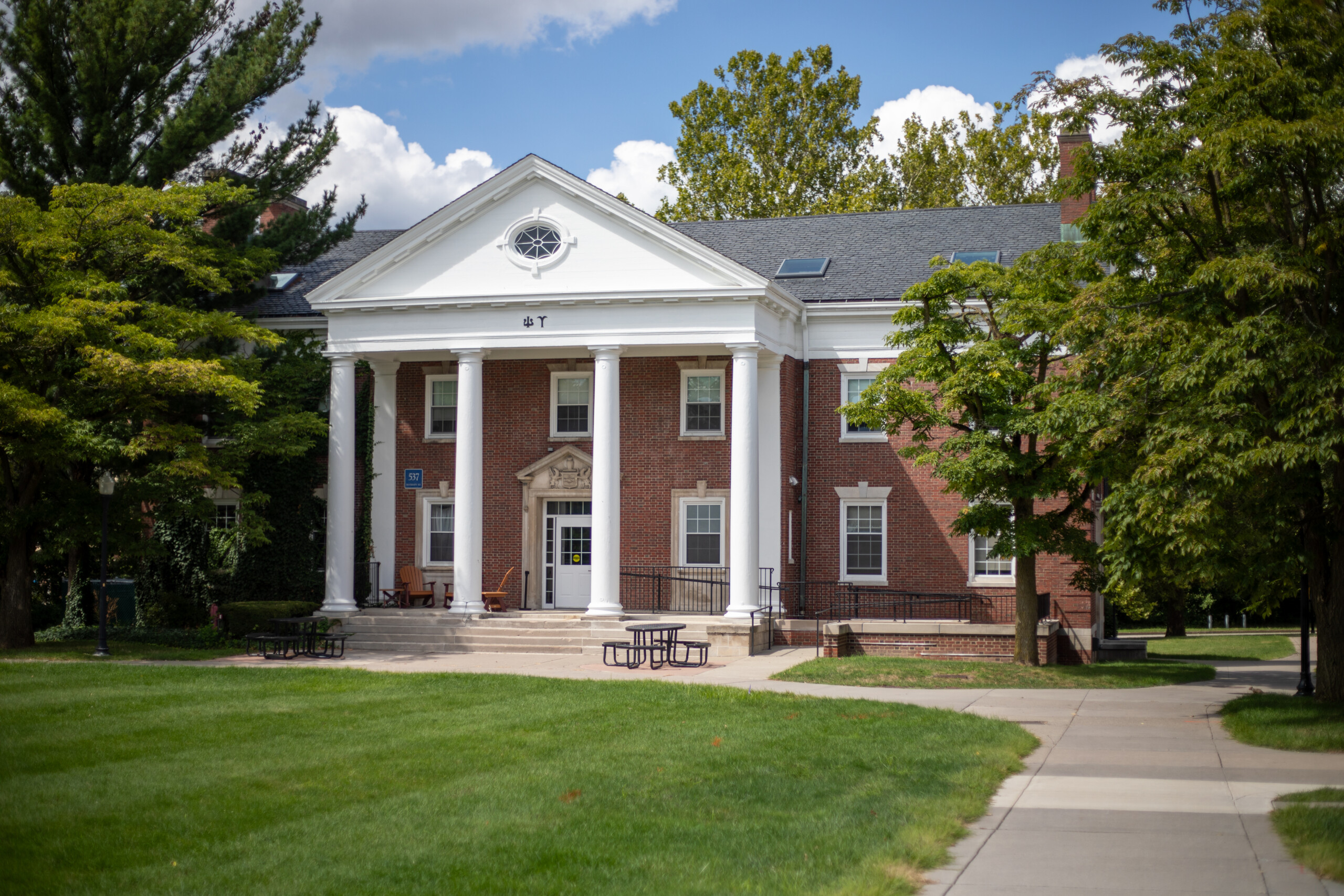
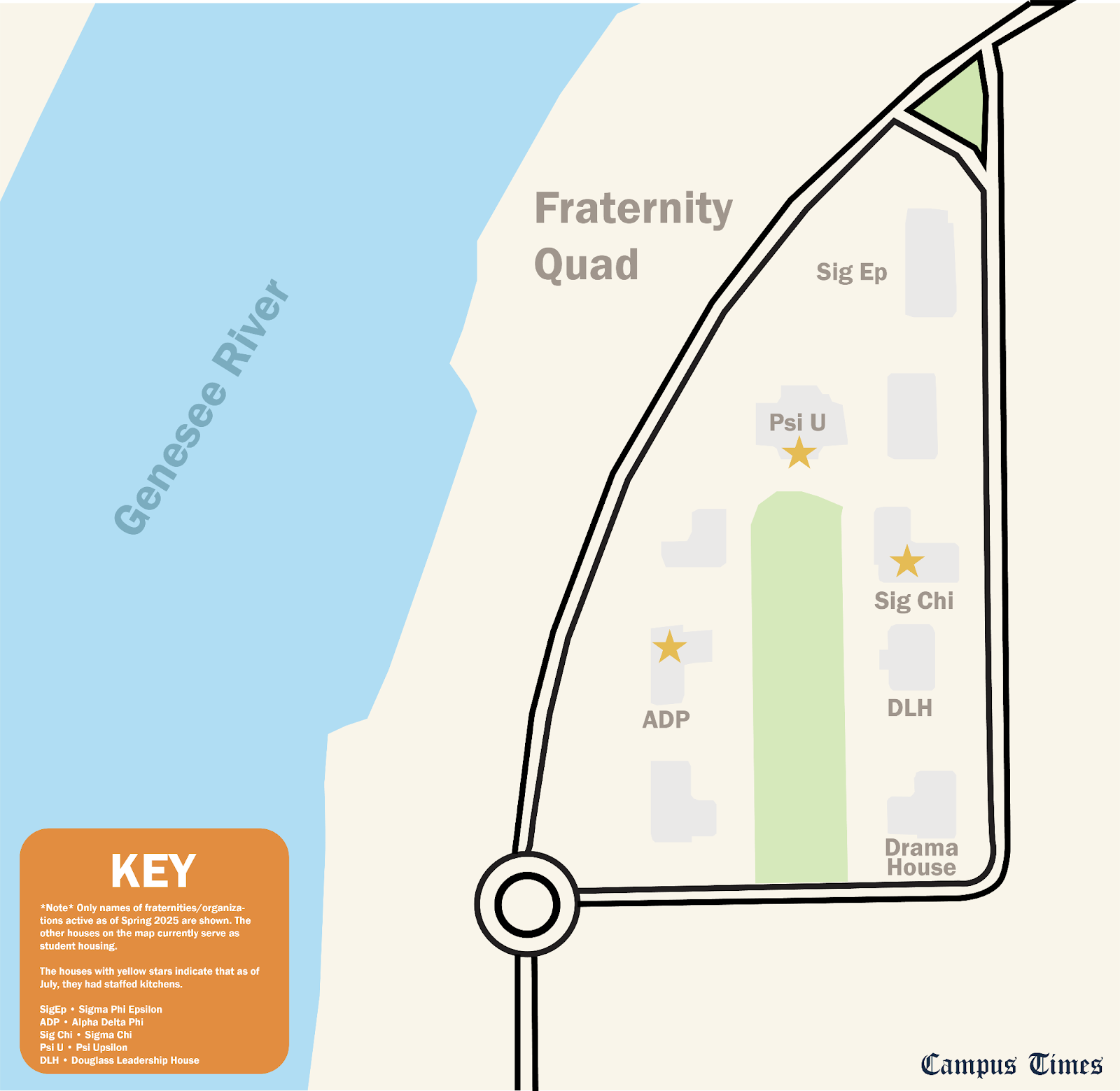
Until July, rather than making the trek to Douglass or Danforth, the Alpha Delta Phi (ADP), Sigma Chi, and Psi Upsilon fraternities merely had to walk downstairs to grab a meal.
Chefs for fraternities were contracted through the company Harvest Table, a subsidiary of the national food supplier/Aramark, which the University no longer contracts with, and worked exclusively in the fraternities’ kitchens to prepare meals.
A fraternity’s chef was responsible for providing lunches and dinners Monday through Friday, according to Fraternity and Sorority policy, as well as ordering food, maintaining the kitchen, and ensuring food safety.
 Having a personal chef allowed fraternity members more control over what they ate, as members of the fraternity’s leadership could meet with the chef to discuss what meals brothers did or didn’t like.
Students living in these houses will now have to join the University’s meal plan.
The announcement came in a “Weekly Updates” email as part of the University’s Fraternity and Sorority newsletter, sent Aug. 9.
“This decision resulted from the [U]niversity’s move to a new self-operating model, a review of campus dining options, and the high costs associated with maintaining each kitchen,” Fraternity and Sorority Affairs wrote in the email. “All Fraternity Quad students, regardless of affiliation, will now be eligible for one of the approved meal plans for their residential grouping.”
The decision was made by University Student Life senior leaders who had consulted staff from Dining Services, Residential Life & Housing Services, and the Office of the Dean of Students, according to University Spokesperson Sara Miller.
Although the school’s decision to close down the kitchens came over the summer, some students and staff have had suspicions since the spring.
“[Our] chef had said that he had possibly been hearing something about how, instead of having chefs [in our kitchens], they were going to do some pantry system,” ADP’s Chapter Steward Kache Morris said. “But that was like he maybe heard something. Like he really wasn’t sure.”
Morris, who is in charge of handling the chapter’s transition to a new dining system, explained that this change severely affects chapter life. Currently, members have no access to the kitchen or its supplies — only to a microwave.
The school also shut down ADP’s soda fountain, which was also their main source for ice and cold water. Not having easily accessible cold water is something which Morris says can be dangerous at parties.
“We use [the fountain] at opens to provide cold water to students just to prevent any casualties,” Morris said.
Morris also explained the social downsides to not having a communal kitchen.
“We got to talk to Rob [the ADP chef] every single day,” Morris said. “He was like a part of our family, you know? We invited him to extra events that were just with brothers, and we bought him gifts for Christmas and stuff like that.”
According to Morris, there is no timeline for the reopening of the kitchen. He said that if and when the kitchen does open, the only items that brothers are guaranteed are a fridge and a stove.
The remaining items will be purchased by the brothers with the “Kitchen Reserve Fund,” which was money ADP had set aside for emergencies, such as equipment failure.
While the school has put the students affected by the closures on a Dining Dollars meal plan, Morris says that since they do not have a kitchen to prepare food, swipes would be more efficient.
He said that after negotiating with the school, he has secured meal swipes for the students in ADP for this month.
The main driving factor behind UR’s decision to close the kitchens was economics. According to University Spokesperson Sara Miller, the school had been operating the kitchens at a deficit.
“Only three fraternity organizations had these commercial kitchens in place,” Miller said. “And the costs simply became unsustainable.”
Miller said that the total cost for the University to operate all three kitchens was $400,000 a year while Fraternity Meal Plan funds were still in use.
“These University costs included labor, food, paper and cleaning supplies, annual maintenance, and long-term maintenance,” she said. “The aggregate funds generated from the Fraternity Meal plan left each kitchen in deficit year after year. The shortfall was spread to other facilities on campus to absorb.”
The University plans to remove the current commercial-grade equipment in the kitchens to ensure that they are in accordance with University-approved safety guidelines, Miller said.
“The costs to operate and maintain the kitchens far exceeded the funds collected from the students to run them. Ultimately, the University must be fiscally responsible, and this consists of evaluating programs to determine their long-term viability.”