During the construction of Rettner Hall in 2013, contractors unearthed unexplained layers of foundation beneath the ground. Nothing in their existing building plans could explain why the foundation existed, or what the scope of it was. To learn more, they approached University Archivist Melissa Mead, who, after spending some time digging through the archives, discovered the architectural drawings from the ’60s for a research center where Rettner now stands.
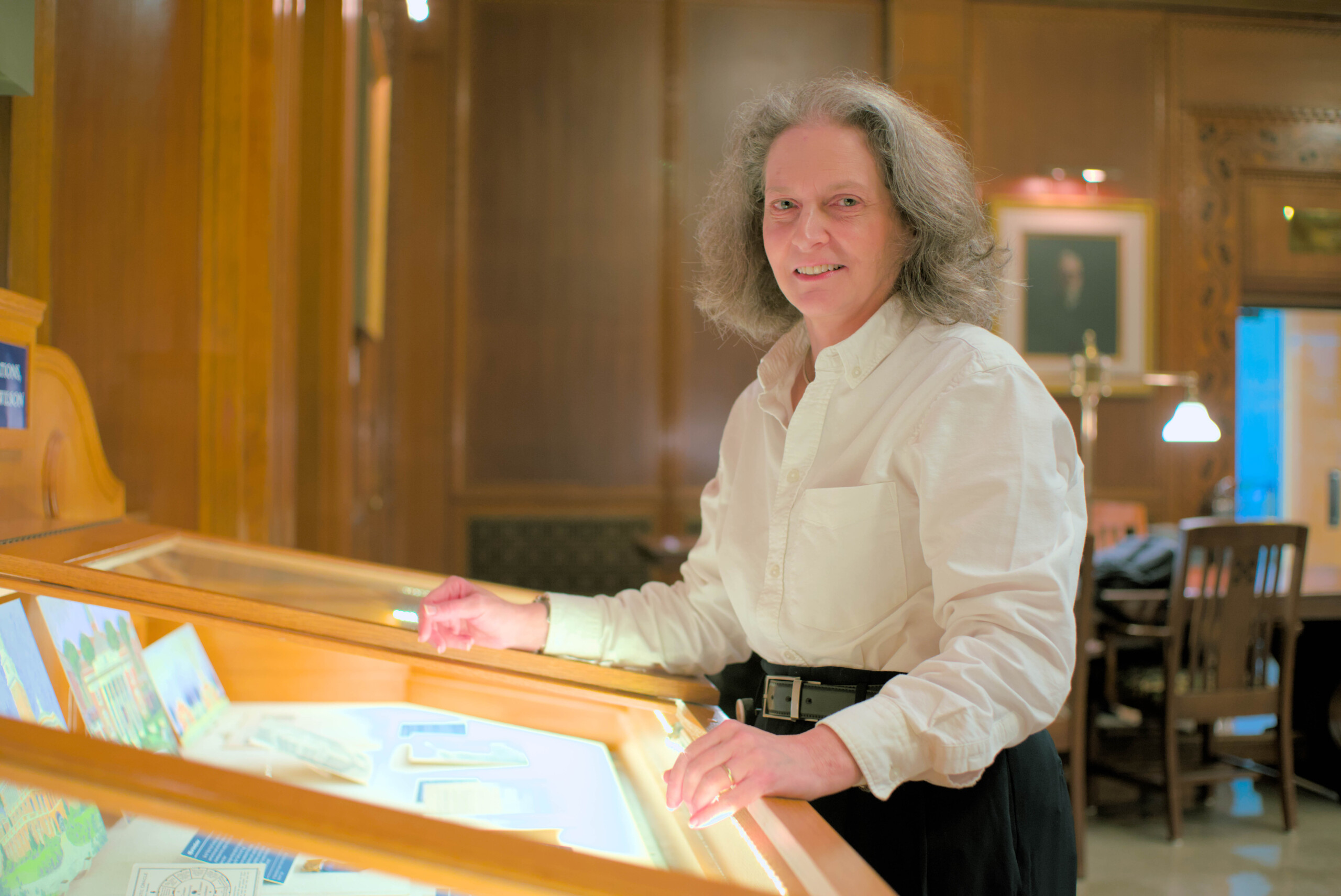
Mead spends her days fielding inquiries from all over the River Campus, from Facilities to students completing projects to even the President’s office, all on about the history of the University.
“What I do is try to collect, preserve, and share the University’s history with basically anyone who’s interested in it or needs to know something,” Mead explained.
Mead originally received her Masters in Information Science at Columbia’s Library School, and she worked in children’s book publishing before joining the River Campus Libraries in 1994. In 2012 she became University Archivist.
“I think that I like the job of being the University Archivist because it changes every day, and it’s great because it sends me into a different area of the collections,” Mead said. “People might think that I just sit back there reading boxes [of documents], but I actually need someone to ask me the question. Pretty much all the work that I did up to 2012 here has supported the work that I’m doing now.”
Students interested in learning more about University history turn to Mead, submitting requests and asking her for guidance in their research — whether it be for personal interest, projects, or in some cases, the creation of both digital and physical exhibits in the Great Hall or Friedman Lobby around campus.
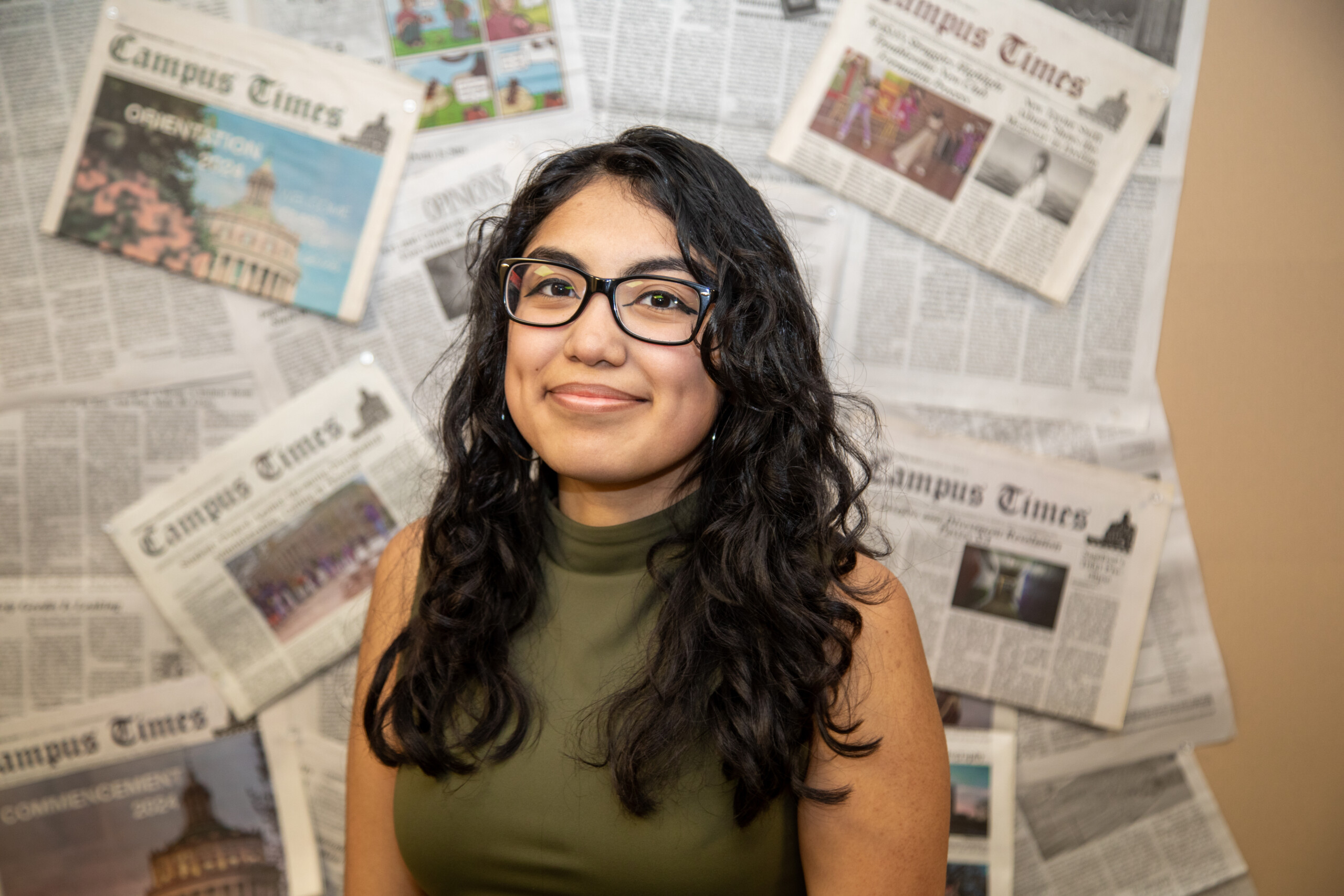
Alumna Sarah Woodams worked closely with Mead for the creation of the Campus Times 150th anniversary’s physical exhibit in the Great Hall.
“Melissa Mead was a lifesaver,” Woodams said. “She met with us several times over the course of the semester to help us guide our vision for the exhibit.”
Mead’s role extends beyond just fielding requests, capturing history through the meticulous preservation of documents, and creating exhibits on the University’s history. During COVID-19, Mead fielded questions from the administration looking for records on the University’s response to the 1918 influenza epidemic, and although there were limited documents available, they served as the foundation for the University’s response at the time. This work all serves as the foundation for the direction in which the University is heading.
“This isn’t about me doing research. It’s about helping other people do research, do their jobs because the answer that I give to somebody’s question may impact what somebody’s doing in renovations or naming of buildings,” Mead said. “Also, that sounds very grand, but it gets up there.”
While Mead’s role has previously entailed documenting physical history, her role has shifted over the three decades she’s been here with the introduction of technology in history preservation, to capture the new student life that’s opened up online.
“I do a lot of […] thinking about the future for the next person who does this job,” Mead said. “Even though I said the digital world makes things hard to collect, [I’m] digitizing the things, the various documents that we can, [which] makes it easier to get into the history right.”
Despite having answers to any question under the sun about the University when asked, Mead isn’t done yet.
As University Archivist, Mead has a column titled ‘Ask the Archivist’ in the Rochester Review where she gets to the bottom of these questions. “You never get the same question twice. It’s always something new,” Mead explained. “If you want to know the mystery that I want to solve, and I’ve almost got it, but it’s the: ‘Why do we only sing two of the three verses in the Genesee?’”