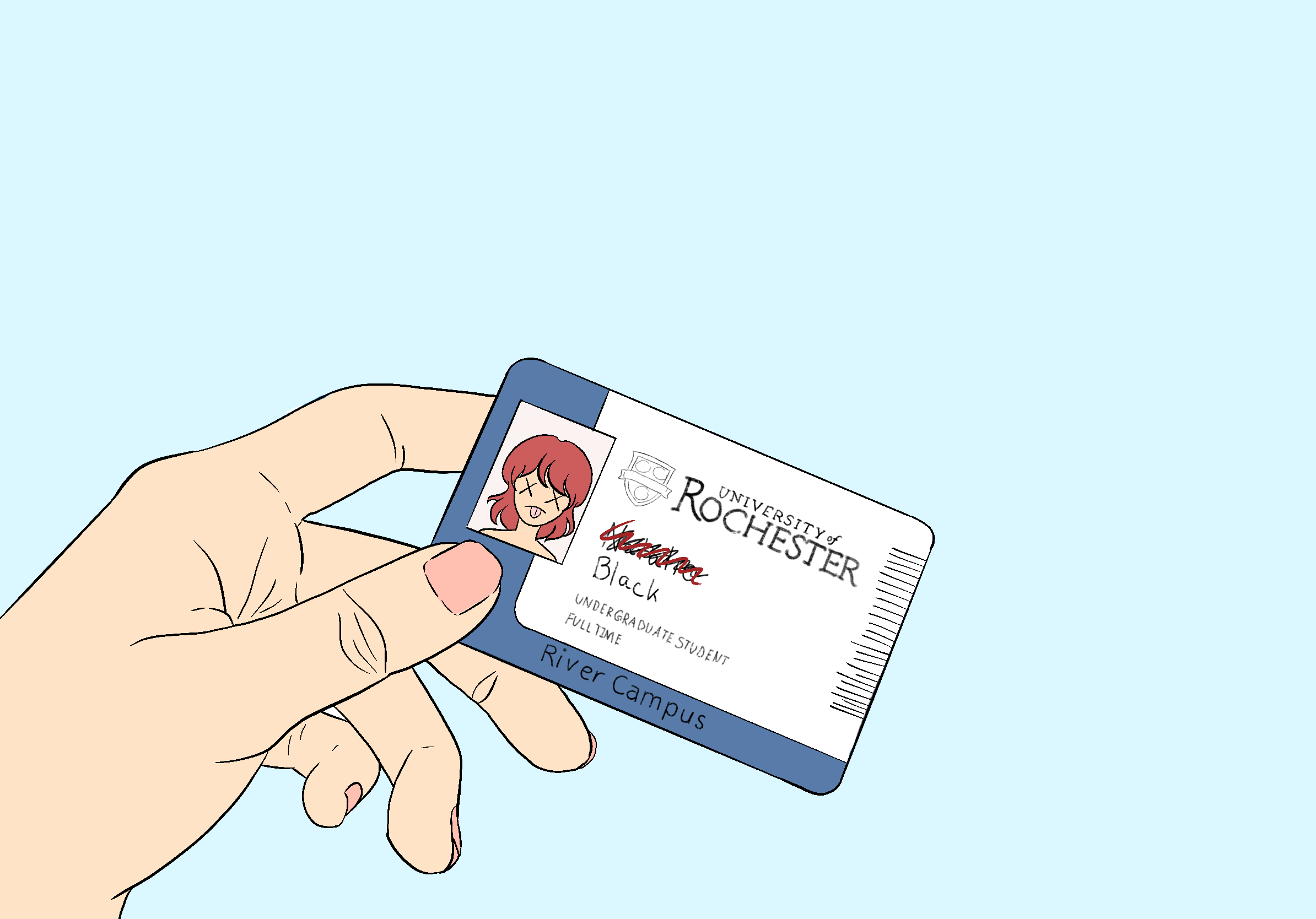
The University of Rochester is a mostly trans-friendly campus. I hope that others agree. With an inclusive student body, faculty training, gender-neutral bathrooms, and health insurance that covers hormone treatment, I found it comfortable to transition on campus.
And yet, there is a curious blindspot: repeated usage of deadnames where a preferred name is sufficient. While a preferred name change process officially exists in UR Student, it seems that other departments’ systems lack access to these details. Glaring examples include public mailing lists, the mail center, the International Student Office (ISO), the library, and the Computer Science undergraduate (CSUG) machines.
For many transgender individuals, our chosen names hold dear meaning in juxtaposition with the unfortunately gendered subtext of our legal names. It matters to us that we can forget about our legal names in all but necessary legal situations, until the difficult legal name change process is complete. A process, mind you, that may be impossible for some international students.
While I found it mildly infuriating to be deadnamed in an email written to the University community and external sponsors with probably hundreds of readers or more, others may find it more stressful, even potentially outing them without consent.
If UR implemented a policy of utilizing preferred names wherever legal names are not necessary, it would improve the quality of life of transgender students, with no downsides for others.