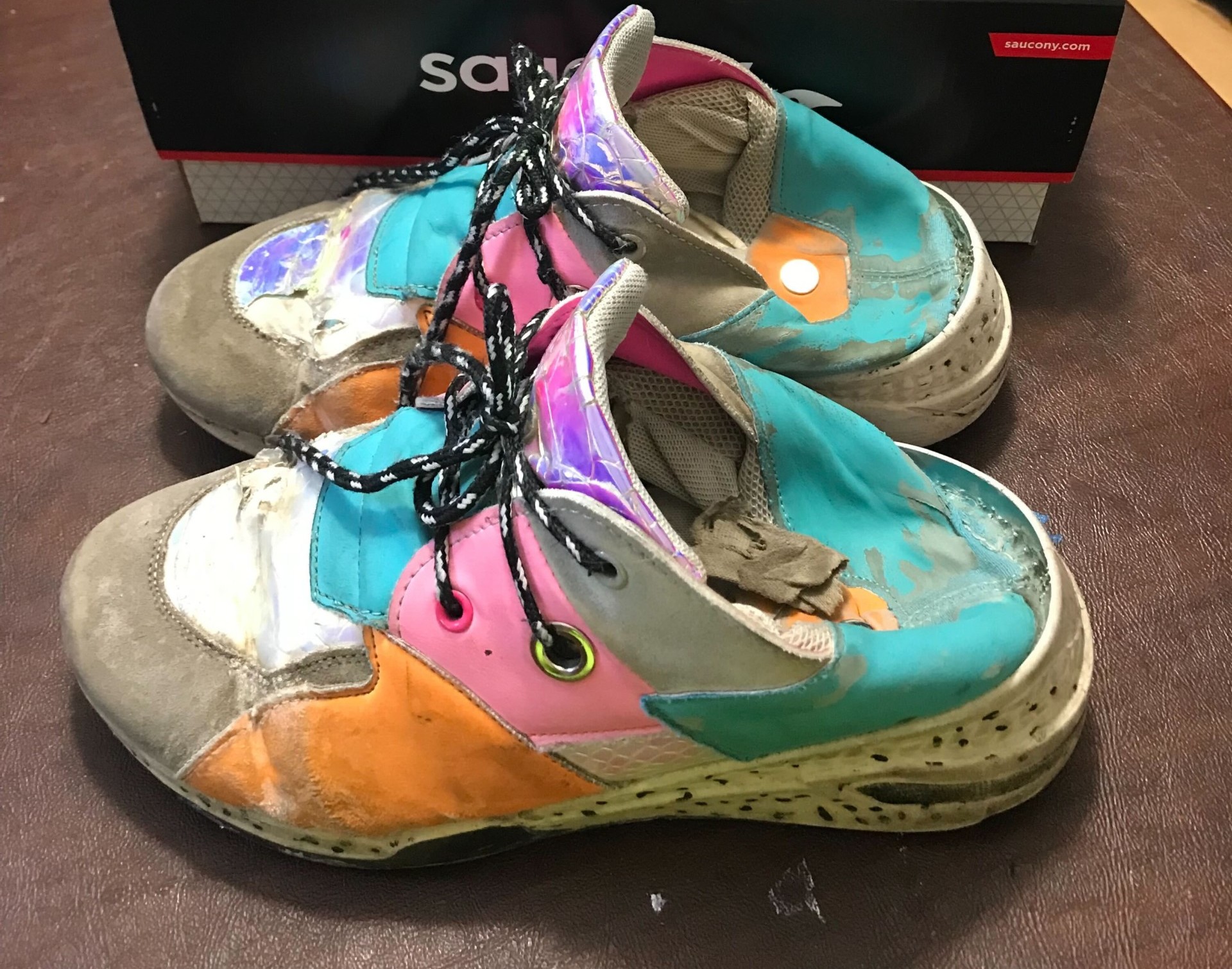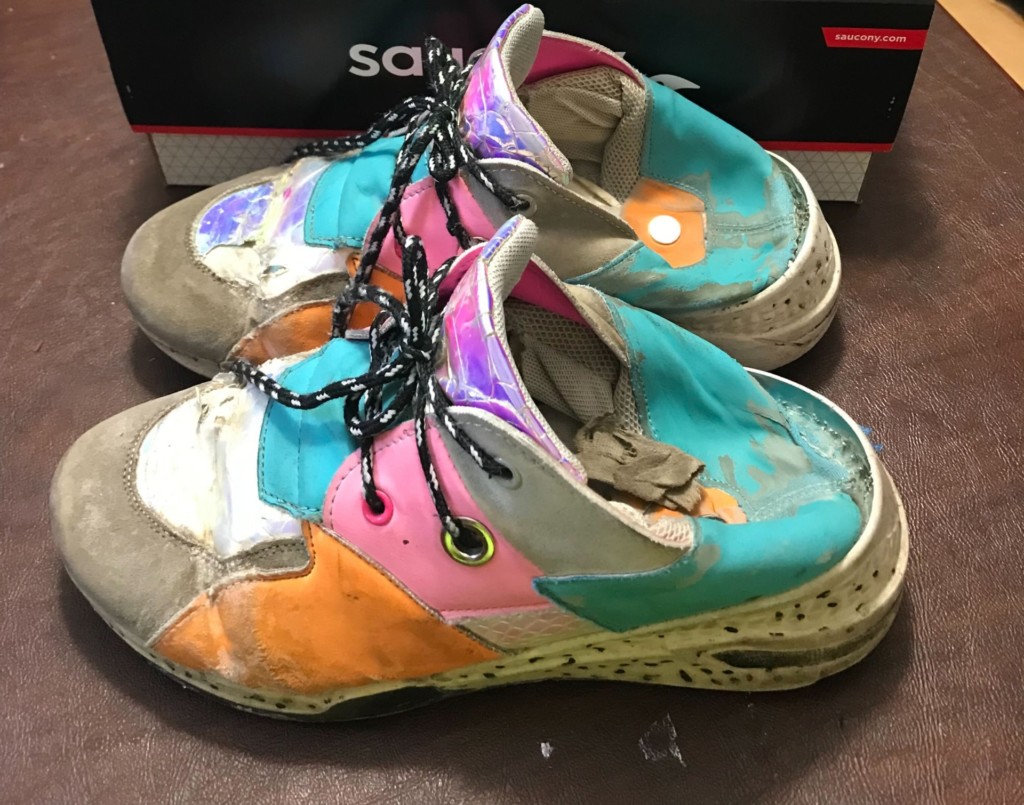
My sneakers have been a point of contention with everyone I know. My parents, my peers, and my partner have all basically threatened to buy me a new pair of shoes for months on end. What’s wrong with the ones I’ve got? Well, I can see their point as to why I need new shoes on a practical level. These bad boys are complete with shredded soles, frayed laces, and holes in the iridescent vinyl that I pretend not to see. They’re a health hazard in Rochester winter weather, and they provide little-to-no support for my arches. For a barbecue comparison, they’re so tender, they nearly fall off the bone.
However, nothing is quite like the feeling of slipping into these shoes to start a day. They’ve become a staple of the way I live my life, as one of the three pairs of shoes I own. Not only are they the visual depiction of the 80s hacking up one final hairball, but they have transformed my feet into an indicator of who I am. Friends have told me that to spot me, all they have to do is look down. These shoes give me a sense of social security. They’re easy to make fun of among company, and as first conversation topics with strangers go, talking about how I acquired my six-dollar bipedal-accessory abominations from Goodwill after my last pair of shoes also completely fell apart is pretty entertaining. In addition, it’s a good way to establish who I am to someone, for better or for worse.
On New Year’s, my dad threw a box of shoes at my face and told me to throw my old pair in the trash — they’d serve no good to anyone else, after all. Instead of being grateful, I tried on the new pair of shoes and then cried hysterically for an hour. It hadn’t fully registered to me how much of myself I saw in my shoes until then.
I may like to say that my vice is funky footwear, but really, I just don’t want to have to take care of myself. My shoes were a reflection of me — bright and flashy but falling apart. The same argument used for my shoes is one that’s been copy-pasted throughout my life when it came to wearing coats in the cold and taking on less responsibility. Instead of listening to these well-intentioned warnings, I chose to ignore them and not take myself seriously, joking about being a New Yorker and constantly being on the grind, rain or shine. This lighthearted mentality can be good in certain moments, but it also serves as an easy way for me to shirk my responsibility for my health and wellbeing.
I don’t know what it is that makes me want to do myself this disservice, but I’m slowly learning that I like to treat myself as a doormat. My shoes were, in some ways, the neon sign that showed people they wouldn’t need to respect me. They weren’t alone — I could barely respect the parts of myself that kept me going. Despite my acknowledgment of this issue, it was so much easier to keep wearing what I had and keep going how I was than to make the fix, until it was forced upon me.
I’m wearing shoes that don’t hurt my feet anymore. I’m working on trying to care about myself a little more (if not for myself quite yet, to at least save others from the headache of complaining). It’s not easy — I still find myself indulging in these little moments of self-neglect and passing them off as comedic bits — but now, I’m starting to realize I have to support myself. After all, nobody can walk on my behalf.