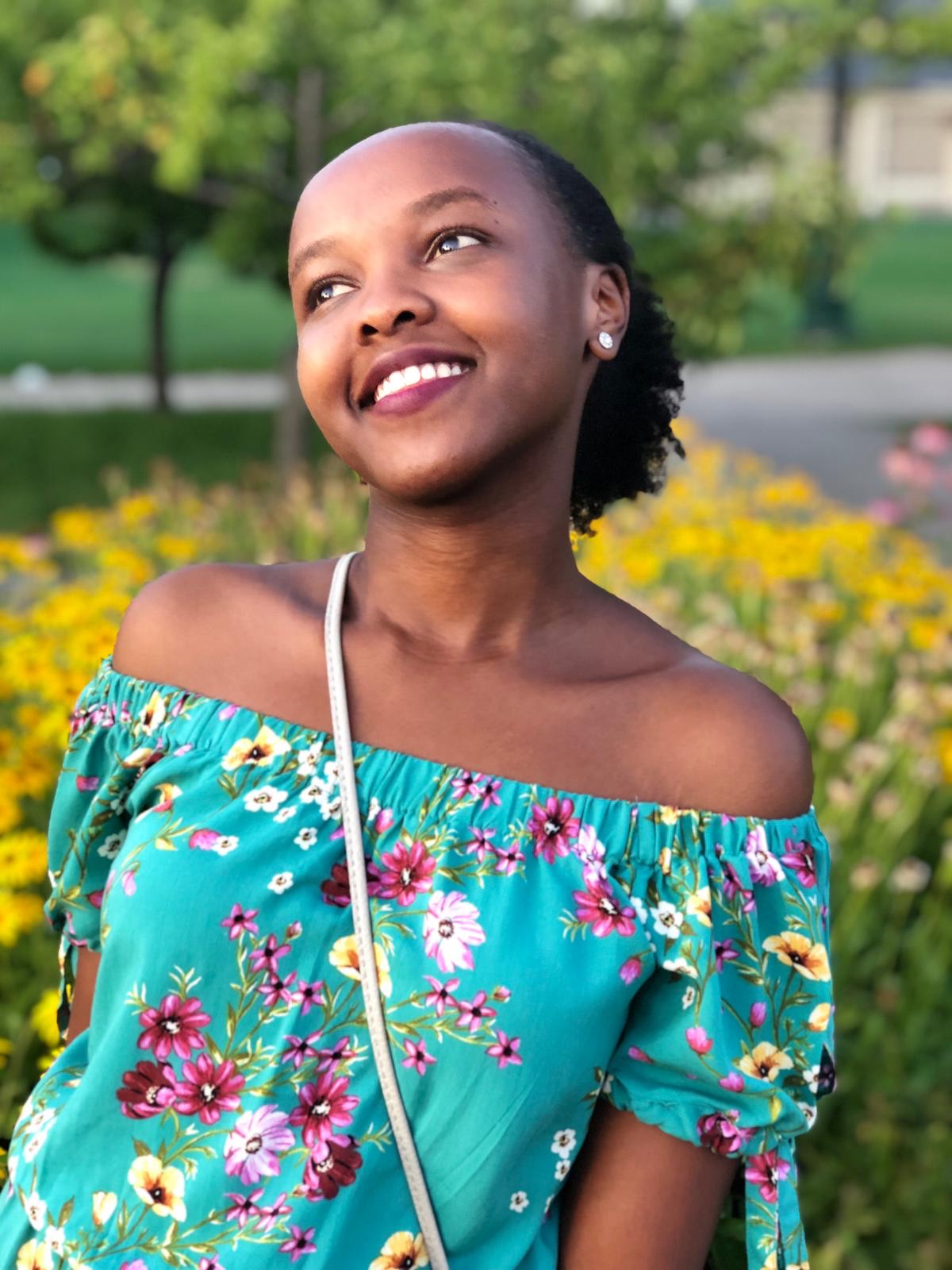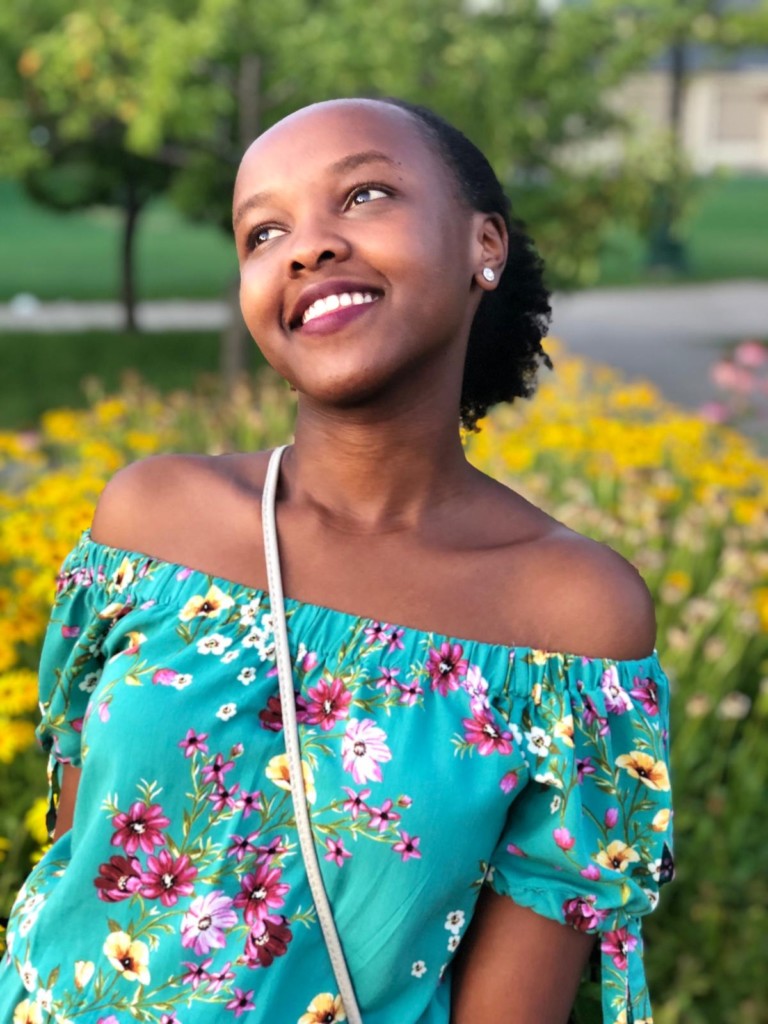
Junior Carol Jerotich is currently majoring in Mechanical Engineering with an interest in product design.
“I have always been passionate about physics and mathematics, and mechanical engineering gave me an opportunity to study these subjects in depth,” Jerotich said. “I enjoy coming up with new ideas and using my creativity to design and build stuff in order to solve problems using my engineering skills.”
Besides her love of all things mechanical, Jerotich is heavily involved within the campus community and is a member of multiple clubs and societies, including Engineers Without Borders, Meliora Fitness, and the American Society of Mechanical Engineers.
She is an International Student Mentor, where she communicates with incoming international students to prepare them for their arrival at the University and guide them through the challenges of transitioning into the college lifestyle. Jerotich is also a Public Health Ambassador, where she serves as a friendly peer advocate who encourages fellow members of the community to adhere to COVID-19 guidelines.
Jerotich currently works in the Pickel Lab, where she collaborates with other undergraduates and graduate students to address fundamental problems in heat transfer at the nanoscale using numerical and experimental methods. Heat transfer is the study of how thermal energy moves through systems.
During her time there, she has designed and machined custom components for the optical microscopy system using computer-aided design (CAD). “This was part of one of the many projects in Professor Andrea Pickel’s Lab aimed to improve the performance and reliability of data storage, optoelectronic, and integrated circuit devices,” Jerotich said. “An optical microscope creates a magnified image of an object specimen with an objective lens and magnifies the image furthermore with an eyepiece to allow the user to observe it by the naked eye.”
Jerotich’s research is still ongoing in the Pickel Lab. “I currently do finite element analysis using Comsol Multiphysics to get voltage and temperature profiles,” Jeortich commented. “So far I have realized that learning not only takes place in the classroom; it is an ongoing process. I have learnt so much doing research, and I get to apply the concepts that I have learned [from] my coursework to my research projects.”
As a mentor, Jerotich has advised undergraduates to pursue their research interests. “I think research is a great thing to be involved in,” Jerotich said. “I would encourage anyone that is interested in research to reach out to professors they would be interested in working with and network as much as they can with other professors in the department.”
After Rochester, Jerotich plans on attending graduate school. “I plan to further pursue research, after which I can go to academia,” Jerotich said. “As a professor, I would be able to impart knowledge to students while pursuing research in my desired field of study.”