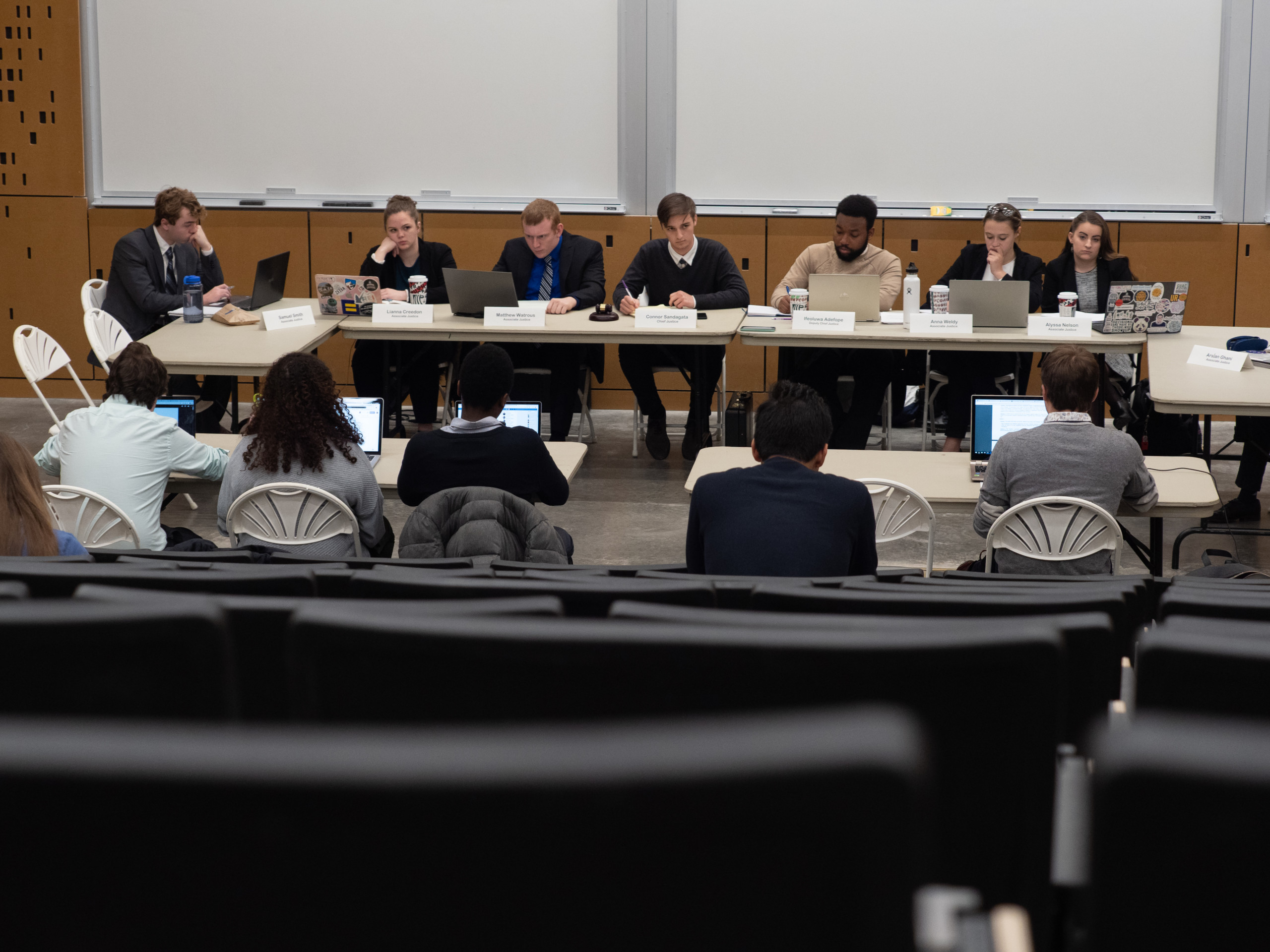
During a Students’ Association Senate Meeting conducted via Zoom on Nov. 9, senior Connor Sandagata, Chief Justice of the All-Campus Judicial Council (ACJC), announced that reforms to the Board on Academic Honesty were approved.
The main reform includes a change to the student and faculty representation. Previously, the Hearing Board consisted of three professors and two student representatives. The Board now consists of two professors and two student representatives.
“It’s been four and a half years of pretty consistent advocacy for students, by students, [and] by the council about changing the way our Academic Honesty Hearing Boards are formed,” Sandagata said during the meeting. He also highlighted the work of previous Chief Justices Lucas Avelar ’19 and Madeline Blackburn ’18 in not only designing the reforms but also in advocating for them.
Because the Hearing Boards now have an even number of professors and student representatives, the Academic Honesty Board Chair Dr. Elaine Sia has been designated the role of tiebreaker.
“In my view, the Board Chair is in a better position to serve as a more neutral arbiter of these decisions when they do not themselves serve on any Hearing Boards,” Sia said in an email. “The members of the Hearing Boards, both faculty and students, are very often in agreement, but when Board decisions are split, I believe the best way to resolve those cases is for the Board Chair to review the available information and help the Board come to a final decision.”
Sia elaborated that this structural change to the Board on Academic Honesty will not have a significant impact on hearing proceedings, saying that “all members of the Board are free to openly express their opinion and vote their conscience” as they have always done.
According to Sia, having an even number of professors and student representatives on Hearing Boards will make the process of hearings less daunting for students. “I imagine that the perceived power differential between students and faculty, combined with the imbalance in numbers, may make this a stressful experience for student representatives, particularly early in their service,” Sia said.
During an interview with Campus Times, Sandagata spoke about how students had been wanting more equal representation during board hearings. “The previous structure of the Board Hearings meant that often student representatives are structurally less relevant than professors, and so this is a change that reflects a somewhat more equal standing,” Sandagata said. “Without the support and advocacy of Murphy and Professor Sia, these changes would not have been possible.”
Editor’s Note (11/23/2020): A previous version of the article was titled “Reforms passed to the Board of Academic Honesty.” The title has been updated to “Board on Academic Honesty” to accurately reflect the official title of the Board.