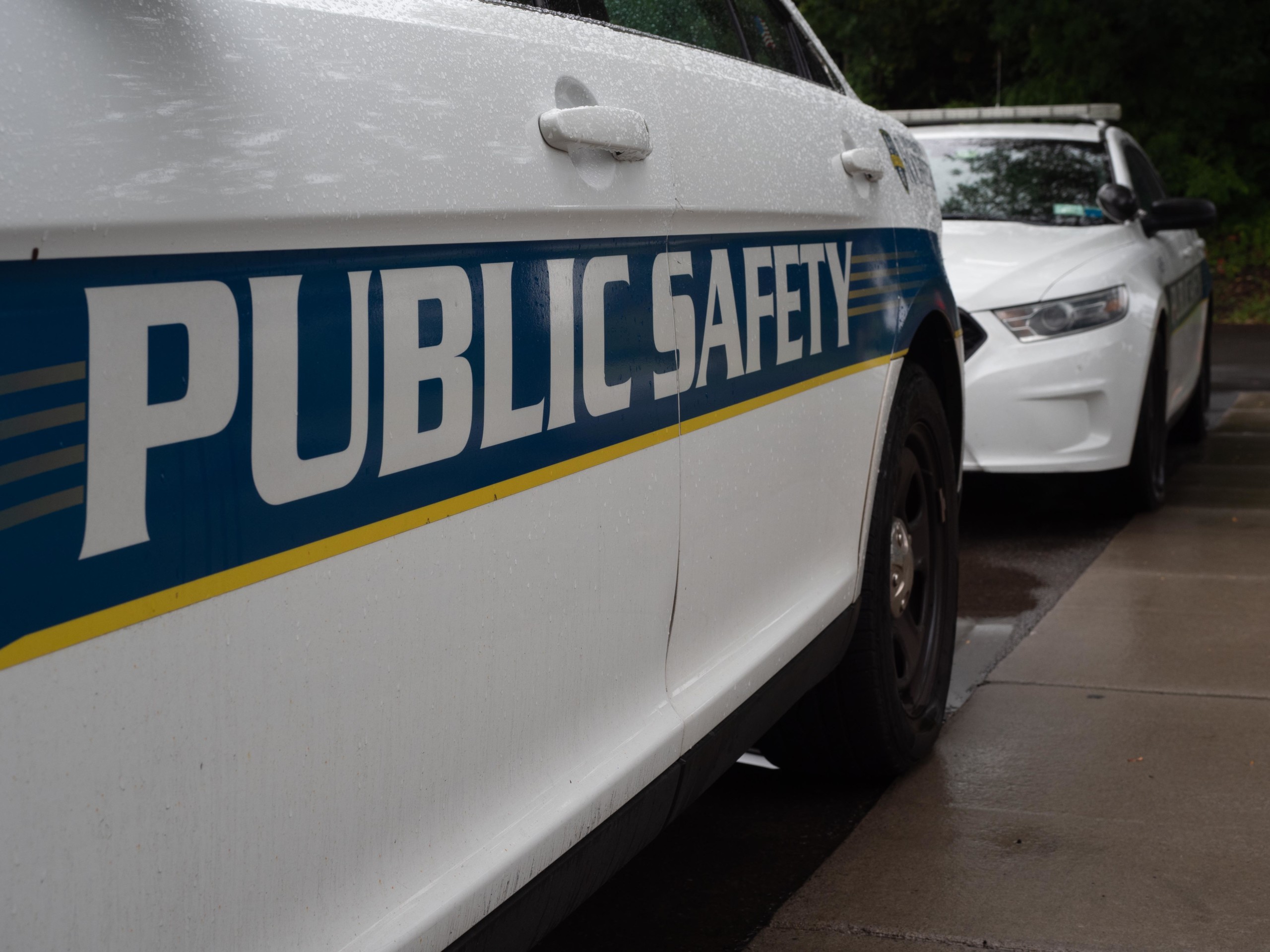
An unidentified person attempted to rob a student with a handgun at around 10 p.m. on Friday, Oct. 23.
The student was walking near the Hill Court Footbridge when someone approached them from behind. The student observed that the individual was armed with a handgun, but before anything could happen between the two, the student managed to stop a passing Department of Public Safety (DPS) car, and the suspect fled from the area. Nobody was hurt. DPS sent out a bulletin on the incident to students about an hour and a half later.
“The camera caught the figure of the suspect, which was also one of the leads to track the suspect,” DPS Director Chief Mark Fischer said. “But the camera could not help identify [them] since the suspect was wearing a head cover in every camera shot.”
Fischer said the case is still under serious investigation. To protect the privacy of the victim, DPS will not release any personal information.
DPS commended the victim for their reaction. “You never know what’s in a person’s mind,” Assistant DPS Director Commander Dana Perrin said. “I think the victim just reacted very quickly and made an almost unconscious [choice] that they wanted to separate from the suspect.”
“You don’t want to question a decision that a person made in such situations,” Fischer said. “What they did was the best they can do at that time. Any types of tips that are given is something more of a reminder to the community.”
In the bulletin, DPS offered some suggestions for students in dangerous situations, including “stay aware” and “let it go” — meaning to prioritize their own safety over their property. Fischer and Perrin added that they hope students are alert to everything around them, and encourage students to report any suspicious sightings.
“Stay[ing] alert and [maintaining] eye contact may help recognize suspicious people,” Perrin said.
DPS also doesn’t want students to fight against someone who’s armed. Students should avoid walking alone at night and looking at their phones when walking.
Many students expressed surprise and concern over the attempted robbery.
“It was a bit surprising, especially when it said armed,” junior and Hill Court resident Matthew Burns said.
“I actually crossed the bridge about 10 minutes after that happened,” sophomore and Hill Court resident Elisabeth Sidorski said. She described how a friend had stopped her to talk for a few minutes before she got to the bridge. “Well, if she didn’t do that, it could [have been] me. I’m worried.”
“It’s jarring, and we don’t even know where the closest blue light is,” junior Jacob Miller said. The closest blue light to the Phase side of the bridge is at the parking lot beneath the Hill Court Footbridge, about a hundred meters away.
Burns called DPS’s response to the incident “reassuring,” and acknowledged that “it’s almost impossible to stop a single person coming to campus, [it’s] not something you can expect.”
Moving forward, DPS is taking actions to increase patrols and target the area “with active cameras” to prevent future robberies.
Chief Fischer said that DPS is aware of the recent criticism of the department, and backlash from groups of people that don’t want to have additional officers on campus.
“Particularly in that area, there is no guarantee that the victim will come back,” Fischer said.