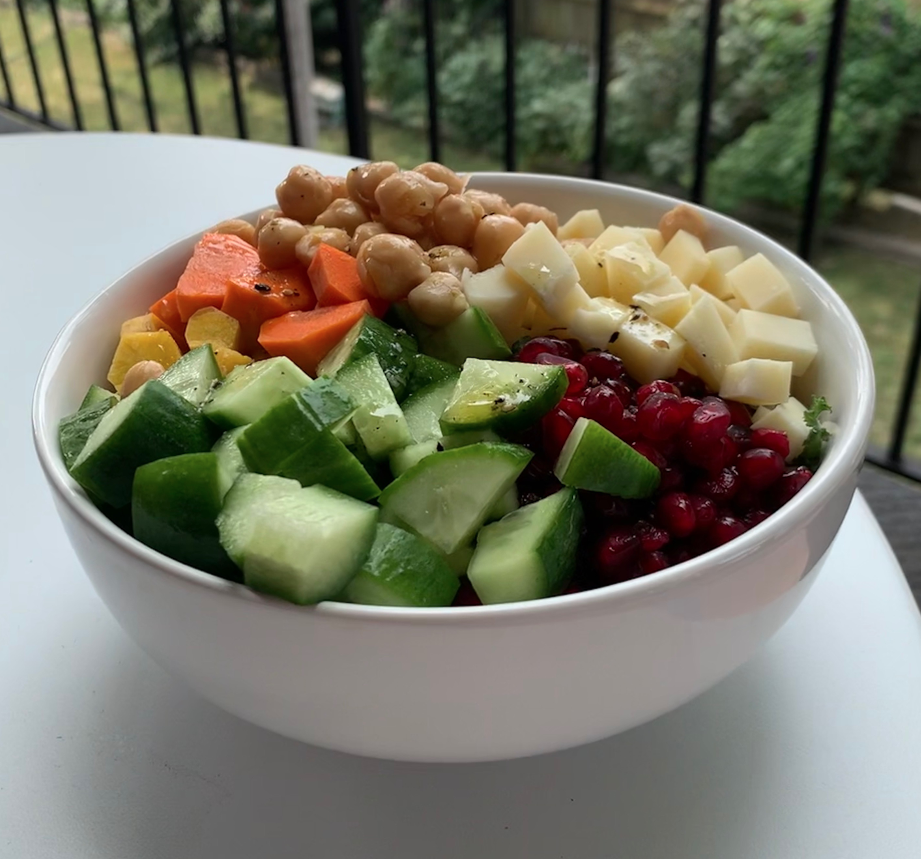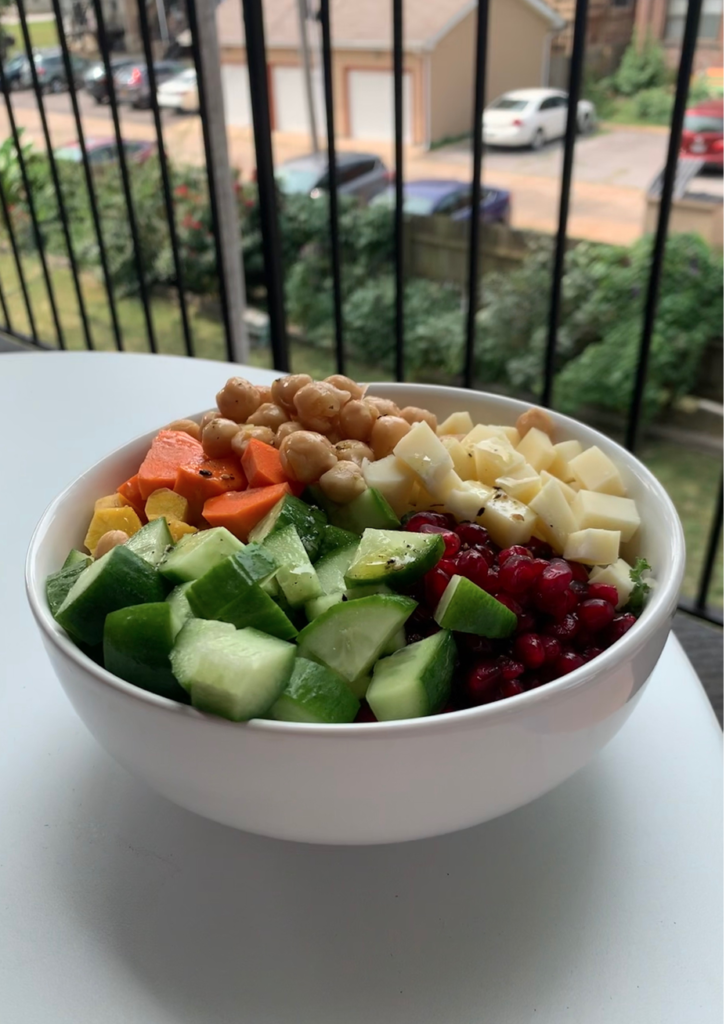
Sophie’s Salad
We have all been there: studying our butts off, cramming like no one has ever crammed before, kicking ourselves for all the “I’ll wake up early and do it tomorrows” we promised ourselves. Eventually, angry sounds start to come from your stomach, and you think, “Holy crap, if I don’t eat right now, I am going to flip out.” Boy, do I have the salad for you. Sophie’s salad is super fast to make and chock-full of high-quality protein to help you power through your study sesh.
Ingredients
For salad
- 1/4 cup cheddar cheese
- 1/2 cup cucumbers
- 1/4 cup pomegranate seeds or dried cranberries
- 1/3 cup thinly sliced carrots
- 1/3 cup chickpeas
- Enough lettuce or mixed greens to fill 3/4 of a medium bowl
For dressing
- 1 tbsp white wine vinegar
- 1 tbsp olive oil
- Salt
- Pepper
- Dijon mustard (optional)
Directions
- Cut cheese into small cubes, and if applicable, slice lettuce to the desired size. Fill the bowl with lettuce and arrange the rest of the salad ingredients on top.
- In a small dish, whisk the vinegar and olive oil until combined. Season with salt and pepper to taste. Add a little squirt of Dijon mustard if desired. Then drizzle over the salad.