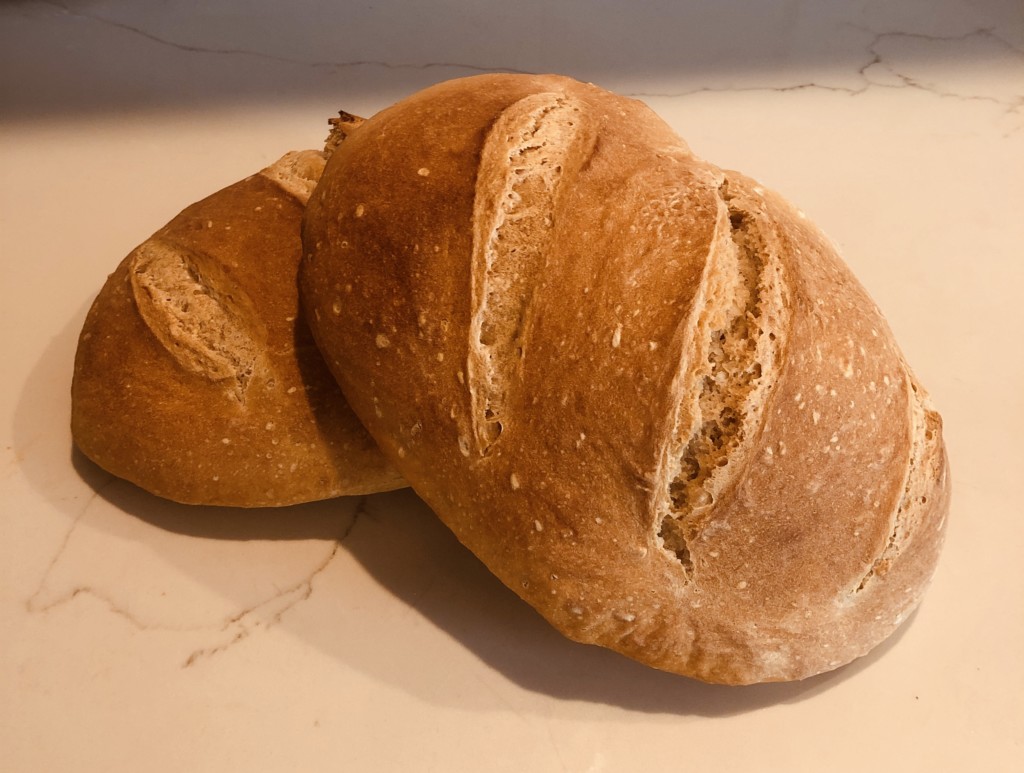
Hey everybody, it’s Jane, covering this week’s CT Cooks for Adina Goldstein. Welcome to the finale of a two part series about an addicting and old carbohydrate — bread!
Today’s recipe is a simple, hard to mess up, no-knead yeasted bread that doesn’t require any fancy starters, special flours, or kneading. It’s definitely not artisanal sourdough, but this is no time for bread supremacy. If you’re new to making bread and you want to start out with baby steps, this is the recipe for you. Heck, I’ve been making bread for years and I still pull out this recipe when I need a lazy, mostly hands-off loaf.
Let’s get to it!
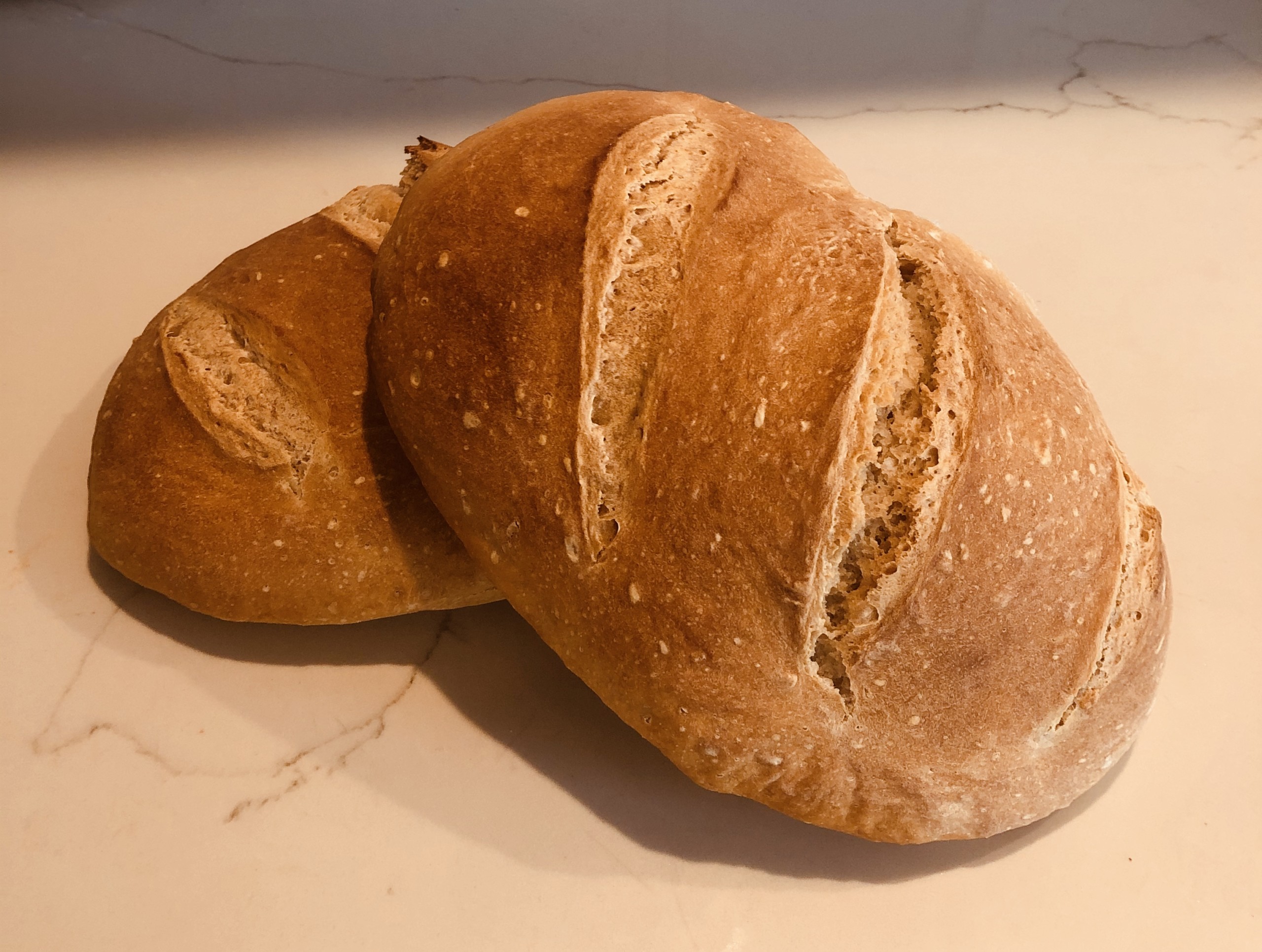
NO-KNEAD BREAD
3 1/2 cups (450 g) of all purpose flour
1 1/2 cups (350 g) of lukewarm water (slightly warmer than room temp, but not hot)
1 packet (7 g) of instant yeast
1/2 tablespoon (9 g) of salt
OPTIONAL: 1 egg white or 3 tablespoons of aquafaba + 2 tablespoons of milk, and/or sesame seeds and coarse sea salt.
- Combine flour and salt in a large bowl (at least 3 quarts large). Mix yeast into water and add the liquid mixture into the dry mixture.
- Using a large wooden spoon or rubber spatula, mix well for about two minutes until no dry spots remain and the mixture is somewhat hard to stir. The dough will be very wet, but do not worry! This is a very high hydration dough, which is very European, if I may say so myself.
- Let the mixture stand, covered with a foil or plastic wrap, at room temp for one hour. Refrigerate overnight for at least 12 hours to three days. (I’ve noticed that at the 12 hour mark, the resulting bread will have a slightly denser crumb but will be smoother and more evenly shaped. By the three day mark, the bread will be more fully flavored but more rustic and flatter. Whatever suits your time and flavor preference!)
- Turn out the dough onto a floured surface and shape it into a ball. If you want a more sandwich-y style loaf, you can make it more oval shaped, but don’t worry if it’s ugly. It gives it character.
- Let the dough rest on a lightly greased baking tray. Alternatively (and I recommend this), you can put it on a piece of parchment paper and transfer it to a preheated baking sheet for a crispier bottom crust when it is time to bake. Let the dough rest for an hour or until you are able to poke the loaf on the side with your fingertip and the indentation remains.
- Towards the end of the loaf’s resting period, preheat your oven to 450 degrees F (230 C). If you are preheating your tray, put your baking tray in now. You will carefully lift the loaf onto the preheated tray using the parchment paper as handles once the oven reaches temperature.
OPTIONAL: Right before baking, brush the loaf with the egg white/aquafaba and milk mixture for optimal browning. Sprinkle with sesame seeds and/or coarse sea salt for additional flair and flavor.
- Using a sharp knife, slash the bread about halfway in three times. Bake the bread for 25-30 minutes, though your time may vary based on your oven. Check in towards the end of your bake time to make sure it’s getting to your desired golden brown color.
- Remove the bread from the oven (carefully!) and transfer to a cooling rack. Now, the hardest part: waiting. A warm but cooled loaf is much easier to slice than a hot loaf, and you don’t risk burning your fingers. The texture is much better this way as well, in my opinion.
Slice with a serrated knife and serve with whatever condiments you desire. My personal favorite (it’s unusual, but don’t knock it until you’ve tried it) is a thin layer of tahini, a little Marmite, and a touch of cumin and chili! The salty-rich-tangy combination of the spreads is complimented perfectly by the spices, making for a great savory breakfast or snack.
There you have it: two easy recipes to experiment with throughout your self-isolation experience! Please feel free to share your own culinary concoctions using these recipes or any delicious discoveries you may have found yourself!