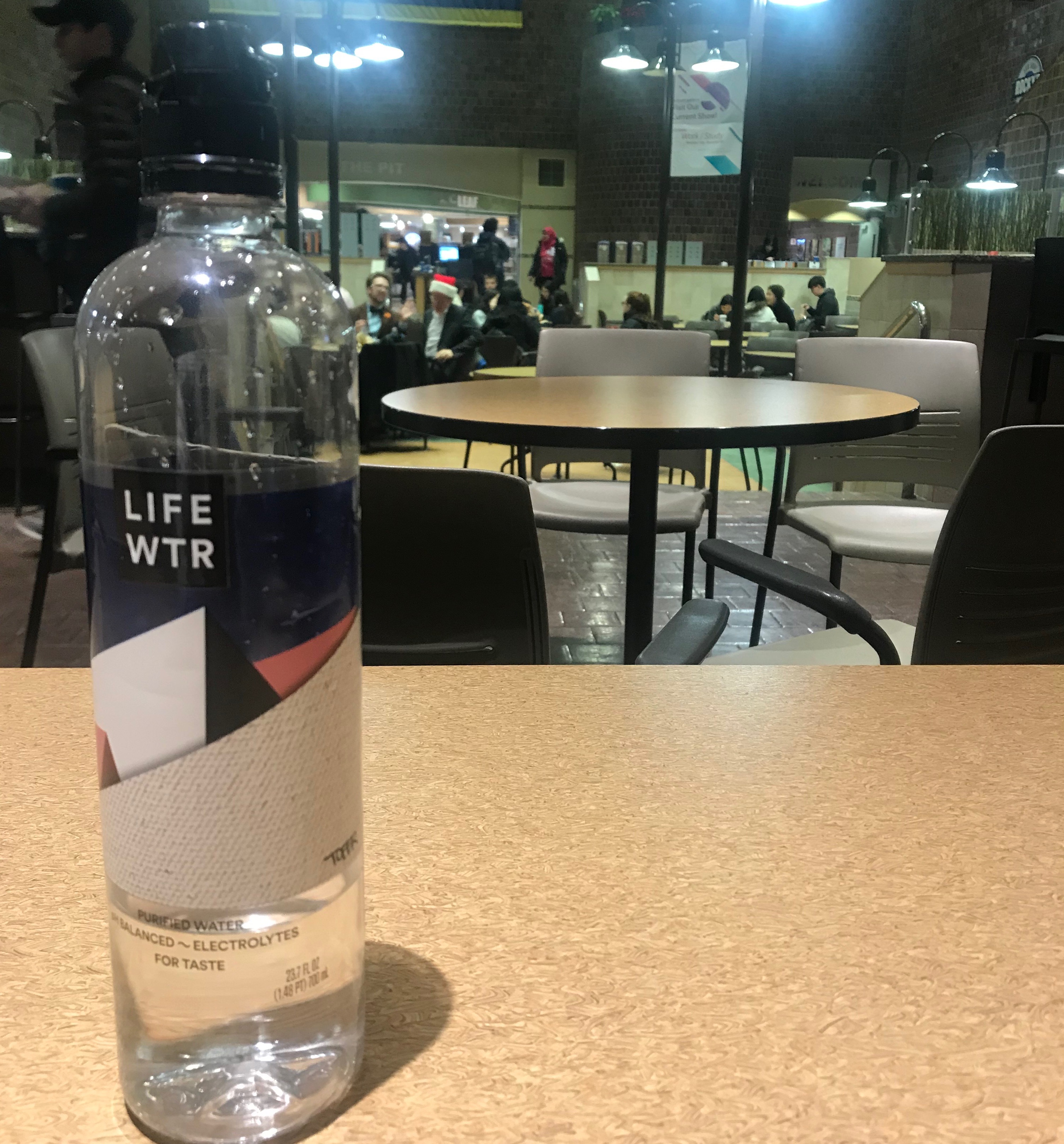
A month ago on Nov. 10, EcoReps emailed a survey to the student body soliciting feedback on a potential UR single-use plastic water bottle ban.
The survey asked about the number of plastic water bottles students bought per week. Another question asked if the responding student would be comfortable drinking from a water fountain, a water bottle refill station, sink tap water, or neither.
EcoRep coordinator and junior Micaela Wallace said the survey was part of an EcoRep subcommittee’s attempt to reduce waste on college campuses.
Wallace said the committee coordinates with a national organization known as the Post Landfill Action Network — or PLAN — and set a goal for this year to learn why people don’t use reusable water bottles.
“[Is] it because they’re afraid of the tap water? Or [because of] rumors that go around about how the tap water is bad?” Wallace said.
While putting together the survey, Wallace said, EcoReps consulted Director of Campus Dining and Auxiliary Operations Cam Schauf for feasibility. They asked him about the possibilities of reducing the amount of plastic water bottles as it would be a “huge profit for the campus,” Wallace said.
However, UR students have mixed feelings on the ban.
“I think it’s the right thing to do, but I don’t know how feasible it is,” sophomore Olivia Gay said.
Sophomore Madison Ireland expressed optimism for the idea, but had doubts as to whether the ban should be implemented now.
“If we have more and better access to water fountains then I think it’s realistic to make this step,” Madison said. “It won’t be a horrible thing to do; we just need to have access once the plastic bottles are gone.”
One example of fountain scarcity is Hillcourt, where residents share one water fountain (located in Gale) between all six buildings.
Like Madison, junior Claire MacCormick also favored the ban.
“I don’t think that would affect me at all,” she said. “Personally I just carry around a water bottle and fill it up. I think a lot of people would get used to it, too.”
Correction (12/8/19): An earlier version of this article had a quote misrepresented. The issue has been corrected.