With a finished lab in my left hand and a cup of coffee in my right, pride fueled my exit from Gleason Library. I had just pulled my first homework all-nighter. I celebrated the occasion by skipping up the hill to Sue B. After all, my fellow classmates were sleeping, and I was out grinding like a real boss.
Exhausted, I crashed into bed. Funny enough, I would surrender to my collapsing eyelids later that morning, unable to pull myself out of bed for my 9:00 a.m. class.
I woke to the sound of my roommate pounding on the door. He had forgotten his keys. Through a haze of confusion, I got up, yawning, to open the door. Then I realized: I had far overslept what was only supposed to be a quick nap. Suddenly, the morning’s previous sense of fulfillment seeped from my half-awake body. Forget the class I just missed, I had a bigger beast: my unhealthy routine. A night’s worth of what appeared to be progress actually left me worse off.
Recent discourse on stress management and anxiety highlights three key factors to pay attention to: mindfulness, meditation, and sleep.
Mindfulness: What, during midterm season? Yeah, right.
Meditation: No way. Too many assignments and deadlines creeping near.
Sleep: That’s expendable, right?
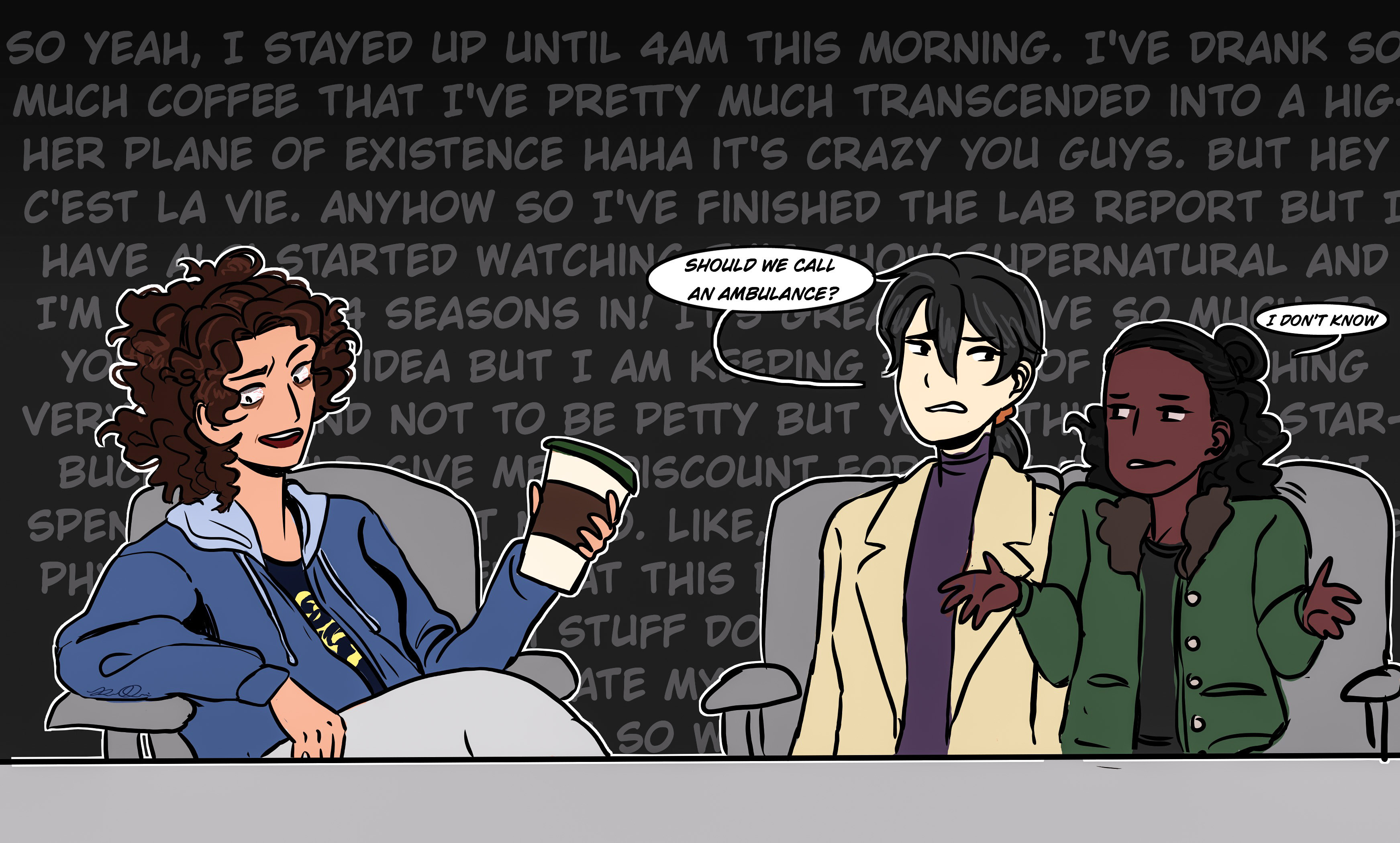
Sitting in the lounge, it was clear I wasn’t the only one with the problem. I was surrounded by yawns, caffeine, and looming deadlines.
These observations are symptoms of our distorted perception of well-being that makes us dismissive of our own mental health. At UR, it seems as though stress cannot be separated from personal well-being, as if our identity is tied to how stressed we are. Shouldering an overload, leadership positions in multiple clubs, an RA position, and academic research all at once has become a way to gain respect and admiration. This image of non-stop work, or as these youngbloods like to say, “grinding,” has been idealized. Maybe it’s important to consider that the norm and a healthy lifestyle can be two very separate ideas.
Ask yourself if you have ever actually compared bedtimes with anyone else in college (excluding the odd extra-late-night-before-something-is-due)?
We are worsening our routines and encouraging others to do the same. We’ve internalized the idea that more work leads to more success. We fail to realize that we’re trapped in a loop, and the source of our mental health crisis lies with our inability to diagnose it.
Stop glorifying the all-nighter, stop blindly praising the super-grind. Focus on using resources such as the University Counseling Center and maintaining a healthy lifestyle of sleeping and eating well. If you are struggling to work efficiently or have bad study habits, talk to the Center for Excellence and Teaching and Learning and develop a plan that will prevent you from needing to cram. Take some time to do activities you love, whether that’s hiking, playing basketball, reading, or any other hobby.
We all go through tough times, but the University has structures in place to help. Let’s take being busy off a pedestal, relax, and work smarter.