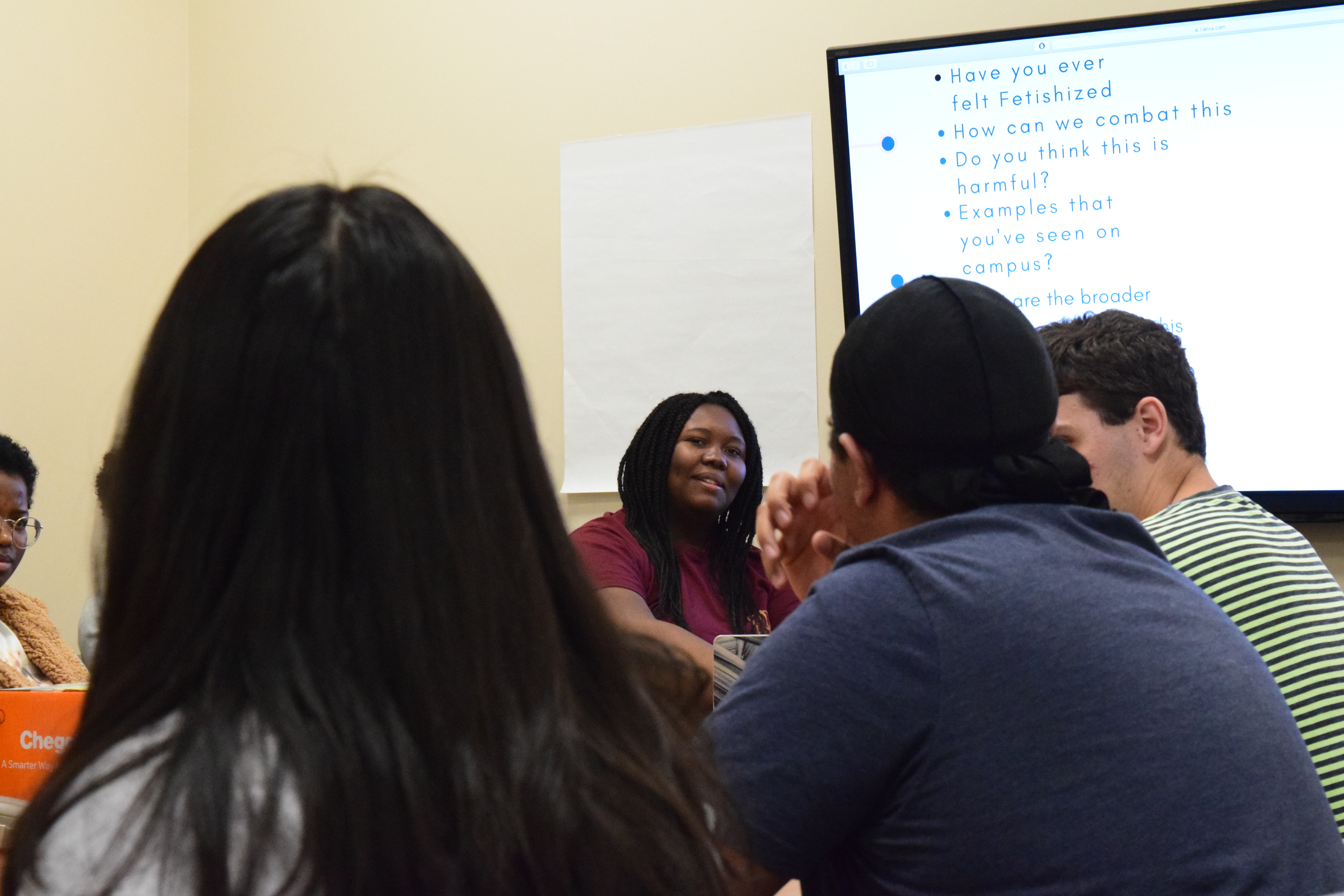
Is dating or attraction based on race okay? Is it just a preference or a sign of something more sinister? On Thursday, Sept. 19, the Womanist Club hosted a session dedicated to these questions and the topic of racial fetishization.
Senior and Womanist Club business manager Gersie Gonsalves-Domond said that she felt racial fetishization was an underrepresented issue.
“I wanted a theme everyone could relate to,” Gonsalves-Domond said. “I feel like everyone has been fetishized or had a bad date or sometimes a bad experience.”
The first half of the event featured articles and clips highlighting Asian racial fetishization, while the second half dove into discussion on what racial fetishization meant and how people encountered it.
“[Racial fetishization] mostly happens to people of color,” Gonsalves-Domond said. “It’s basically just [the] stereotype about a race [without considering] personality and any of that. It helps keep the system of oppression going because it perpetuates the stereotypes […] Some people take it as a compliment but it’s really not.”
Evidence of racial fetishization can be found throughout history. The presentation described the Nazi fetishization of Asian people, and a clip from “Full Metal Jacket” was used to demonstrate the fetishization of Asian women by American soldiers in the Vietnam War.
Although the topic is more openly discussed in the 21st century, the debate still hasn’t settled, and today, fetishization is as prevalent as ever, whether that be in workplaces or schools.
“People need to find an outlet to voice those opinions and voice their thoughts and be like, ‘Oh, I saw this happen here, and I wasn’t okay with it,’” said junior and Womanist Club president Angie Rosario.
Despite being reticent at the start of the session, people started opening up about personal experiences throughout the discussion. Attendees offered their thoughts, saying that fetishization involved viewing someone as an “object of pleasure” and that it stemmed from a “lack of exposure.”
There was a general consensus among the audience members that racial fetishization should not be encouraged and that it could be harmful to a person’s self-esteem.
When the speaker asked whether people have felt fetishized before, both men and women shared their experiences.
After the presentation, first-year Jennifer Lee said she found it impactful.
“There was a community who was willing to talk about [racial fetishization] and I feel like that’s super important, because if we weren’t here and we weren’t talking about it, it would’ve just been another issue […] swept under the rug.”
Correction (9/22/19): An earlier version of this article had the wrong featured image. The issue has been corrected.