In my dorm room, safely tucked in a little corner of the floor, sits a pair of bright orange, special edition Bobbito Garcia suede Pumas. The off-white tongues are stained faintly blue from my jeans, the patterned gum outsoles are just a bit worn, but the back interiors still proudly read “Where’d You Get Those?” This classic sneaker-head’s question is also the title of Garcia’s book, a celebration of the New York sneaker culture born in the ‘60s and ‘70s that spread throughout the country and world.
“Where’d You Get Those” is a critical book because it charts the pre-global history of sneakers and sneaker culture. This is a unique period in American fashion because it didn’t begin with high-status designers and rich white people. It began when kids hanging out on the streets of New York started comparing kicks. Through the mid-80s, sneaker culture remained underground, blossoming through after-school shoe trades and bubbling up with excitement as new models dropped.
In 1985, when Michael Jordan first laced up the most iconic sneakers since the Northeast started calling them “sneakers,” the Air Jordan 1’s, it started to proliferate. There he was, breaking league rules and wearing shoes that would have been fresh as hell on any chain-linked court in Harlem or the Bronx in front of TV audiences of tens of millions. They brought the culture to the country.
Bobbito is a fixture of the New York hip-hop scene. As half of the “Stretch and Bobbito” WKCR program with DJ Stretch Armstrong, he first showed the planet artists like The Notorious B.I.G., Nas, Jay-Z, and Eminem for the first time. But as hip-hop and rap exploded into, arguably, the most popular new music of the turn of the millennium, Bob’s other great love, sneakers, followed.
Sneakers didn’t have the same problem as rap, with its lyrics suggestive of social upheaval. They were just shoes, and kids everywhere could justify them as status symbols, a much easier pill for parents to swallow than anything explicitly related to hardcore gangsta rap. As such, even though designers have gentrified the sneaker industry, it’s maintained a lot of its original character. Sneakerheads from all over the world are continuing a vibrant tradition that started on the streets of New York and persists to this day.
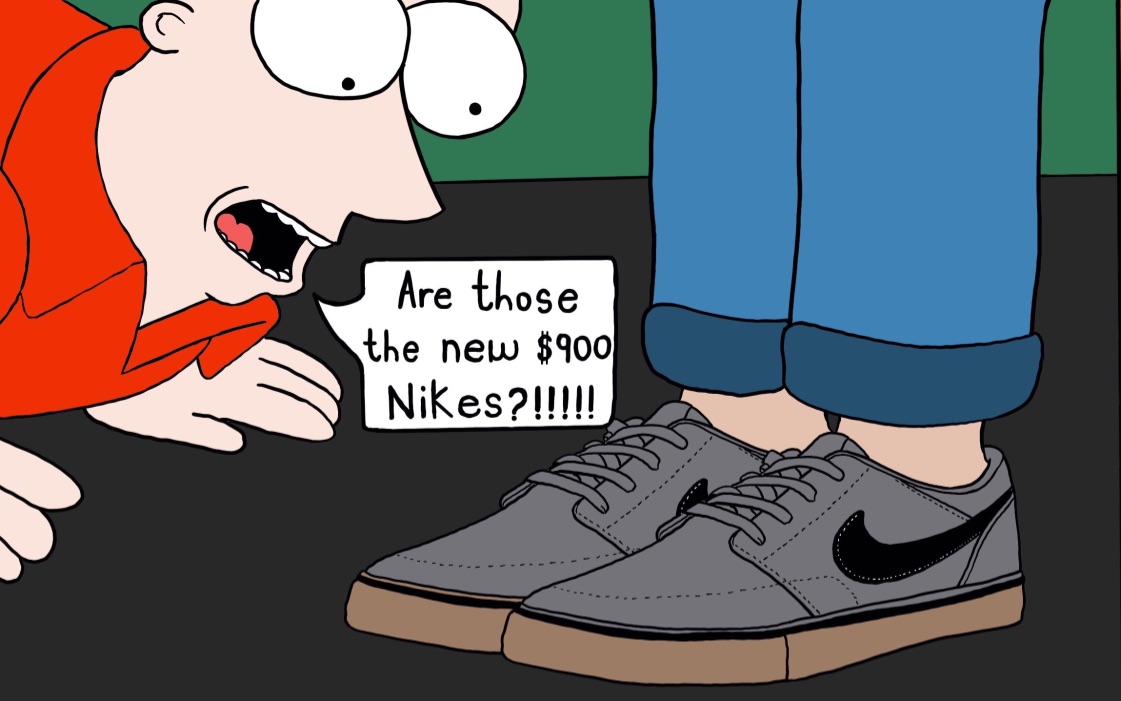
Sneaker culture is universal, crossing the boundaries of language and geography. It’s one of the few cultural institutions that crosses lines of economic class, having begun on the feet of the urban poor and remaining accessible even today. Even though some designer shoes can get ridiculously expensive, hand-me-downs and shoe trades are still valid ways for genuine heat to end up on the feet of kids and grown-ups everywhere today. In fact, those beat-up Air Forces and Superstars are much more special than the overpriced Yeezys the hypebeast scoops up with his parents’ credit card. They’re more real.
Sneakers, somehow, have always remained of the people. It doesn’t matter who you are, where you come from, how much money is in your bank account, or what you look like. Jordan 1’s are nice. It’s a universal constant. Anyone can tell you that.