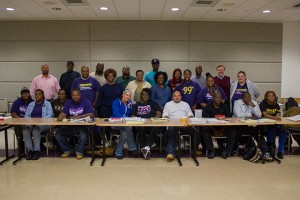
UR and the Service Employees International Union (SEIU) tentatively agreed on new labor contracts for approximately 1,800 workers at UR Medical Center’s Strong Memorial Hospital and UR campuses after a day of negotiations on Tuesday, Oct 7.
Though the University and union delegates approved of the proposed contract, the union membership has yet to vote on it, and an all-day vote has been tentatively set for Thursday, Oct. 16. If approved, the new contract would conclude a series of nine contract negotiation meetings in which workers negotiated issues including wages, healthcare, sick leave, and accessibility to education.
SEIU Local 200United organizer Calvin Ott said that it was “unprecedented to have negotiations finish this early” and that “it was the first time no actions were needed to be taken by workers as far as picketing,” a stark contrast to 2012’s drawn-out contract negotiation. Though details of the proposed contrast will not be made public until after the vote, Ott said that the union was able to “work out a very good deal” for its members.
This year, workers joined the “Fight for Fifteen,” a nationwide campaign for better paying jobs. They argued that workers who have worked for UR for several years should earn a living wage, which they consider $15.00 an hour.
Union officials and Students for a Democratic Society (SDS) members noted the fact that Rochester is considered the third poorest city in America after Detroit and Cleveland, and that UR is the largest and wealthiest employer in Rochester.
Jake Allen, who works as an organizer for SEIU Local 200United and with UR’s SDS, said, “Institutions as large and wealthy as the University of Rochester have a moral obligation to take care of the people that make that institution run.”
Just an hour before the agreement was reached, SDS was discussing plans to reestablish the fair contract coalition, which they first established in 2012 by bringing together different student groups in support of a fair contract for workers.
Students protested by marching around campus, picketing, and delivering a petition signed by 500 students to Seligman’s office, pressuring the University to raise wages and keep the health plan for workers.
Junior Miles Meth, who is part of SDS, said of their efforts, “We’re not just going to stand silently while people who we’re interacting with every day […] aren’t making enough to make a living wage.”
Before the decision had been reached, SDS was planning on gathering 900 signatures on a petition, using social media to share photos and quotes from workers, and intensifying their overall efforts to raise awareness of the issues many workers at UR are dealing with. Some examples are increased rent incurred by UR construction, the hiring of outsiders instead of current employees, and inflexibility when trying to make time to take classes at UR.
SDS members who heard the news of the tentative agreement observed that such efforts would likely be unnecessary if the contract went through.
Tiarra Singleton, who works in the Pit, noted the student support.
“The students have our back,” Singleton said. “When it’s time to picket, they’re out there. They’re wearing the pins; they’re coming to the rallies. We can do it because of them.”
Lai is a member of
the class of 2018.