Courtesy of rochester.edu
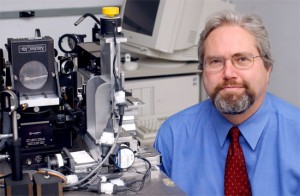
Professor of Optics and Dean of Research David Williams has won the top prize awarded worldwide in his field.
Williams was presented with the prestigious Antonio Champalimaud Vision Award at a ceremony in Lisbon, Portugal on Friday, Sept. 14 for his pioneering work in adaptive optics technologies.
“This invention flowed naturally out of a whole line of research in which I’ve been engaged my whole career,” Williams said in a phone interview.
Williams was awarded half of the total one million euro prize money — $630,000 — to be used for future research. The remainder of the prize money will be shared with five other scientists who developed optical coherence tomography (OCT) — another method of imaging the retina.
OCT technology was invented six years before adaptive optics, according to Williams, who said that the two are “very compatible” and “complement [each other] beautifully.”
Williams modified existing technology used mainly by astronomers to see through the Earth’s atmosphere and applied this concept to the human eye, making it possible to look through the pupil and image individual retinal cells.
By modifying the path of light entering the eye, the technology can improve vision for those reliant on intraocular lenses and laser refractive surgery.
Williams and his team have “revitalized the field of physiological optics, producing year after year truly beautiful, technically brilliant and groundbreaking work,” according to the jury that awarded Williams and his team the prize.
“It’s the biggest award in my field,” Williams said. “No one dares to dream that they would get an award so prestigious as this one.”
Williams stressed that a host of UR scientists, researchers and students played a crucial role in his success and that te prize is for “everyone who made it possible over the past 20 years.”
His future research will focus on watching the activity of neurons in the retina as they respond to neural stimuli and pioneering noninvasive ways to view the human retina.
As the dean of research at UR, Williams also noted that he hopes that more UR faculty earn this kind of recognition for their work. The prize “raises the whole visibility worldwide of all of us who are engaged in this technology and reaffirms our position as a leading institution in the field of optics,” he said.
Buletti is a member of the class of 2013.
