Courtesy of Ronald Paprocki
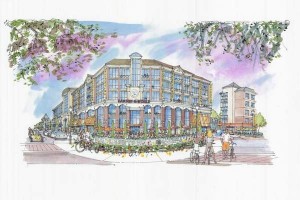
City Council gave its approval on Tuesday, April 24 for Rochester Mayor Thomas Richards to seek a $20 million federal loan from the U.S. Department of Housing and Urban Development that will help finance UR’s $140 million College Town project slated to transform 16 acres of University property on Mt. Hope Avenue into a vibrant hub of shops, restaurants, apartments and office space.
The loan would be repaid with a portion of annual property tax payments over 20 years. Conditions stipulated by the city for the loan include that at least 10 of the proposed 150 housing units be for low- and moderate-income households, that at least 20 percent of the total dollar amount of construction contracts for the project go to minority- or women-owned businesses and small business enterprises and that the labor for these contracts would be at least 20 percent minority and 6.9 percent women.
Current plans for College Town call for a two-story Barnes & Nobles, restaurants, gourmet food markets, office space, a 150-room hotel and conference center and potentially a parking garage with the capacity for 850 vehicles — the first floor of which would house a Rochester Genesee Regional Transportation Authority transit station.
Buletti is a member of the class of 2013.