Karli Cozen, News Editor
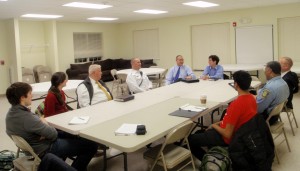
On Wednesday, Feb. 22, UR Security and the Students’ Association held an open forum to discuss campus security.
The main issue Security discussed was the Rails to Trails bridge, formally an old railroad bridge, which is being renovated so that pedestrians and bicyclists can travel from the city of Rochester directly into the River Campus. This bridge will be owned and operated by the city of Rochester and is located at the intersection of Intercampus Drive and Wilson Boulevard.
This bridge will have none of the security measures like those on the foot bridge outside of Tiernan Hall. There will be no blue lights or security cameras and the bridge will be dark at night. Security and UR undergrads fear that this new bridge may decrease safety on campus. They also predict that students will use this bridge as an alternate route off campus, putting themselves in danger by either not realizing campus security is not present on it or simply not caring.
SA President and senior Bradley Halpern discussed installing a clearly marked sign on the bridge at the exit of campus property, so students are aware of the lack of surveillance. Security officers also stated that there will be heavier security measures taken on the River Campus side of the bridge so that crime does not increase on campus.
The SA Safe Ride Home Service, which was implemented this December, was also discussed. Students can receive rides from various points on UR’s campus by calling Security within the hours of 1 and 4 a.m.
“So far, the safe ride program has been a big success,” a UR Security officer at the forum said. According to Security, the service is averaging 14 to 20 calls a night.
This program, which was a result of student input at forums, frees up hours of patrol officer work because they no longer have to act as escorts for students.
One student brought up the possibility of extending this program to include student transportation in the 19th ward, in addition to the current areas it serves – the River Campus, Southside, Hill Court and Riverview apartments.
This idea is going to be discussed further with administrators, however, Security officers fear that this may lead to students abusing transportation, rather then using it for its original purpose of safeguarding the safety and security of students.
The forum ended with a brief discussion on the controversial topic of D-day.
Security’s main fear is that the current D-day practices will result in a student death. Security wants to lower the risk of any sort of incident, which may mean stricter alcohol enforcement on D-Day this year.
Students seemed to feel that changing D-day to a Friday will make the day a two day-long celebration on both Friday and Saturday which will only prolong the drinking activities.
A Medical Emergency Response Team (MERT) representative at the forum suggested some sort of alcohol education for underclassmen to help lower the risk of an incident.
Students also suggested starting activities earlier in the day so there will be less time for drinking, however, others felt that this would be impractical, causing students to choose between academics and the festivities.
Cozen is a member of the class of 2015.

