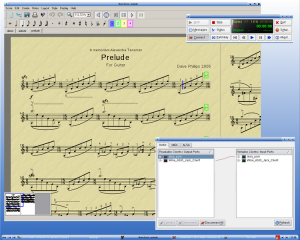
Courtesy of linux-sound.org
It’s a rare treat to come across free software that not only accomplishes what it was designed to do, but does so on a level comparable to much more expensive software packages. MuseScore is one such program — it is a cost-effective option for digital music notation, printing and exporting, and, in terms of quality, it’s on par with competing programs like Sibelius and Finale.
In the eyes of many, Sibelius is the industry leader in music notation software, but there’s only one version of the package, and it has an MSRP of nearly $600, putting it well outside the reach of the casual composer on a budget. Finale used to offer its entry-level NotePad software for free, but it now comes with a modest $9.95 price tag. Its low cost puts it in a league with MuseScore, but NotePad is far more limited than MuseScore in terms of the customizability of your work (e.g. number of staves allowed, time changes, etc.).
MuseScore’s intuitive flow and easy-to-learn note-entry system stand head and shoulders above NotePad — something that is apparent upon a cursory comparison of the two. Delve a little deeper into MuseScore and you’ll notice its impressive selection of built-in instruments, its full import and export capabilities with MIDI and MusicXML file types (and ability to export to PDFs) and even the professional appearance of its printed music.
As with almost all freeware, MuseScore does have its limitations: Some users have complained about the playback sounds of the instruments, and under high processing demands it can be a little crash-prone. However, most users won’t notice a difference between MuseScore and its costlier cousins — other than a few hundred bucks, of course.