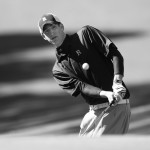
All four of the UR golfers broke 80 strokes for two days straight, resulting in a second-place finish. Campus Times Archives.
The Rochester golf team had a solid showing at the Edward Jones Shootout on April 9 and 10. The team’s focus — along with some nice weather — helped them earn second place in the tournament.

On the first day, the Yellowjackets’ lowest scorer was senior Ryan Williams. Williams shot 38 for the front nine and then worked out the kinks to close with a 35 on the back nine. His first day score was 73 on the par 70 course.
Freshman Nick Palladino was next for the ‘Jackets with a 74, followed closely by sophomore Marc Younentob (75)and freshman Will Mallia (77).
UR put up another strong showing on the second day by shooting the exact same score as they did on the first: 299. Youngentob shot a 74, earning him the team’s overall lowest two-day score of 149 and a share of eighth place.
“The first day of the tournament I did not hit the ball very well,” Youngentob said. “But my putting was good and carried me through the day to shoot 75. I kept myself in contention to finish high individually. The second day, I hit the ball much better, but my putting was not great and I shot 74 … Although I’m not disappointed, I know I could have done better.”
Palladino placed 10th with an overall score of 150 while Mallia scored a 16th-place score of 153. Williams and junior Michael Chudacoff both had two-day scores of 154.
Youngentob looks forward to the team’s next tournament, the Kravetz Invitational, and is even more excited about next season, as most of this year’s top players are underclassmen and will return in the fall.
Bates is a member of
the class of 2014.