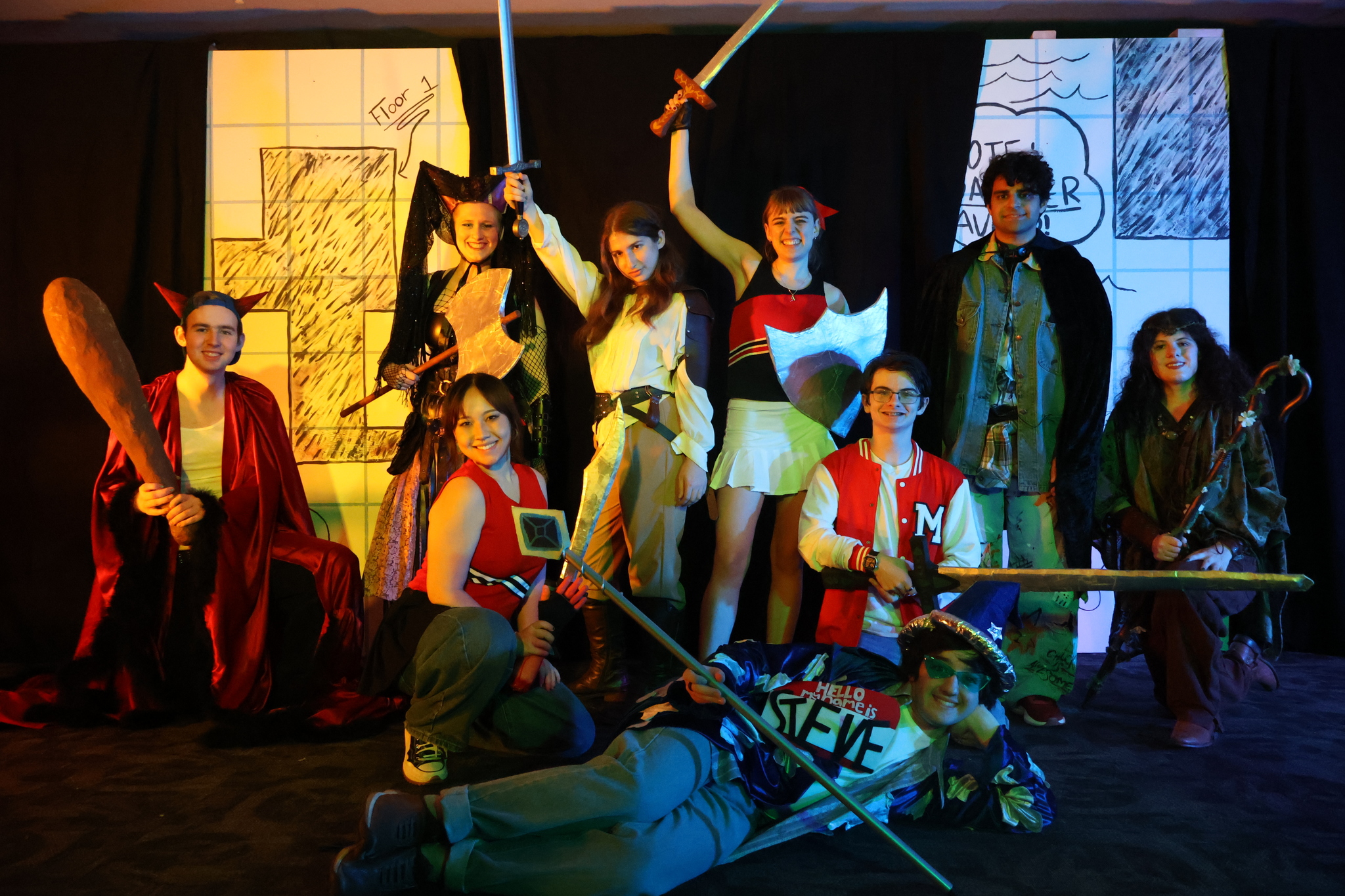
Scott Strenger and Ashley Haluck-Kangas offer a combination of experience and vision that lends credibility to their bid for the two highest offices in student government. They communicate a message that included innovative ideas of their own and an important focus on academics.
As an active senator and deputy chairperson of the Communications and Public Relations Committee, Strenger has already demonstrated his passion for reaching out to students and administrators alike, a trait that will serve him well should he be elected president.
Through initiatives like URoc, a program for publicizing club events on Facebook, he has shown his ability not only to communicate ideas, but also to convert them into tangible achievements that benefit the campus community.
Although she appeared less confident than her running mate during endorsement interviews with the Campus Times, Haluck-Kangas has also shown her dedication to student issues through previous accomplishments such as her work on course evaluation feedback and the Collegiate Readership Program.
While it is of the utmost importance that the next SA President and Vice President represent students first, the ability to work with administrators in order to enact meaningful change for students is an important dimension of student leadership. Given their record, Strenger and Haluck-Kangas clearly have a leg up on their opponents in this area.
A notable feature of this ticket, which differentiates it from the opposition, is its emphasis on the academic side of a student’s life. Since academic concerns have often been marginalized in recent elections, it is encouraging to see this issue being addressed.
Strenger and Haluck-Kangas have concrete proposals to improve academic life, including making the Registrar more accessible online and adjusting student advising. While consolidating academic Web sites may not be immediately feasible, they are taking steps in the right direction. To be successful, however, they will need to move beyond conversations with academic departments and student groups to more substantive proposals.
In addition to the clear enthusiasm that the ticket has shown for improving school spirit, the Campus Times is encouraged by proposals that would push the SA toward new, fresh goals. Strenger and Haluck-Kangas are right to acknowledge the mixed success of the ‘Fill Fauver” program, although several ideas such as a T-shirt cannon and additional giveaways appear to be trivial attempts to address the program’s failures. On the other hand, the initiative ‘Sell Out Strong,” would draw needed attention to UR’s diverse performance groups.
Continuing the policy pursued by current President Eric Weissmann and Vice President Brittany Crowley, Strenger and Haluck-Kangas have acknowledged the issue of the burgeoning number of student groups. Although UR’s large collection of student groups is an asset to the college community, encouraging clubs with similar objectives to collaborate on programing will reduce the strain on university resources, while potentially increasing the quality of programing.
Lastly, the ticket’s desire to see the University better connected with the Eastman School of Music is laudable, as is its desire to reach out to the 19th Ward and the Mt. Hope corridor.
Although their goals are ambitious, and it remains to be seen how many of their ideas will prove implementable, Strenger and Haluck-Kangas have communicated proposals that would dramatically enhance student life. The breadth and feasibility of their proposals gives us confidence that they are the more qualified ticket to lead the Students’ Association in the coming year.