I wish to comment on President Jackson’s policy on the university’s position on joining the Worker’s Right’s Consortium. His justifications for not joining are incomplete, misleading and not wholly accurate. Between 1999 and 2001 the student movement known as “No Sweat” mobilized a significant portion of the campus to ask that the university join the WRC. The aim of this organization is to monitor the working conditions of factories in developing countries producing university apparel. For only $1,000 per year to join, all information regarding the manufacture of university apparel will be verified and made public, thus giving corporations a huge incentive to better their working conditions – based solely on local standards of living. After many months of increasingly intense action, Jackson finally agreed to appoint a committee to look into the issue. However, it is evident from the beginning that President Jackson had already made up his mind. In his March 20, 2000, memo in which he called for such a committee, he outlined his general reservations to the project, including his opinion that such matters, “are much better left to political decision making, or to the forces of the market – including boycotts by interested individuals – than to actions by academic institutions.” This statement makes Jackson’s predisposition abundantly clear, and the committee reflected this bias – consisting of only two voting student representatives – plus one from the William E. Simon Graduate School of Business Administration – on a committee of nine.The final committee report recommended that the university not join the WRC by a six to three vote, with both undergrad student representatives voting in the minority – citing the Kalven Report, produced in 1967 by the University of Chicago, as guidance for not taking a “political” stance. The committee’s recommendations were accepted by Jackson and the university did not join the WRC.The Kalven Report was drawn up by the Kalven Committee at the University of Chicago to address the university’s role in “Political and Social Action.” The report’s general conclusion is that the university “has a unique role to play in fostering the development of social and political values in a society,” it is therefore, “the home and sponsor of critics; it is not itself the critic.” However, what is “political” is very hard to define, and not taking a political position is, of course, a political position. The report also states that, in certain cases, the, “corporate activities of the university may appear so incompatible with paramount social values as to require careful assessment of the consequences.” It is patently clear that UR did not carefully assess the consequences of its overtly political decision, to not join the WRC, which is indeed “incompatible with paramount social values,” of human rights. Furthermore, the producers of the Kalven Report, the University of Chicago, recently kicked Taco Bell off campus as a result of its treatment of workers – a similar “political” decision to that which the Apparel Committee decided not to make. Our own university’s policy has violated this precept as well. In 1999, after a sit-in at Wallace Hall by the Black Students Union, the university changed its policy regarding minority representation on campus. This affirmative action stance taken by the university was indeed a “political” decision, despite Jackson’s assertion to the contrary, at the Sophomore Class dinner that the WRC decision “differs fundamentally from diversity issues.” In his memo endorsing the committee’s decision to join the WRC, however, Jackson made it specifically clear that there will be “continuing vigilance and study, recognizing that new information may or may not bring a different outcome.” The fact is that there is plentiful evidence that has been put together over the past academic year to prove the reliability and effectiveness of joining the WRC. Currently, 120 schools are now members of the organization, and not one of them has lost a contract with their apparel manufactures, while factory conditions have improved. Unfortunately, despite repeated attempts to meet with Jackson and present evidence, he has continually shown himself to be inaccessible and distant to student demands and needs. Why is it so much trouble for students to know where their clothes come from? I sincerely hope that in the future the administration will be more willing to discuss issues such as this with students with an open mind and a willingness to listen.Powell can be reached at npowell@campustimes.org.


grief
TOOP kills the stage with ‘She Kills Monsters’
It isn’t until “Lilith” gets struck by evil succubi that the weight of the realization that she had never known her sister begins to wear on her heart. The last week of her life had been spent getting to know the ghost of a girl who she had never paid attention to while she was alive. Read More
Contracts
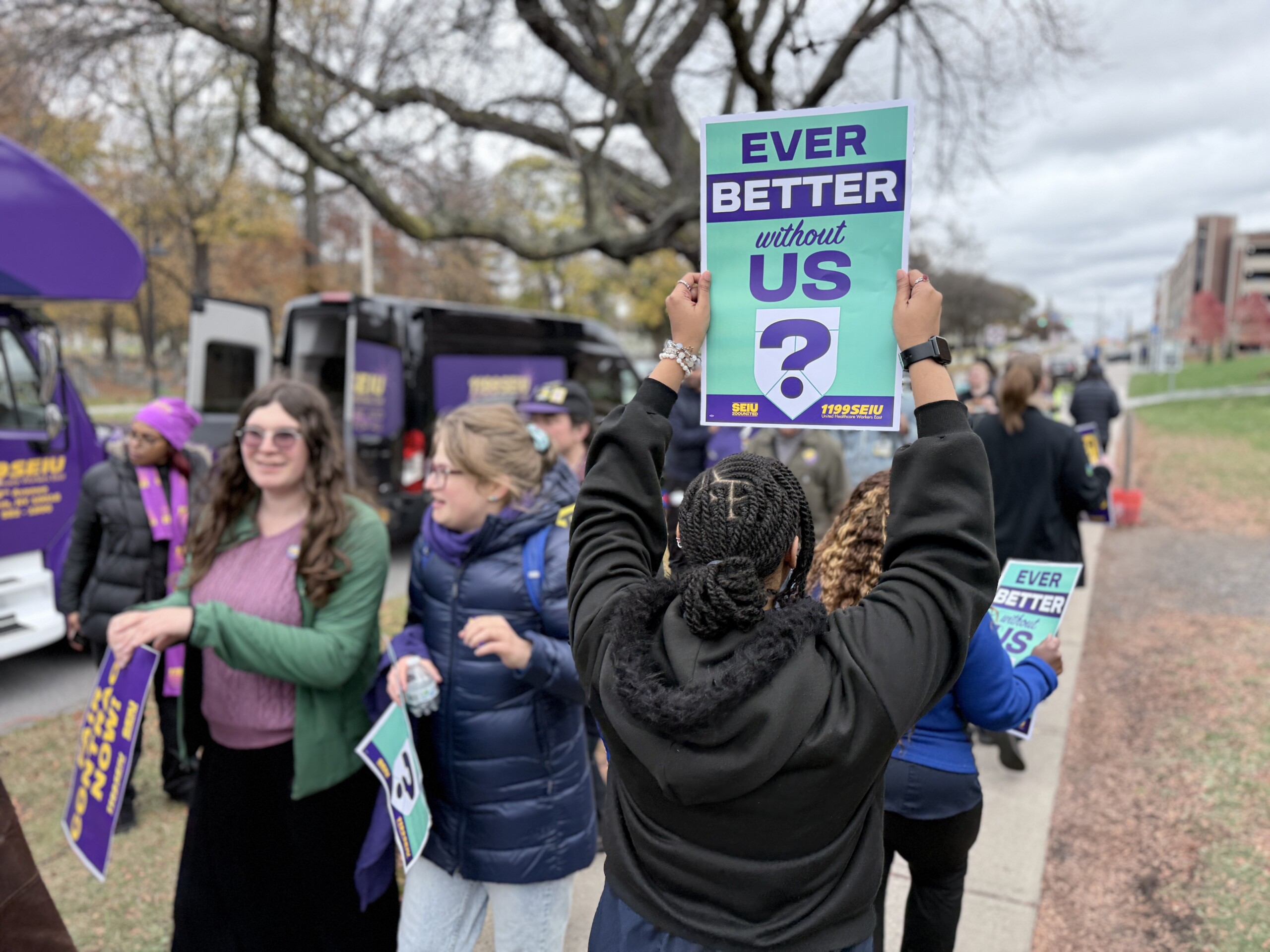
URochester Unions Picket Over Contract Changes
Local unions, 1199 Service Employees International Union (SEIU) and Local 200United SEIU, held an informational picket to inform the public about changes URochester has proposed making to their collective bargaining agreement. Read More
Baskeball
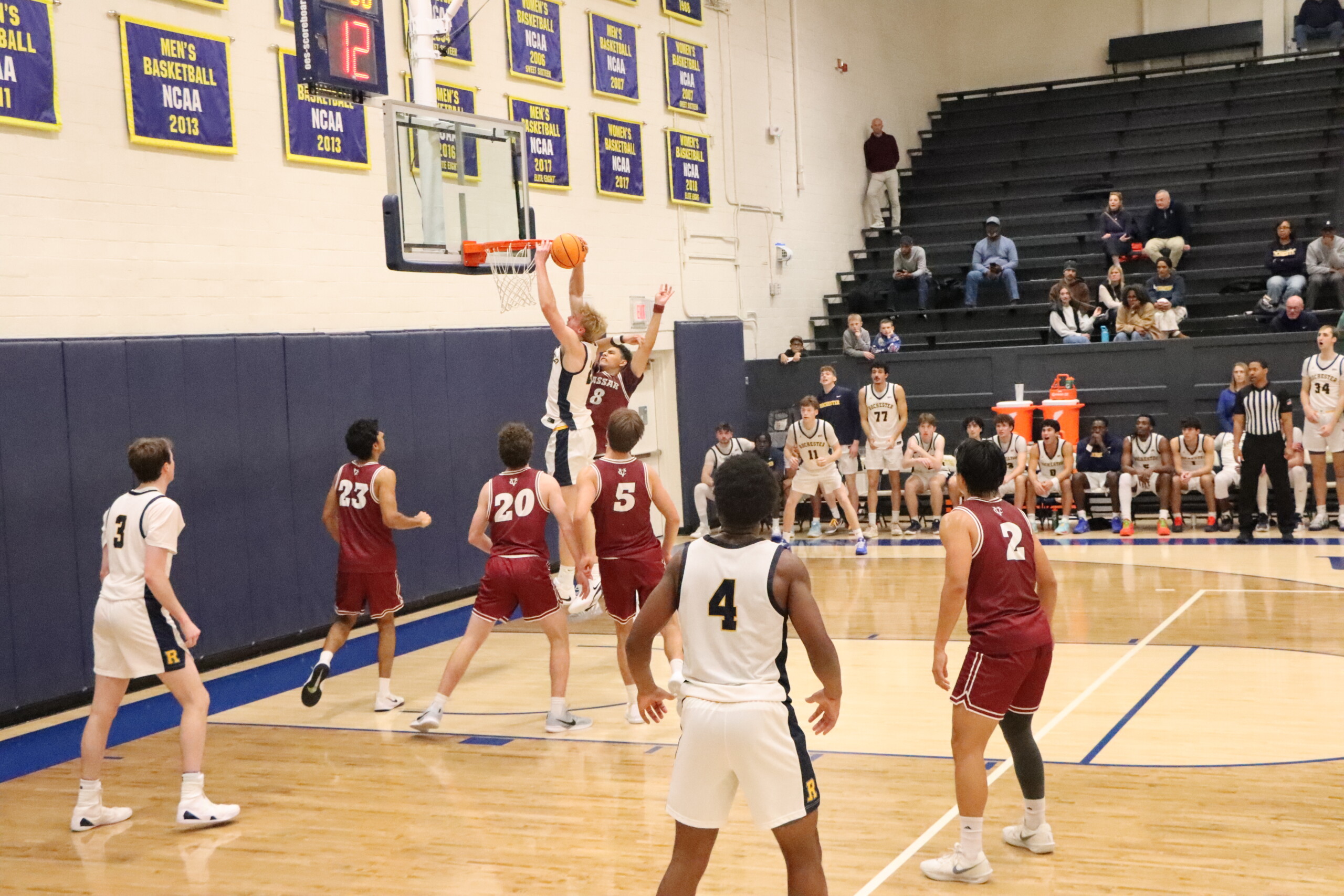
Men’s Basketball pulls away from Vassar in a tournament victory
The ’Jackets regained control after halftime, limiting the Brewers to just 9-for-34 attempts from the field in the second half. The Brewers also committed six turnovers during the period, struggling to find offensive consistency as the ’Jackets maintained their advantage. Read More