Courtesy of leadershipfreak.com
In a classroom of 200 students, a professor conducts a quiz in which students rate themselves on a number of attributes and capabilities in comparison to their peers. After tabulating the results, it turns out that nearly every single student viewed his or her self as above average. What’s more, 25 percent of those students saw themselves in the top one percent in terms of their ability to get along with others.
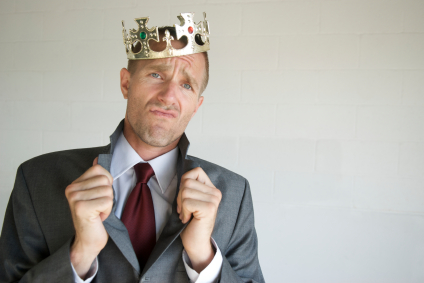
This tendency to overestimate one’s skills in relation to others isn’t new. It’s called “illusory superiority” or the “better-than-average effect” and has been observed across all walks of life: drivers, parents, CEOs, presidents. According to recent surveys, however, this level of self-inflation among students, in particular, has reached a new peak.
The American Freshmen Survey, which has asked students to rate themselves compared to their peers since 1966, found that over the last four decades there’s been a dramatic rise in the number of students who describe themselves as “above average” in areas of academic ability, drive to achieve, mathematical ability and self-confidence. Approximately 75 percent of freshmen asserted a greater “drive to achieve” than their peers, and about 60 percent rated their “intellectual self confidence” and “leadership ability” as above average.
Disregard the statistical improbability of these numbers. Disregard the fact that the average, in these cases, refers to the median and not the mean. What worries me most is the disparity between a person’s self-perception and the reality around us.
I’m disinclined to blame Western culture for over-gratifying this generation, for drilling ideas of brilliance into the minds of students, for handing out unwarranted cookies, dash of narcissism included. There’s nothing wrong with self-confidence. It is unearned, self-inflated confidence that sits at the root of this problem.
Harboring such a high image can be severely detrimental. When we routinely convince ourselves that we’re better than we actually are, we won’t progress. This is not to say that people shouldn’t view themselves in a favorable light; it’s just that people are more aware of their strengths and not their weaknesses.
Interestingly, a catch-22 of this phenomenon is that incompetent people are unable to recognize their own poor performance; they can’t assess themselves accurately and thus tend to grossly overestimate their skills and abilities. Known as the Dunning-Kruger effect, unskilled people not only fail to learn from their mistakes, but they also consider themselves more competent than their peers.
Although there’s no easy remedy for such a problem, I believe one solution is self-awareness. Coming to terms with reality can help target and understand blind spots and weaknesses. And, as hard as that may be, this will give us the capacity to accept and face what we tend to deny. We can’t change what we don’t acknowledge.
In the ideal world, self-image would be linked to self-knowledge. According to behavioral economist Dan Ariely, setting benchmarks can prove to be another way to overcome perceptions. Fortunately for us, college provides the appropriate atmosphere to cultivate this insight.
Maybe as a new step, perform a reality check. Question assertions. Question your perceptions. Question your surroundings. Question yourself, and shatter this illusion.
Kerem is a member of the class of 2015.