Beyond bringing joy to birdwatchers, migratory birds are vital to their ecosystems as they provide different services from insect hunting to seed dispersing along their seasonal journeys.
Unfortunately, 3 billion birds have died out since the 1970s, and over 90% of these losses include migratory songbirds such as warblers, sparrows, and finches.
In Monroe County, New York, on the south shore of Ontario County, the Braddock Bay Bird Observatory (BBBO) is one of many key nonprofit organizations that work to mitigate this decline in bird populations. Due to efforts such as regular and seasonal bird bandings, volunteer work, and public outreach, BBBO has been working hard to engage people from various backgrounds to get involved with bird conservation.
Migratory songbird banding was first practiced in the general area of Manitou Beach in 1960. As the banders began to notice how songbirds became abundant during the spring and fall migrations in that area, more regular, seasonal bandings were conducted and the observatory was then founded in 1994 as a nonprofit 501(c)3. The Genesee Land Trust granted much of the current land for research use today.
“The 15 acres surrounding us were conserved for the purpose of what we do. So, our work led to the conservation of this plot of land by the Genesee Land Trust,” noted Andrea Patterson, Executive Director and Master Bander of BBBO.
BBBO has played a key role in bird conservation and research efforts throughout Monroe County. The organization’s research primarily focuses on stopover ecology, or how birds use different habitats to rest and refuel during migration.
Patterson, who oversees bird banding and data collection, explained that this research helps conservationists identify which habitats are most important to protect. “We can’t save every green space,” Patterson said, emphasizing the importance of identifying critical stopover sites and directing conservation resources toward them.
While birds have established breeding and nonbreeding grounds, Patterson noted that the habits connecting these destinations are equally important to consider when developing conservation strategies.
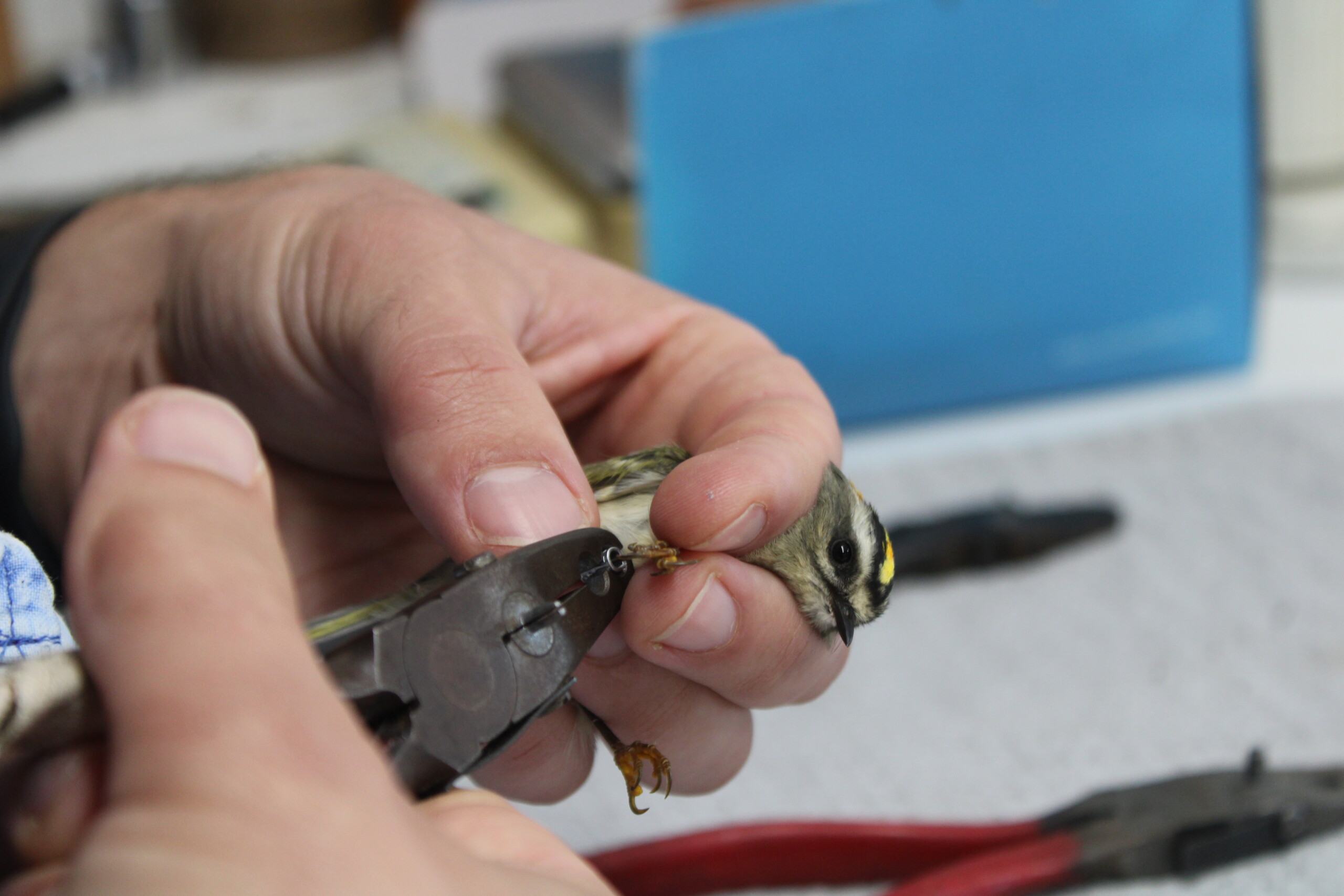
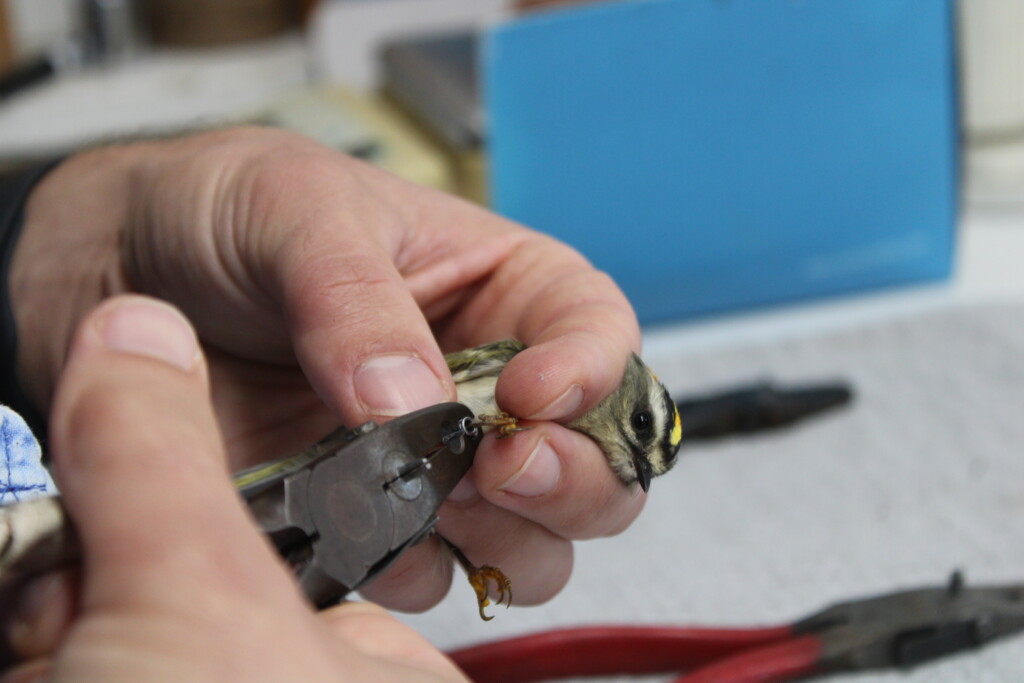
Part of this research in stopover ecology involves regular seasonal bird banding. Bird banding is one of the key efforts many bird conservation and research groups like BBBO perform to monitor the populations of migratory songbirds in eastern North America and assess their conditions.
Patterson described the general process of bird banding and emphasized its importance in tracking individual birds and greater populations over time.
“We catch the bird, we put the band on it. That creates a record for us. We’ll take some demographic information like the age and the sex of the bird, the species, we’ll take some biometric information, we’ll take some measurements, and then we’ll let it go,” Patterson explained. “Over time, we’ve built a database of records … This is our 41st year. That can help you answer questions about bird behavior, bird biology, [and] bird ecology over time. Part of what we do here is really building that long-term data set that researchers can then tap into to answer the questions that they have.”
The fall migration continues to come to pass this October. Throughout the month, BBBO has been catching and banding various migratory songbirds, such as gray catbirds, warblers, sparrows, thrushes, kinglets, and treecreepers, plus local nonmigratory species such as woodpeckers.
While BBBO’s main banding focus is migratory songbirds, plus others such as woodpeckers and raptors, the observatory also bands saw-whet owls. The saw-whet owl banding program started in 2011, where it was discovered that Braddock Bay was a key roosting site for these owls.
Once the breeding season arrives in early summer, BBBO takes part in the continent-wide Monitoring Avian Productivity and Survivorship (MAPS) program, where they monitor populations of breeding birds. To avoid catching the same parent birds multiple times, which prevents them from properly raising their young, birds are caught and banded every ten days rather than every single day.
When fall migration ends and winter starts, Patterson enters the entirety of the data collected throughout the spring and fall banding periods into a larger database. The data collected is organized and fine-tuned to minimize errors before it is added to the database and submitted to the Bird Banding Laboratory, who oversees bird banding and data collection from nationwide organizations. In addition, Patterson focuses on tasks such as regular newsletters and fundraising.
BBBO is also unique in the way that they are almost entirely volunteer-run and emphasize the importance of volunteering for conservation. Another main role of Patterson’s is to lead the bird banding training sessions for new volunteers at the start of the spring and fall migrations. Volunteers then take on various roles, such as setting up or taking down mist nets, scribing/record-keeping, extracting birds from the mist nets, or measuring and banding the birds themselves.
Tom Hilling is one of many volunteers who are deeply involved in the banding process. Hilling first joined in the spring of 2024 after completing his master’s degree in Ecology at Western Connecticut State University.
“I had moved back to the Rochester area after being away for years, and was looking to get involved in Rochester/Western New York conservation and research initiatives,” Hilling said.
Hilling’s main role is a Banding Assistant, where he sets up the mist nets at dawn, extracts the songbirds from the nets, bands and measures the birds, and eventually releases them. He is one of many volunteers that educates visitors or volunteers-in-training about BBBO’s main research projects.
Beyond volunteering, BBBO champions how public engagement is key to helping the observatory keep running and aid their conservation efforts for migratory birds. When they publish their research from the data they collect each season, they can work closely with other bird conservation-related organizations and advise the public on conservation solutions.
“We’re unique in the way that we are open to the public every day that we’re open. A lot of places, you have to make an appointment, or they only have a couple of days where there’s an open house,” Patterson said. “The research we do gets disseminated in a number of ways, mostly through publications, that can hopefully help make our conservation leaders make good decisions as they develop their conservation plans for various regions. As the fall migration winds down, Patterson, Hilling, and the other staff and volunteers at BBBO will continue to band these incoming migratory birds through the end of the month as they make their way south for the winter.
Patterson expressed how BBBO is unique in the way that anyone, regardless of ability or background in conservation, can be involved in the observatory’s mission to contribute to science and protect migratory birds through research and volunteer work. “You don’t have to have a biological pedigree to get in the door here. As long as you have the interest and the ability,” she said. “We’re doing science, we’re contributing to conservation, [and] working with organisms that are just incredibly precious.”