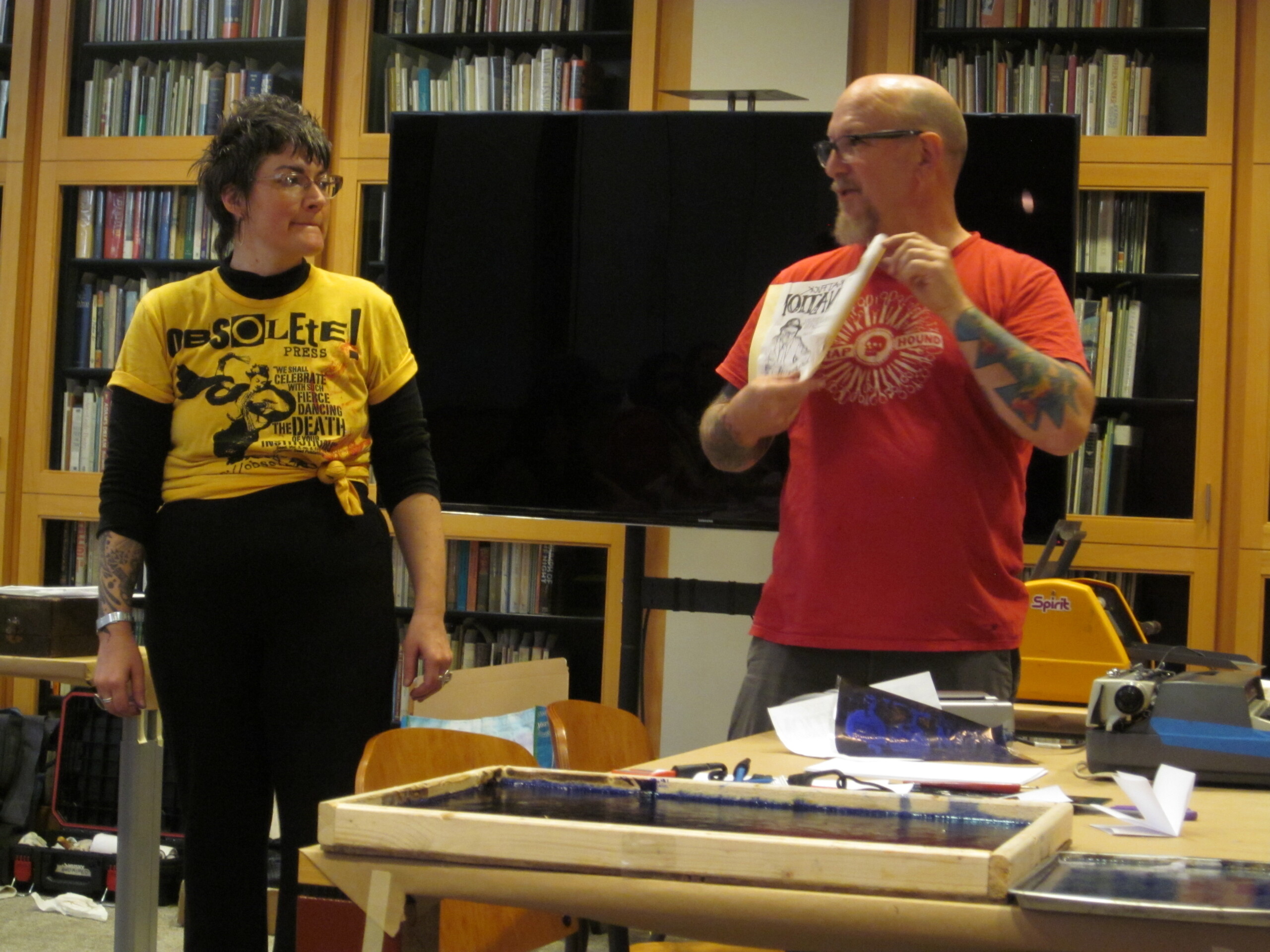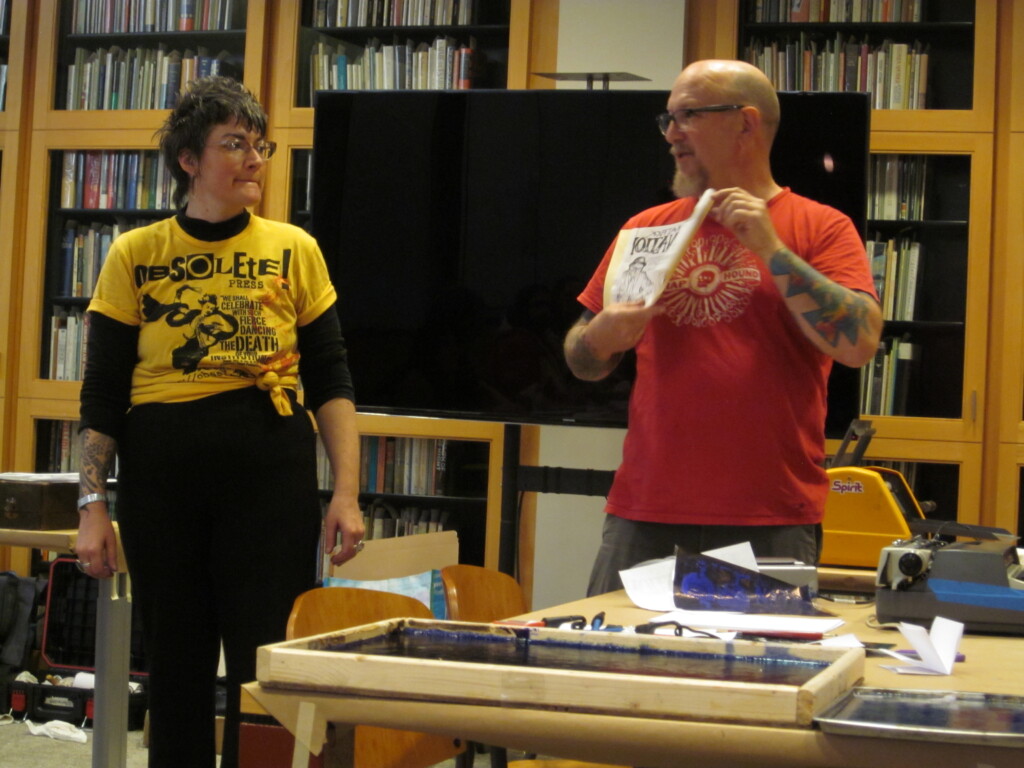
Obsolete Press set up shop in Rare Books Special Collections and Preservation (RBSCP) last week to give URochester students the chance to learn about pre-Xerox printing methods. The workshop was open on Oct. 21 and Oct. 22, and I had the opportunity to go on the first day.
The workshop began with a brief introduction to some of the earliest forms of copying and printing from Obsolete Press’ own Rich Dana and Leisha Stanek. This included a wide variety of methods and machines, such as a dedicated person to copy writings, an invention to write identically on two different points, early copy books for receipts, and the typewriter. Sprinkled throughout the presentation were other slightly more modern print methods as well, such as a spirit duplicator that runs on alcohol, which was a common printer for schools in the 1970s.
However, the workshop truly picked up with the introduction of the hectograph. Hectograph printing is accomplished in three steps: Writing out an original copy in special dyes known as a “master sheet,” placing it on a layer of gelatin to be used as a matrix, which is the template that gets pressed onto copies, and then printing copies by pushing blank paper onto the gelatin matrix. We were given the chance to make our own unique designs (I personally made a Superman logo) and perform this type of printing with materials provided by Obsolete Press. Getting to utilize the same method of printing that people hundreds of years ago used was a unique and interesting experience.
The second major focus of the workshop was the mimeograph. The process for using a mimeograph machine is a bit different from the hectograph. First, we had a thin wax paper which we carved out a design on with a specialized stylus. Once the design was set, the wax stencil was put on a flat layer of cloth and pressed against the new blank piece of paper that we wanted the design to transfer to. Finally, paint would be rolled onto the fabric, and pass through the wax stencil, and transfer onto the paper. As with the hectograph, we were able to experience this firsthand and make our own designs.
Overall, the experience was a wonderful look into the past and how people have innovated the art of preservation and duplication throughout time, and the lovely people at Obsolete Press made it all the more engaging with their passion showing through in every demonstration.