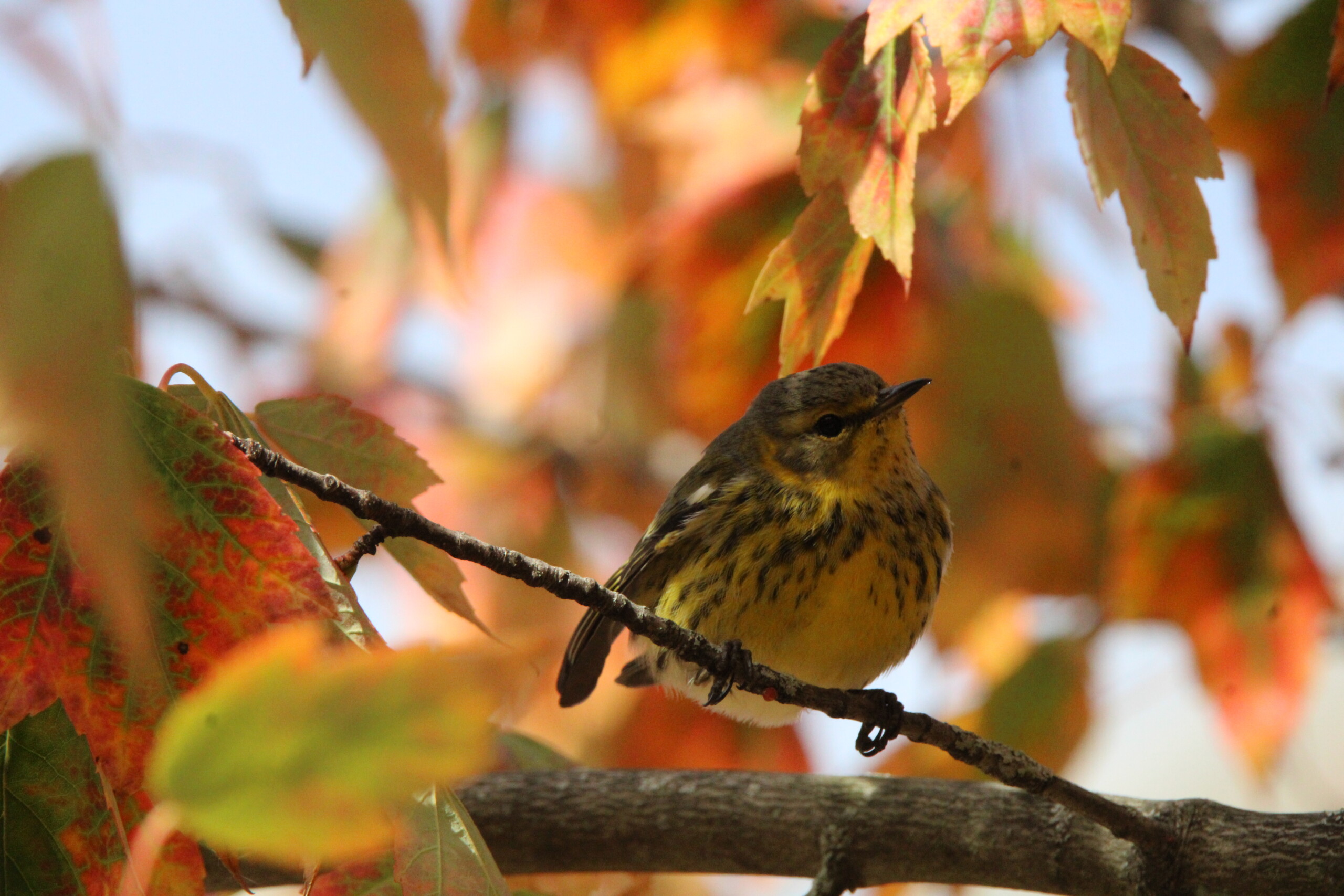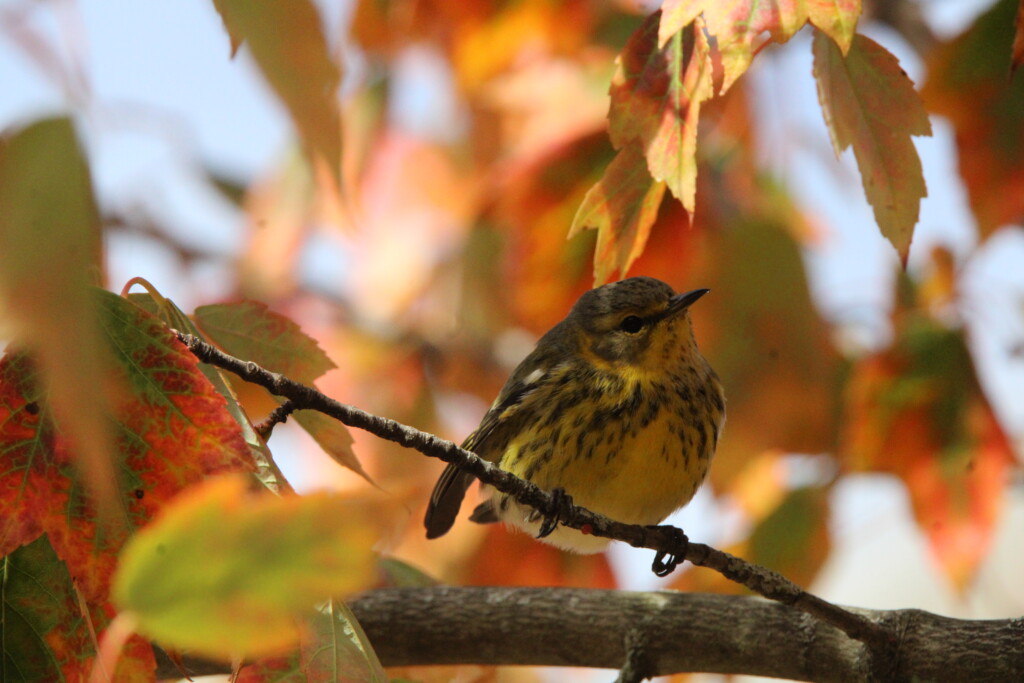
Every spring and fall migration, and whenever I visit their wintering grounds down South, I look forward to seeing this particular family of songbirds. They’re colorful. They’re lively. Their songs are memorable. They’re diverse in shape, size, and habitat. They dart through the treetops making them both a challenge and reward to spot. Warblers are one of my favorite songbird groups for the many reasons I listed above. While there are multiple groups of songbirds called “warblers,” this article focuses on the species in the Americas, including those in the family Parulidae — also called “wood warblers,” — and why they are one of the most remarkable songbirds.
Warblers are small songbirds known for their brightly colored plumages with different patterns, their migrations, and their songs. These birds weigh about an ounce, and can easily fit in the palm of your hand. Their plumages are brightly colored, particularly in the males of most species and are at their brightest during breeding season in spring and summer (except for the black-throated blue warbler, since the males retain their breeding plumages throughout the fall and winter).
Rochester happens to be one of the key stops in the Atlantic Flyway, the route migratory birds take along the Atlantic coast of North America. I was lucky enough to spot a good number of species here on campus, as many are very challenging to photograph due to their small size and quick movements. I spotted many myrtle, black-throated green, Cape May, Tennessee, blackpoll, and Nashville warblers as they were devouring swarms of flying insects through areas of campus such as the First-Year Quad.
Some of my favorite features of warblers are their diversity in size, shape, color, as well as in habitat preferences and niches. Many of them play important roles as insectivores, keeping the insect populations in check wherever they roam. Most warblers prefer areas with thick vegetation, such as forests and thickets. During breeding season, warblers such as the black-throated green warbler, Canada warbler, magnolia warbler, and Blackburnian warbler thrive in boreal forests. Pine warblers, Tennessee warblers, and chestnut sided warblers on the other hand, often live in mixed forests, which have combinations of deciduous and evergreen trees. The rare and endangered Kirtland’s warbler exclusively breeds in the young jack pine forests of Michigan and other nearby parts of the Midwest. However, most species are not restricted to specific types of forests when they breed and can be seen in a variety of habitats during breeding season as well as throughout migration when they make their stopovers along the way.
One species called the yellow-rumped warbler is adaptable enough to live in parks, gardens, and even residential areas and is one of the most widespread species. The eastern half is home to the “myrtle” population, characterized by a black mask and white throat, while the “Audubon’s” population, which lack the black mask and have yellow throats, live in Western North America. Both populations’ defining trait is the patch of yellow right by their tails, which earn them their name as well as their cuter nickname, “butter-butts.” Some populations do not migrate and are hardy enough to withstand the low temperatures in winter.
True to its name, the prairie warbler thrives in open areas such as meadows and pastures and also thrives in habitats such as shrubland, regenerating woodlands, and even by telephone poles.
Black-and-white warblers are a unique species of warbler in their behaviors. Unlike most warblers, they can skitter up and down trees like nuthatches and treecreepers. They are also territorial, fighting off other bird species when they enter their turfs.
The yellowthroats are prevalent, remarkable species that rule fields and marshes. As their name suggests, their throats and bellies are golden yellow and the males have a black mask around their eyes.
While most warblers rule the treetops and bushes, rarely coming to the ground, the ovenbird is one notable exception. These secretive warblers live on the forest floor and have a distinctive walk, stepping one foot in front of the other. Ovenbirds earn their names due to their nests, which are shaped like old-fashioned ovens.
The waterthrushes are other examples of warblers living different lifestyles than their tree-dwelling relatives. North America is home to two waterthrush species: Northern and Louisiana, and both have brown bodies with buffy undersides with brown stripes at their throats and bellies. They often live by the edges of streams, and hunt for aquatic insects.
While most warblers live in both eastern and central North America, there are plenty of notable species that live outside these zones. The Townsend’s warbler, which looks like the black-throated green warbler except for the dark eye patches, and the hermit warbler, with its bright golden head, breed in the conifer forests of the Pacific Northwest while migrating and wintering through different habitats of the Pacific coast. Painted redstarts, red-faced warblers, and Lucy’s warblers all breed in Arizona and winter in Mexico through Central America. Guatemala and Mexico host the aptly named pink-headed warbler, and Puerto Rico is home to the Adelaide’s warblers and elfin woods warblers.
Besides their small sizes, colorful plumages, and migration routes in most species, another notable aspect about warblers are their songs. Many warbler songs can sound buzzy or clear and can either remain steady or rise and fall in pitch and volume. One example is the black-throated green warbler, whose song is most often heard in spring to attract mates, sounds like a buzzy, raspy “zoo-zee-zoo-zoo-zee.” Other warblers’ songs can sound much clearer. Many warblers are often heard before they are seen and there are multiple catchy mnemonics to remember their calls. The widespread yellow warbler’s song sounds like “Sweet! Sweet! I’m so sweet!” and the Chestnut-sided warbler’s song can be heard as “Pleased-Pleased-Pleased to meet you!” The vocal yellowthroats have one of the most well-known warbler songs, calling out “Witchity-witchity-witchity” and the secretive ovenbird sings “Teacher! Teacher! Teacher!” which gradually grows louder as the call continues. During fall migration, as soon as breeding season ends, warblers become much quieter. Their colors begin to disappear, causing many species to look alike, and stop singing, instead communicating by shorter, softer “chip” calls.
Warblers are remarkable and beautiful songbirds. Regardless of the habitat they live in, where in the world they are native to, the colors they sport, or the songs they sing, there are many unique qualities to admire about warblers. With this article in mind, I hope this inspires you to get to know more about the different types of warblers nearby. Keep an eye and ear out for these songbirds as they migrate or while in their breeding or wintering habitats — and stay alert with your camera or binoculars ready, because they move fast.