It feels like it’s been winter forever in Rochester, so when we hit Spring Break I was more than ready to chase some warmer weather. There’s no denying that a great way to escape the cold of the North is to visit a nice, warm place down South, in this case South Florida. More than just warm weather though, South Florida is one of many places in the U.S. where birdlife is both diverse and abundant, and mid-winter through early spring is one of the best times to spot and photograph the different native and migratory birds.
South Florida, as with many areas of the Southeastern U.S., does not experience all four seasons but instead has just a wet and a dry season due to its subtropical climate. The winter months mark the dry season, where all kinds of wildlife, especially birds, are abundant. A drier climate means there are fewer water sources available, causing large numbers of different bird species to congregate in the same area, increasing one’s chances of spotting them in the wild. Florida is also a key destination for migratory songbirds and ducks along the Atlantic Flyway, which is a migration path along the Eastern coast of North America. Visiting the Everglades, Big Cypress National Preserve, and the Ten Thousand Islands in mainland Florida along with Key Biscayne has given me a great opportunity to spot much of Florida’s native and wintering wildlife, many of which are lifers, or birds seen in the wild for the first time, for me as a birder.
I first took an airboat ride in part of the Everglades, along the “River of Grass,” where alligators and wading birds were among many of the highlights. Some of the highlight birds included the wood stork, distinguished by its bare head and neck and white plumage. I remember hearing how these birds were once listed as a threatened species but their numbers have surged over the years, causing them to be delisted from the Endangered Species Act by the U.S. Fish and Wildlife Service as of this year. Some other lifers for this trip included the iridescently colored purple gallinule, a relative of cranes and coots that are a little smaller than a crow, as well as the roseate spoonbill, whose brightly colored pink plumage comes from the pigments in the shrimp they eat.
After the boat ride, we took a scenic ride through parts of Everglades City, a small town in Collier County, on our way to our next destination. Along the way, we took a quick stop at the Big Cypress Gallery, a small museum featuring the work of nature photographer Clyde Butcher, which included black-and-white photographs of Florida’s cypress swamps. Right outside the gallery was a very scenic swamp filled with wildlife. There I spotted large flocks of wood storks and double-crested cormorants perched high in the cypress trees. Yet, the most memorable bird I got to see and (finally) photograph in this area was the green heron. The green heron is more known for its brains than its brawn unlike its larger relatives and stands out for its small size and dark green and brown plumage to blend in with the wetland vegetation. I have spotted them a handful of times before up North, yet, as is typical for this species, they were very camera-shy. Luckily, the green herons in the Everglades seemed slightly more approachable and abundant.
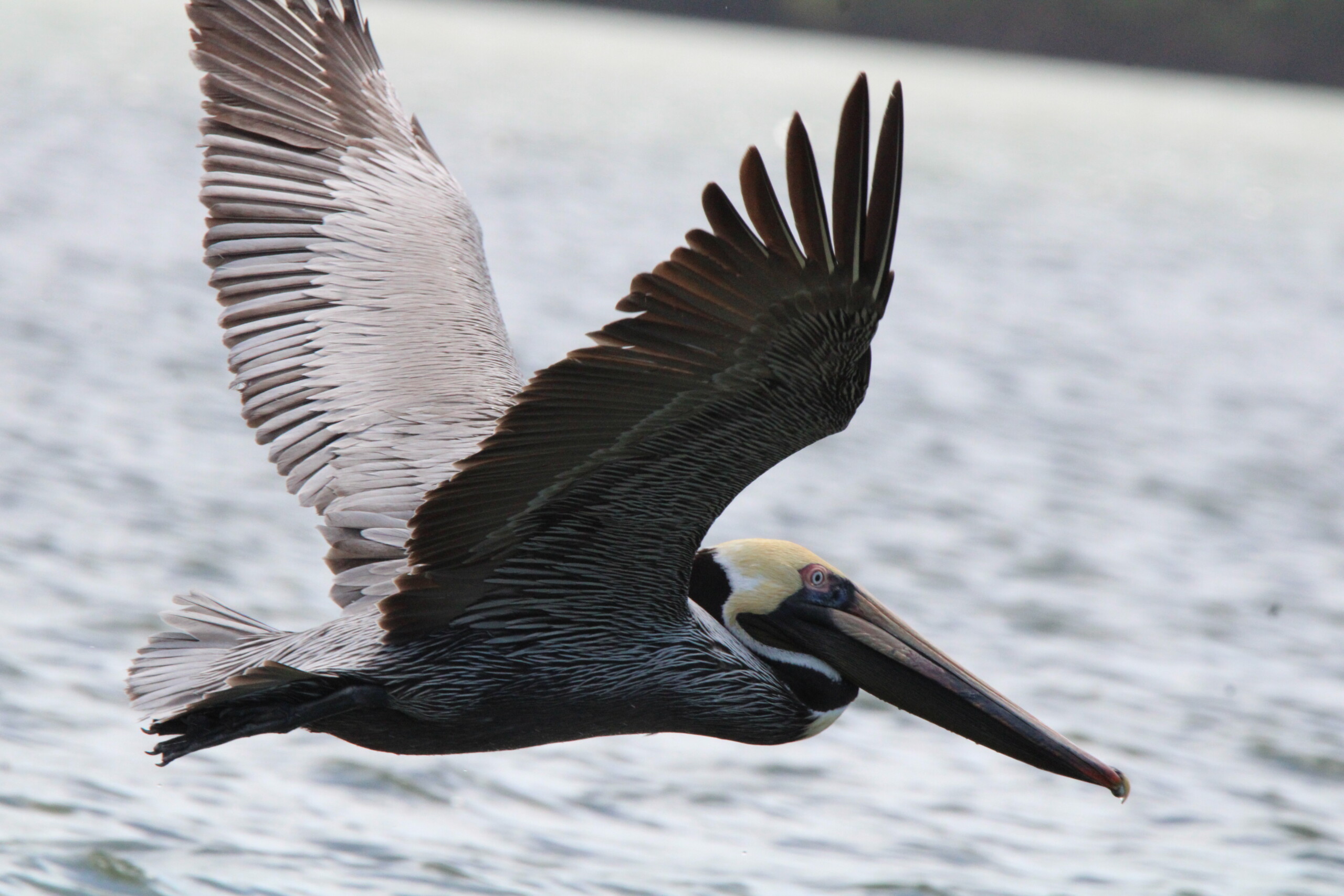
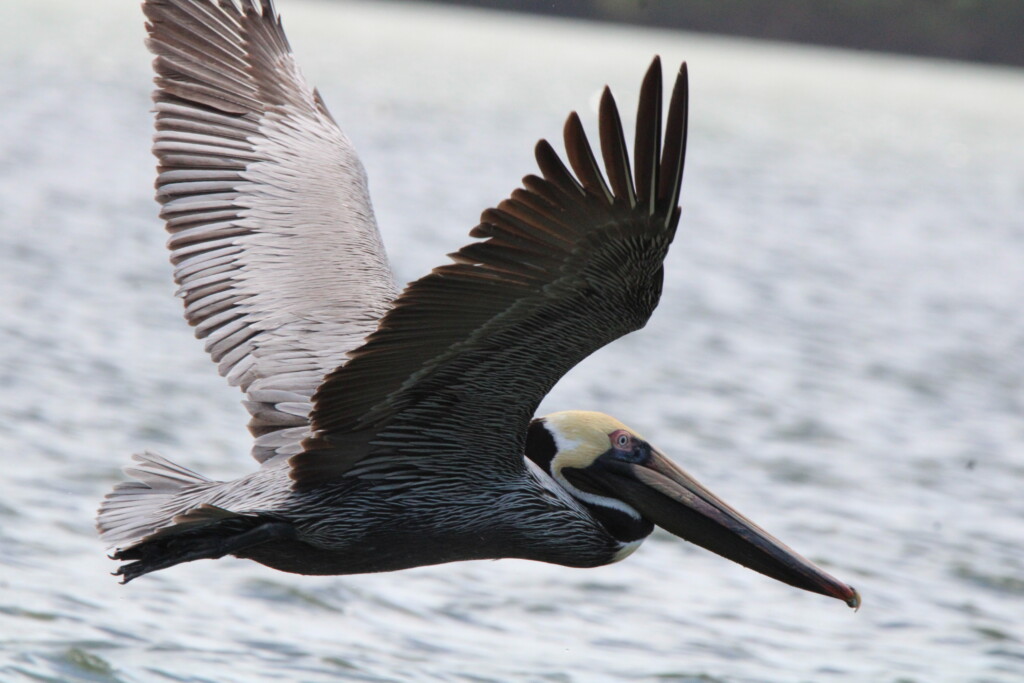
After lunch, we took a second boat ride out into the Gulf of Mexico. Photographing the different bird species along with other wildlife, including manatees and a pod of bottlenose dolphins, was pretty challenging, yet spotting wildlife out in the ocean was a real treat. A few of the creatures spotted were brown pelicans fishing for their next meal, ospreys building their nests in the tops of mangrove trees, a vocal and rather fragrant rookery of double-crested cormorants, and an entire flock of royal terns resting on a sandbar.
The tour ended with a hike through the Marsh Trail of the Ten Thousand Islands National Wildlife Refuge. Along the trail I spotted various native and migratory waterbirds, along with a very rare morph, meaning a different coloration, of a common bird species only found in Florida and the Caribbean. In a quiet, still pond, right next to a basking alligator, was a white morph of a great blue heron known as the “great white heron.” It stood silent, strong, and stately in the water, appearing to watch us from a short distance while waiting patiently for its next meal. Great white herons may be easily confused with the more common great egret, yet they are set apart from the latter by its larger, slightly heftier build, thicker, darker bill, and lighter-colored legs.
Near the heron, pairs of common gallinules, sporting blackish-blue plumages and shiny red bills and facial shields, were swimming in the ponds off the trail. While we were hiking, a swallow-tailed kite, with its unmistakable white plumage, black wing tips, and forked tail feathers, was soaring high above us.
The abundant and charismatic anhingas, known for their long necks, sharp bills, and dark, streamlined bodies that make them resemble mythical creatures, were everywhere. They appeared to pose for everyone’s photos when they sat atop their branches and spread their wings to dry off after a dip in the water.
Adult little blue herons were wading and foraging alone while the juveniles, distinguished by their all-white plumage, were doing so among a large flock of snowy egrets. Little blue herons start out white to blend in with the snowy egrets and avoid larger predators, and eventually turn blue as they grow older. The little blue heron is distinguished from the snowy egret by its bluish bill and dark yellow legs, while the snowy egret has a yellow beak and black legs. The dark brown glossy ibis joined in the herons’ and egrets’ hunting session, dipping its long, curved bill in search of small fish and crustaceans.
A tricolored heron was wading in the pond and stalking its main prey, fish, as it seemed to follow them and stab its bill into the water every few minutes without success. As their name suggests, tricolored herons are distinguished by their patches of dark blue, gray, and buffy white feathers.
A large flock of blue-winged teals, who winter in Florida, were resting on a nearby riverbank. These migratory ducks are about half the size of a mallard duck and set apart by the powdery blue patch on their wings, seen when they are in flight. Males have a dark blue head with a white crescent marking near the bill, while females are speckled brown.
My birding adventures did not stop after this memorable journey through mainland South Florida’s major natural zones. Visiting the parks of Key Biscayne was another opportunity to spot and photograph more of Florida’s native and migratory wildlife. Resting by the ocean, near a seaweed bed that covered most of the coastline, cormorants were cooling off as they opened their beaks and waved their small gular pouches, the flaps of skin below the lower beak.
A large flock of gulls were nearby, standing among their charming, dignified cousins: royal terns, which I could spot up close. Breeding season was coming soon for these birds. Some individuals were fully prepared, sporting shiny black caps that covered their eyes, while others were still transitioning, distinguished by black crests on the back of their heads and salt-and-pepper caps that did not completely cover their eyes.
Yellow-bellied sapsuckers, the only species of migratory woodpecker in North America, were perched on the palm trees. I could discern their presence based on the circular holes on the palm trees that originated from their quest for insects and tree sap. One of them could be seen tapping on the bark of a palm tree.
Another highlight were the warblers, one of my favorite types of songbirds. Spring migration was underway for warblers and many species, including palm warblers and black and white warblers, were hopping along the treetops and slowly making their way back up North to breed.
Overall, South Florida was a wonderful and adventurous place to bird and escape the cold of the North. Photographing the different native and migratory bird species has been quite a treat for me as a birder looking for lots of new species to add to my life list and photo collection, and has been a memorable way for me to spend my spring break. Whether you’re a seasoned birder looking for unique species or just looking for a warm outdoor adventure in the middle of winter, I highly recommend visiting South Florida and checking out its many natural birding hotspots.