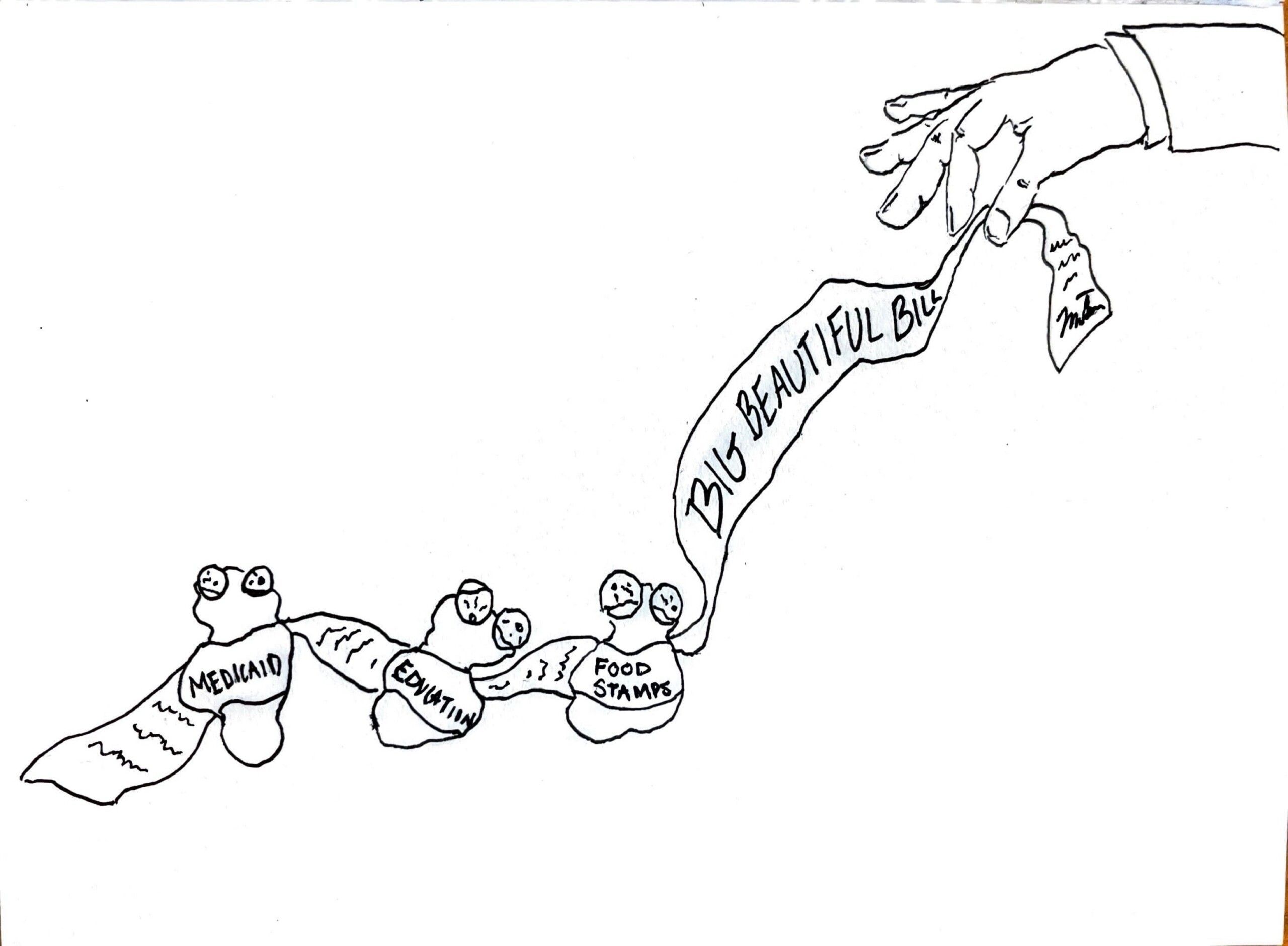
The age-old problems of bloated government bureaucracy and “wasted tax dollars” have sent President Trump and the Republican Party into a frenzy with their 2026 federal discretionary budget request. A few pages deep into the proposed budget, nearly every single department is facing billions of dollars in cuts. Upon further inspection, most agencies subject to cuts are accused of “wokeness,” “DEI” schemes, and inefficiency. In fact, the word “woke” was used 12 times, and “DEI” thirty-one times within the document. For these so-called problematic principles to be grounds for cancelling government funding, we’d hope the administration would properly define the terms. But these never seem to be explained. The sole major increase in the document is the Department of Defense’s (DoD’s) new budget of $1,133,000,000 (this was renamed the Department of War Sept. 5 2025, but are we seriously gonna call it that?). This drastic uptick in spending highlights the Trump administration’s wish to project a picture of “strength” and, as Secretary of “War” Pete Hegseth put it, “warrior ethos.” President Trump has repeatedly said he wants the U.S. to be strong. However, his direction for our tax-dollars isn’t one that invests in America’s true strength: its people.
Trump’s new budget slashes the entire Institute of Museum and Library Services, which provided $226 million to American cultural institutions last year. Over 1,600 school, public, academic and special libraries have benefited from the grants available, providing services like WiFi and resources for learning digital skills. These free services give struggling Americans the potential for upward mobility — including students, who may rely on libraries and cultural institutions to pursue higher education. The American Economic Association states that through its different opportunities, resources, and support for children from difficult beginnings, “library capital spending … can have significant positive effects on children’s academic performance.” Library funding is an investment in America’s tomorrow, and it is undoubtedly a mistake to cut what minimal funding it previously had.
Trump’s executive order targeting libraries details the reasoning behind the cuts as “reduction in the elements of the Federal bureaucracy that the President has determined are unnecessary.” Whilst some believe that streamlining bureaucracy will reduce wasted tax-payer dollars, the reduction reflects a misunderstanding of the resources that everyday Americans need to thrive. According to the White House, “Trump is returning power to local communities and state governments” by reducing the federal footprint, but this also results in the closure and endangerment of places vital to those same smaller American communities.
The Quincy Institute for Responsible Statecraft goes further into the problems arising with Trump’s budget vision: There are already “largely unavoidable pressures to increase spending on Social Security and, especially, major federal health care programs.” These budget cuts alone cannot support the massive increase in military spending. The Emergency Food Assistance Program, which falls under the jurisdiction of the United States Department of Agriculture, has already had $500 million terminated by Trump — which results in fewer resources and aid for Americans on the poverty line to fight against humanitarian problems caused by their socioeconomic status, such as hunger and food insecurity. Additionally, federal aid against hunger stimulates the market for American farmers, a group that Trump has claimed he wants to support and focus on. By cutting funding for these programs that indirectly benefit farmers, the consequences trickle down and hurt them by proxy. How ironic that Trump said that “the American farmer is the backbone of our country” in 2020, yet now he is cutting their assistance.
This is a small handful of the agencies, departments, and programs that are being axed for Trump’s vision. There are countless others, and we’re already feeling the consequences. It’s clear that Trump isn’t focused on benefiting the American people with his budget proposal. His vision is wrapped up in a clear desire for forceful control and the title of “President.” If there’s one thing we know the American people don’t want, it’s a king. The truth is in the numbers, and there is little he can do to convince us this new budget is in good faith.