Standardized testing. We all know it, most of us hate it yet it saturates the K-12 education system. Sure, standardized tests can produce students with great study habits which can lead to long-term retention. However, using test scores as a barrier to a high school student’s graduation via standardized testing is extreme, especially considering that lessons centered around exams narrow the curriculum and limit learning potential, according to New York State United Teachers (NYSUT), who go as far as calling these tests “developmentally inappropriate.” Let’s not forget that the working world largely does not function like an exam — so why should we let a student’s overall success be based on how they perform on tests?
Exam-based learning affirms that the data derived from exams is standardized and therefore a valid method to measure student learning and growth.
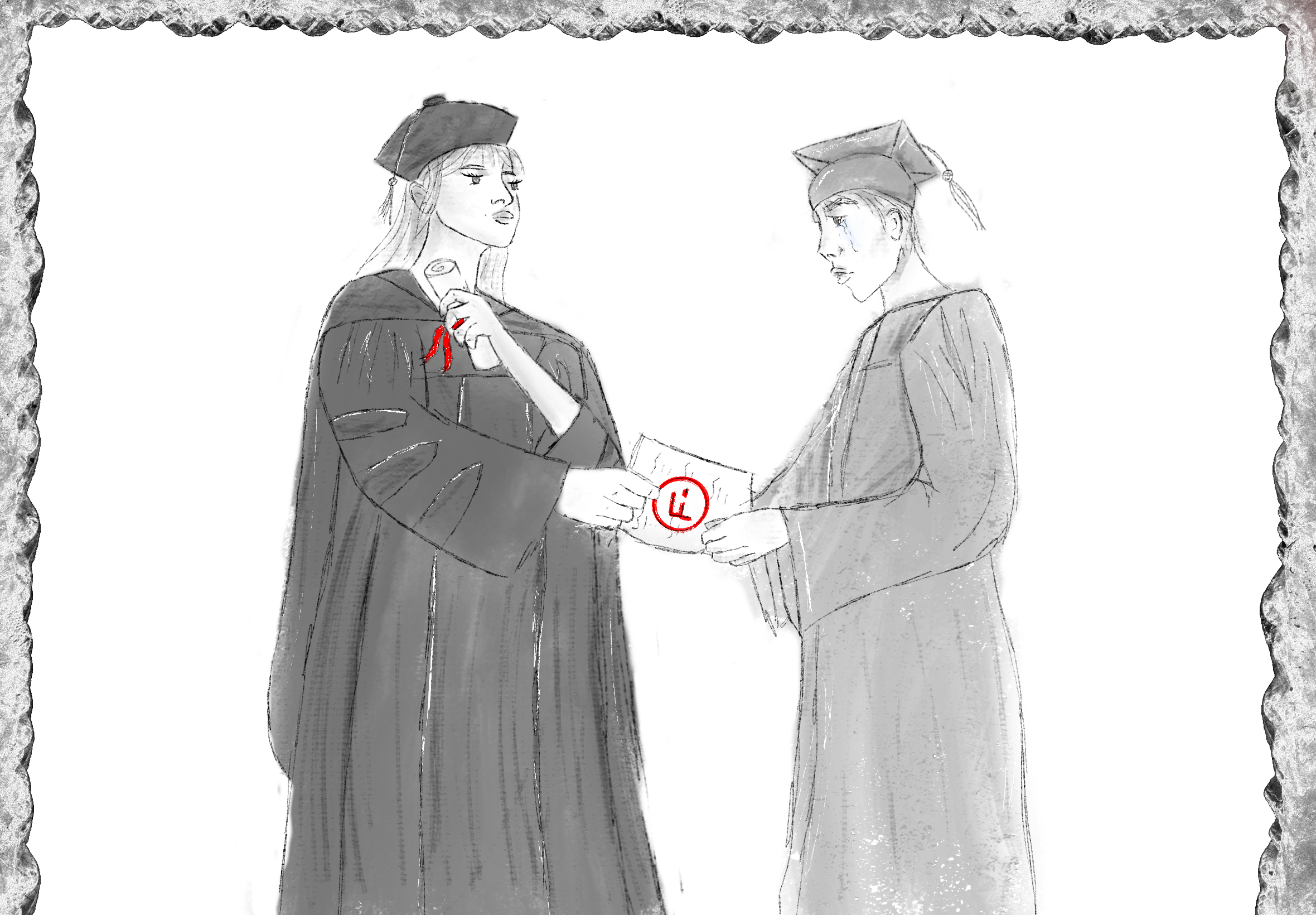
An infamous exam known by many New Yorkers is the Regents exam, which is anticipated to sunset for the class of 2028, according to the New York State Education Department. Currently, students in New York State are required to pass five Regents exams from different subjects to graduate from high school. Score one point below the 65-point threshold, and you might have to graduate without the people who you have grown up with your whole life, that is unless you retake the test and pass it before your graduation date.
Withholding graduation seems quite drastic for one failed test, especially when the failure can be owed to any number of extenuating circumstances. You could have worked 13 years for that moment, and one test — three hours on any given day in June — has now altered your future. Whether that includes summer school, an extra year of schooling, or forgoing a high school diploma altogether, the effects of that single moment in time has far greater effects beyond the loss of a cap and gown. Standardized testing does provide, well, standardization amongst a large number of students. The Education Trust says that standardized tests “remain the only objective, comparable, and consistent statewide data to help show what our students know.” Looked at through an idealist lens, it appears to be a convenient and quick way to track and evaluate students in their learning as well as a school’s curriculum and efficacy. However, NYSUT states that standardized tests are “burdensome on students … and diminish the amount of instructional time.”
High-stakes tests are exaggerated as a measurement of achievement considering that the impact on both students and instructors is negative, argues NYSUT. Teachers are often evaluated on their students’ test results, incentivizing “teaching the test” over prioritizing a student’s academic growth. “Misleading information from poor-quality tests can obstruct teaching and undervalue a student’s true grasp of the material.”
Supporters of varied measures claim that other methods have produced more successful real-world results. “Standardized tests can only assess a small portion of the curriculum,” said educator Jane L. David for the Association for Supervision and Curriculum Development. “State tests tend to rely on easy-to-score questions that measure basic skills and recall instead of higher-order thinking.”
Furthermore, Dr. Robert Sternberg, professor of human development at Cornell University, highlights in a lecture at Hamilton University that while tests do measure a student’s analytical skills, they do not assess “creative skills, practical skills, or wisdom-based ethical skills” necessary for cognitive growth. Standardized tests are necessarily narrow in scope, forcing teachers to adjust their curriculum to fit on a flashcard or two in preparation for high-stakes tests rather than focus on independent and critical thinking.
Outside of the classroom, when we are forced to make quick decisions, I can confidently say that I do not find my answers like a fill-in-the-blank problem. Rather, I think critically through the genuine choices I have and act fast, a skill I never learned from an exam. Things in real life are natural to us; exams produce avoidable stressors.
“To succeed in the 21st-century economy, our students will need to develop key skills such as critical thinking, collaboration, creativity, and communication,” NYSUT states. If exams don’t measure these important life skills, we shouldn’t let them determine the futures of the students taking them.