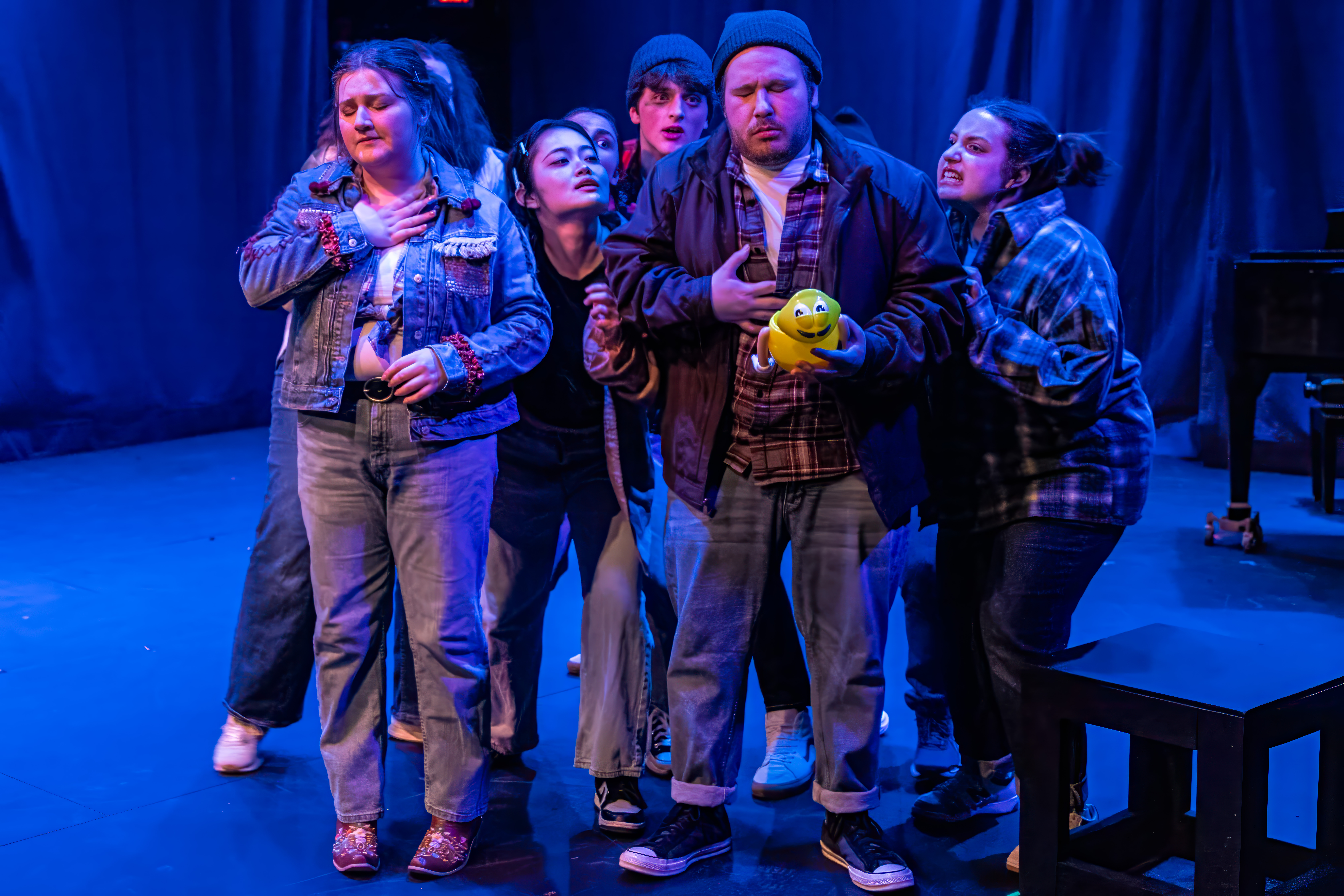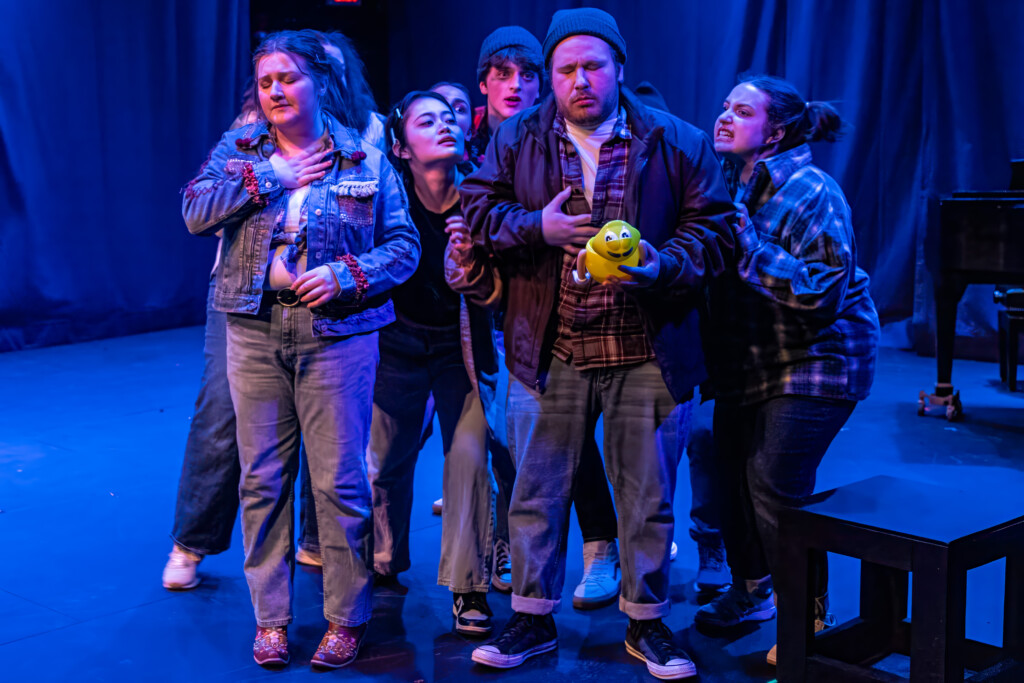
I’ve always loved fairy tales, so when I learned that the Eastman School of Music was putting on a retelling of Hansel and Gretel as part of their Opera Theatre Winter Voice Festival, I knew I had to go.
“H & G, A Great and Terrible Story” is an hour-long musical production based on Anna Maria Hong’s novella of the same name. The show employs a fusion of jazz and opera to examine the classic tale in a new and refreshing light.
The original Hansel and Gretel follows the two namesake characters through the woods after being abandoned by their parents. They wander into the clutches of a cannibalistic witch who intends to eat them, but the witch’s nefarious plan is foiled when Gretel kills her by shoving her into a hot oven. In comparison, in Hong’s narrative, the cubist-style performance invites its audience to decide what is important about the art, posing numerous questions about the boundaries between reality and dreams.
I’ve seen many modern adaptations of the Brothers Grimm’s tale, but “H & G, A Great and Terrible Story” is by far the most postmodern, ethereal depiction that I’ve seen. Instead of simply retelling the story, Hong and the team of composers and librettists, who compose the music and write the lyrics, weave themes from the original story into an exploration of growth, maturity, and trauma. It is not a “narrative” in the typical sense, but rather a visual and auditory collage of dreamlike fragments that piece together a nonlinear reflection on life. There are no scenes in H & G. Instead, everything flows fluidly into the next sequence, blending time and space into a conglomeration of ideas and thoughts that never fully resolve.
Demonic spirits chase two innocent children. A witch who cannot see is determined to be known as the fairest of all. A woman who was once a young girl enslaved in a candy house becomes a seductress who uses candy apples to lure children into that very same place. A starry-eyed, opulent mistress sings an aria about a game of chess. A husband mourns the loss of his wife.
What does it mean to “grow up”? Are villains really villains? Is it possible to escape traumatic cycles? In “H & G,” everything matters, yet nothing is important. Everything influences everything else, yet everything is independent. Time is always moving, yet moving through time we are stuck, frozen in place.